
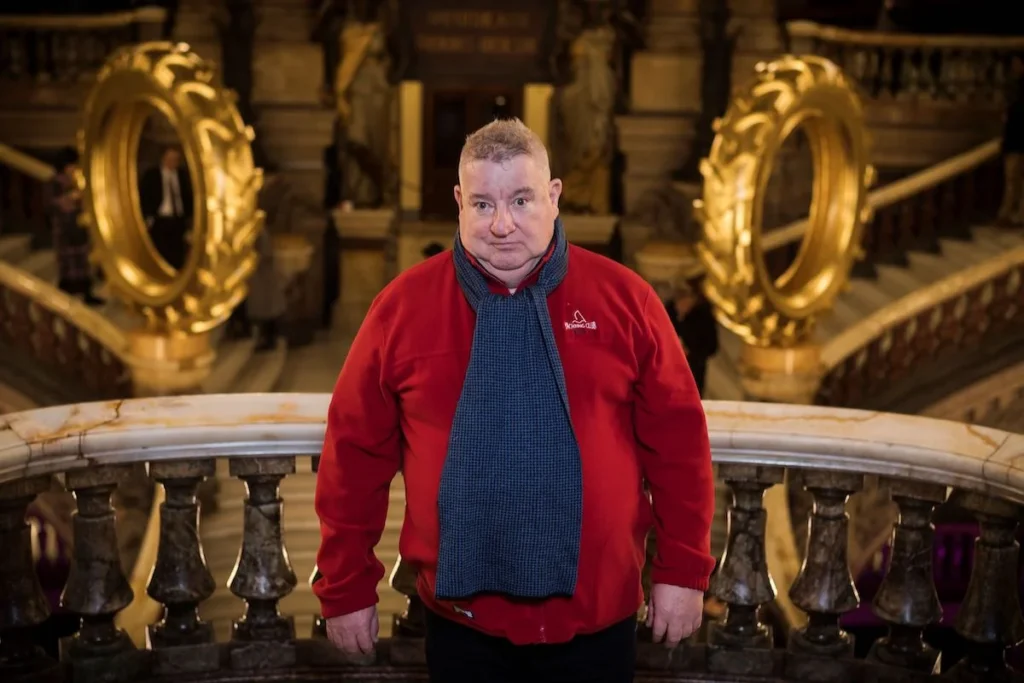
Claude Lévêque, once a luminary of the French contemporary art scene, has been ordered to stand trial in a criminal court in the Seine-Saint-Denis department, north of Paris. The trial, which marks a pivotal moment in the ongoing reckoning within the French cultural establishment, concerns grave allegations of rape and sexual assault involving three minors.
For decades, Lévêque’s work—characterized by haunting, immersive neon installations—adorned the most prestigious halls of Europe, including the Louvre and the Elysée Palace. Today, that legacy is overshadowed by the grim reality of a judicial process that has been years in the making. As the artist prepares to defend himself against charges of using his professional stature to exploit vulnerable youth, the French art world is left to grapple with the disturbing intersection of institutional power and personal predation.
Main Facts: The Charges and the Context
The upcoming criminal proceedings stem from a long-standing judicial investigation that formally began in 2019. Lévêque faces charges of sexual assault involving violence, coercion, threat, or surprise, as well as the indecent assault of a minor under the age of 15 by a person in a position of authority.
According to court documents leaked to the French newspaper Libération, prosecutors allege that Lévêque utilized his "position and his aura as a renowned contemporary artist" to manufacture a context conducive to his crimes. By establishing a pervasive moral influence over his victims—who were between the ages of eight and 18 at the time of the alleged offenses between 1989 and 2007—he purportedly created an environment where consent was impossible to establish.
The prosecution’s case is built on the premise of a "gradual escalation." Witnesses and victims have described a process of grooming where the artist slowly desensitized his young assistants to inappropriate physical contact, framing these acts as part of the "artistic lifestyle" or professional mentorship.
A Chronology of Investigation and Accusation
The unraveling of Lévêque’s reputation did not happen overnight; it was the result of a courageous, albeit exhausting, effort by those who claim to have been harmed during their formative years.
- 1989–2007: The window of the alleged criminal activity. During this period, Lévêque’s career ascended, and he brought various young assistants with him on global exhibition tours.
- 2019: The formal opening of a judicial investigation follows a public complaint by artist Laurent Foulon. Foulon alleged that he was raped by Lévêque in the 1980s while he was a minor. His testimony served as a catalyst, leading investigators to uncover a pattern of behavior involving other young men.
- The Post-2019 Fallout: As details of the investigation leaked into the public sphere, the art market reacted with swift, albeit belated, distance. The influential gallery Mennour severed ties with the artist, and various municipal and state institutions dismantled or deactivated his neon works.
- 2026 (September): The latest development, as reported by Le Monde and Libération, confirms that the court has ordered a trial at the criminal court of Seine-Saint-Denis.
- Present Day: Lawyers for Lévêque have filed an appeal, further postponing the trial date and sparking outcry from victims’ advocates who argue that the delay is a tactic to evade accountability.
Supporting Data: The Anatomy of Exploitation
The case against Lévêque is not merely about isolated incidents; it is about the structural exploitation of power. Testimony provided to investigators paints a chilling picture of how the artist manipulated parents and victims alike.
The "Hotel Room" Pretext
A recurring theme in the testimonies involves the logistical arrangements made during international art trips. When traveling for exhibitions, Lévêque would reportedly insist that his young assistants share a hotel room—and often the same bed—with him. He allegedly cited the difficulty of booking separate rooms as the justification. Crucially, the parents of these minors were given the same explanation, effectively neutralizing their oversight by cloaking the artist’s predatory behavior in the guise of logistical necessity.
The Illusion of Professional Advancement
Victims have articulated a complex web of emotional and professional coercion. Many were aspiring artists or assistants who viewed their relationship with Lévêque as a gateway to the elite echelons of the art world. The fear of "disappointing" a figure of his stature, combined with the desire to maintain access to professional privileges, created a psychological trap. As the court documents state, the victims felt compelled to conform to his wishes to ensure their continued proximity to the art world, a dynamic that highlights the inherent imbalance of power between a world-renowned artist and a minor.
Official Responses and Legal Maneuvering
The legal battle has become as much about the definition of consent as it is about the facts of the case.
Lévêque’s defense team, led by Patrick Klugman and Lucas Veil, has taken a contradictory approach. While they claim that their client has "actively cooperated" and undergone significant "work on himself" to offer apologies, they have simultaneously challenged the "legal classifications" of the charges. This move to appeal the court order has been interpreted by the prosecution and the plaintiffs’ legal representatives as an attempt to undermine the severity of the charges under the guise of legal technicality.
The court, however, has addressed the defense’s argument of "consensual relationships" with striking clarity. According to the latest reports, the judicial order explicitly rejects the possibility of a minor consenting to an adult in a position of authority. The document notes that a minor is "not capable of understanding the nature of sexual acts, of perceiving what is at stake in them, much less of asserting a desire of their own or of protecting themselves against an adult who would attempt to impose their own desire on them."
Anastasia Pitchouguina, the lawyer for two of the plaintiffs, has been vocal about the hypocrisy of the defense’s strategy. "One cannot apologize while, at the same time, disputing the seriousness of what one has done," she stated. Her clients, she noted, are weary of the delays and are calling for the artist to stop making excuses and face the judgment of the court.
Implications for the Art World
The trial of Claude Lévêque represents a watershed moment for the French cultural sector. For years, the "star system" in the arts—where prominent figures are afforded near-total autonomy—has masked the dark reality of systemic abuse.
Institutional Complicity
The fact that Lévêque’s work was displayed in the Elysée Palace and major museums raises uncomfortable questions about the vetting processes for state-sanctioned art. To what extent did institutions look the other way, or fail to investigate rumors, in order to benefit from the prestige of a globally recognized artist? The "turning off of the lights" in his neon installations serves as a symbolic act of erasure, but it does not address the underlying cultural structures that allowed such behavior to persist for nearly two decades.
A New Standard of Accountability
This case is part of a broader, global shift in which the "genius" defense—the idea that an artist’s creative output excuses their moral failings—is being dismantled. By focusing on the power imbalance and the incapacity of minors to provide consent, the judicial proceedings are setting a precedent that will likely influence how future allegations of misconduct are handled in artistic circles.
As the case moves toward trial, the focus remains on the victims. Their persistence has forced a reckoning that the art world was historically ill-equipped, or unwilling, to facilitate. The trial in Seine-Saint-Denis will not only determine the legal fate of Claude Lévêque but will also stand as a testament to the endurance of those who have spent years waiting for their day in court. For the French art world, the lights may be off on Lévêque’s neon sculptures, but the spotlight is now firmly fixed on the truth of his actions.