
In an era increasingly dominated by the rapid proliferation of artificial intelligence, where algorithmic generation often threatens to dilute the sanctity of creative expression, Prada has staged a bold, defiant, and whimsical intervention. The luxury powerhouse’s 2026 holiday campaign, titled “Drawing Prada,” serves as a poignant love letter to the tactile, the human, and the impossible—a masterclass in bridging the gap between high-fashion photography and the timeless discipline of hand-drawn animation.
The Core Concept: A Fusion of Worlds
Prada has long maintained a symbiotic relationship with the cinematic arts, viewing its seasonal collections not merely as products to be sold, but as characters in a broader cultural narrative. For the 2026 holiday season, the brand has transcended traditional advertising by inviting the legendary animator John Pomeroy to helm a visual experiment.
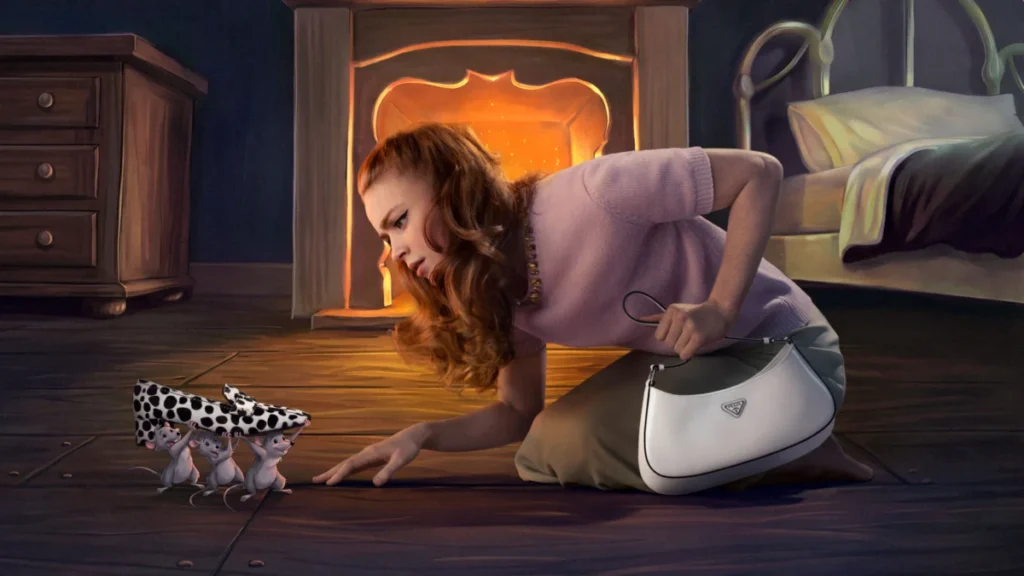
The campaign, which officially debuts this Tuesday, features a constellation of today’s most sought-after young actors—Maya Hawke, Sadie Sink, Chen Haoyu, Kelvin Harrison Jr., and Luther Ford—placed within vibrant, illustrated winter landscapes. Rather than relying on the sterile precision of digital rendering, Prada has opted for the soulful imperfections of traditional 2D animation, effectively positioning the brand as a champion of "the human touch."

Chronology of a Creative Vision
The genesis of "Drawing Prada" began with a desire to depart from the predictable tropes of holiday marketing. Prada’s creative team sought to inject a sense of childlike wonder into the sophisticated world of luxury accessories.
- Conceptualization (Mid-2026): Prada executives engaged with John Pomeroy, a titan of animation whose resume includes quintessential works such as Winnie the Pooh and Tigger Too, Pocahontas, and Fantasia 2000. The objective was to create a series of shorts and stills that felt both nostalgic and avant-garde.
- Photography Phase: Renowned photographer Glen Luchford was brought on board to capture the live-action elements. Luchford, known for his cinematic eye, shot the actors in a controlled, minimalist environment, providing a neutral "real-world" canvas upon which the animation could be layered.
- The Animation Integration: Throughout the late summer and early autumn, a team of artists led by Pomeroy meticulously hand-drew the fantasy creatures—foxes, mice, lynxes, and bats—that interact with the actors. Each frame was crafted with the same rigor used in the golden age of hand-drawn studio animation.
- The Final Edit: The blending of these two mediums occurred in the weeks leading up to the holiday launch, ensuring that the interaction between the human stars and their illustrated counterparts felt seamless, organic, and magically believable.
The Human Element: An International Cast
The choice of talent for the campaign highlights Prada’s commitment to a global, generation-defining narrative. The cast is intentionally diverse in background but unified by their ability to bring emotional depth to a campaign that exists halfway between reality and fantasy:
- Maya Hawke and Sadie Sink: The Stranger Things duo brings a palpable sense of youthful curiosity, perfectly suited for the whimsical narratives involving a cynical fox and mischievous mice.
- Chen Haoyu (Amy Chen): The Chinese star offers a bridge to the Asian market, portrayed in the campaign interacting with a snow lynx.
- Kelvin Harrison Jr. and Luther Ford: These actors provide a grounding, sophisticated presence that anchors the more fantastical elements of the accessories’ presentation.
These actors aren’t merely modeling handbags or shoes; they are participating in a narrative. Whether it is a pair of mice "stealing" Sink’s shoes or a group of bats playfully interacting with Ford’s leather goods, the accessories become characters in their own right, endowed with a sense of playfulness that is rare in high-end campaigns.

Supporting Data: Why Hand-Drawn Still Matters
In a market saturated with AI-generated "slop"—content that lacks intention or soul—Prada’s move to invest in manual labor is a calculated strategic shift.
- The Craft Factor: The campaign requires thousands of individual drawings to create even seconds of fluid motion. This commitment to traditional techniques is a rejection of the "fast content" cycle.
- Consumer Sentiment: Market analysts have noted a growing "authenticity fatigue" among luxury consumers. As AI becomes ubiquitous, consumers are increasingly placing a premium on items and media that bear the literal fingerprint of human labor.
- Technical Complexity: By combining Glen Luchford’s high-contrast, sharp photography with the softer, organic lines of hand-drawn animation, Prada has created a visual language that is distinct from anything currently seen in the luxury space.
Official Responses and Creative Intent
The resonance of the campaign is best articulated by those who built it. For John Pomeroy, this project was not just a commercial commission; it was an opportunity to preserve a dying art form.
"It was an absolute honor to have Prada ask me to direct this series of 2D animated films," Pomeroy stated during the project’s launch. "The merging of our two art forms took our combined creativity to the next level. It also advances the legacy of classic hand-drawn animation for many generations to enjoy."

Pomeroy’s perspective is mirrored in the brand’s behind-the-scenes content, where he notes, "There’s a very distinct and purposeful reason to do hand-drawn animation, and that’s to see that there’s value in it and that hand-drawn and handcrafted work is still alive in the world today. I learned my craft with pencil and paper. We’ve stuck to that, and we want to carry that forward into future generations."
The Implications for the Future of Fashion Advertising
Prada’s "Drawing Prada" represents a significant pivot point in the evolution of luxury marketing.
1. The Anti-AI Aesthetic
While many brands are rushing to integrate generative AI to cut costs and increase output, Prada is doubling down on the "human premium." By making the labor of the animator visible—and indeed the central hook of the campaign—Prada is making a statement that luxury is synonymous with the time, patience, and human struggle required to create something beautiful.

2. Narrative over Product
This campaign proves that high-end fashion is moving away from the static, product-focused imagery of the 2010s. Modern consumers want to be transported. By weaving a narrative of winter wonderlands and talking creatures, Prada effectively makes their accessories essential props in a wider, more magical world.
3. The Return of the "Auteur" Campaign
By partnering with a legendary animator like Pomeroy, Prada is elevating the role of the creative collaborator. This isn’t just a photoshoot; it is an animated production. We can expect to see more luxury houses seeking out directors and artists from the film and animation worlds to bring a sense of "prestige cinema" to their digital footprints.
Conclusion: A Timeless Holiday Gift
As the holiday season approaches, the “Drawing Prada” campaign stands as a reminder that technology, no matter how advanced, cannot replicate the spark of human intuition. By choosing the pencil over the algorithm, Prada has not only secured a visually stunning campaign but has also set a benchmark for integrity in the creative industries.

In a world that is becoming increasingly automated, Prada is betting that the most valuable thing an audience can receive is the evidence of a human hand at work. Whether it is a fox chasing a star or a pair of mice making off with a designer heel, the campaign invites us to look closer—not just at the product, but at the artistry required to imagine it. This is not just a holiday ad; it is a declaration that even in the year 2026, the old ways of doing things are, in fact, the most modern of all.