By Lucrezia Reichlin
August 25, 2026
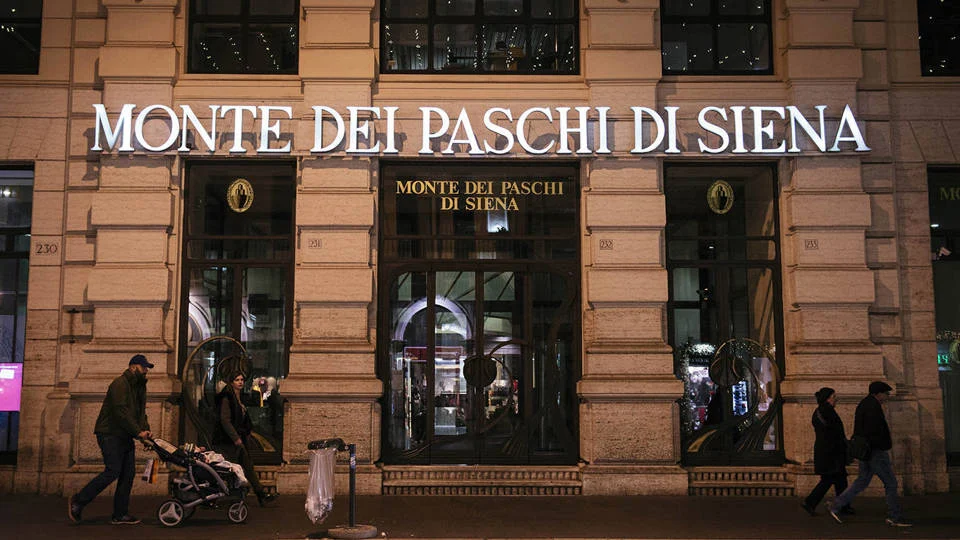
The landscape of European finance was sent into a state of shock this week as Banca Monte dei Paschi di Siena (MPS)—the world’s oldest bank, famously rescued by the Italian state in 2017—executed a maneuver that has rewritten the playbook on corporate defense. In a move that observers are calling a “poison pill with a twist,” the Siena-based lender has responded to a hostile takeover bid from Intesa Sanpaolo by launching its own aggressive, multi-billion-euro acquisition spree.
This high-stakes drama in the heart of Italy’s banking sector serves as a microcosm for the broader, more systemic failures of European financial integration. As EU policymakers continue to push for the surrender of national control in favor of a centralized Banking Union, the MPS saga highlights a more urgent, neglected necessity: the creation of a robust, efficient European financing channel that transcends borders and political protectionism.
Main Facts: A Bold Defiance
On August 20, 2026, the board of directors at Monte dei Paschi di Siena concluded a marathon seven-hour session that culminated in a strategy of unprecedented complexity. Facing a €30.6 billion ($35.7 billion) unsolicited takeover bid from Intesa Sanpaolo—Italy’s largest banking group—the MPS board opted for an aggressive counter-offensive.
Instead of seeking a “white knight” or engaging in traditional defensive negotiations, MPS announced share-exchange offers for two major players: Banco BPM and Banca Generali. The combined value of these counter-bids sits at approximately €34 billion. To further sweeten the deal for its own investor base and complicate the acquisition math for Intesa, the board simultaneously pledged a €4 billion capital distribution to its shareholders.
This strategy effectively turns the hunter into the prey, or at the very least, creates a consolidated entity so complex and expensive to integrate that Intesa’s original bid becomes economically unviable.
Chronology: The Road to the August 20 Decision
The current standoff is the result of months of simmering tension in the Italian financial sector. The chronology of these events underscores the volatility of the current market:
- Early 2026: Speculation mounts regarding the privatization of the Italian state’s remaining stake in MPS. The Treasury signals a willingness to divest, sparking rumors of consolidation.
- July 15, 2026: Intesa Sanpaolo begins discreet inquiries into a potential merger with MPS, aiming to dominate the Italian retail and wealth management landscape.
- August 10, 2026: Intesa Sanpaolo formalizes its €30.6 billion bid. The offer, while generous on paper, is met with skepticism by the MPS board, who fear a massive loss of local identity and operational autonomy.
- August 19, 2026: Leaks reach the market that MPS is preparing a "radical response." European banking stocks dip in anticipation of volatility.
- August 20, 2026: Following seven hours of deliberation, the MPS board officially rejects the Intesa offer and announces the counter-bids for Banco BPM and Banca Generali.
- August 25, 2026: The markets digest the fallout as regulatory bodies in Rome and Frankfurt scramble to assess the systemic risk posed by such a massive reorganization of the Italian banking sector.
Supporting Data: The Cost of Consolidation
To understand the scale of this maneuver, one must look at the numbers. Intesa Sanpaolo’s €30.6 billion bid was predicated on achieving significant cost synergies by streamlining the branch network and centralizing IT infrastructure. However, by launching counter-bids for Banco BPM and Banca Generali, MPS has effectively increased the barrier to entry for any suitor.
- MPS Counter-Bid Value: €34 billion.
- Shareholder Distribution: €4 billion.
- Estimated Capital Ratios: Analysts at major investment firms have expressed concern that the combined debt-to-equity ratios of a merged MPS-BPM-Generali entity could test the patience of the European Central Bank (ECB) regarding capital requirements.
- Market Concentration: If the MPS counter-bid succeeds, the resulting entity would command nearly 25% of the Italian retail banking market, creating a new, formidable challenger to Intesa’s hegemony.
The sheer volume of capital involved suggests that this is not merely a tactical defense, but an attempt to force the Italian government and the ECB to rethink the "too big to fail" framework that has dominated European policy for a decade.
Official Responses and Regulatory Murmurs
The reaction from official channels has been one of cautious silence, masking deep internal concern.
The Italian Treasury, which still holds a significant interest in the outcome, has publicly maintained a neutral stance, emphasizing the need for “market stability.” Privately, however, officials in Rome are reportedly worried that the MPS move could invite unwanted scrutiny from the European Commission regarding state aid rules.
The European Central Bank (ECB), in its role as the primary supervisor for significant banks in the Eurozone, has requested full documentation on the capital adequacy of the proposed MPS counter-bids. A spokesperson for the ECB stated, "We are monitoring the situation closely to ensure that any proposed transaction adheres to the highest standards of prudential oversight and does not endanger the stability of the Eurozone financial system."
Intesa Sanpaolo, for its part, remains publicly defiant. In a statement released shortly after the MPS announcement, the bank’s board noted that their bid remains the most “value-additive” path for the Italian financial system, and they intend to continue their dialogue with regulators.
Implications: The Failure of the Banking Union
The MPS episode is not merely a corporate brawl; it is a symptom of a deeper malaise in European economic policy. For years, the Brussels consensus has focused on the "Banking Union"—a project intended to break the link between national sovereigns and their domestic banks. The goal has been to move toward a more integrated, cross-border system.
However, as the MPS defense shows, banks remain deeply entrenched in national silos. When a bank feels threatened, it does not look for a European partner to merge with; it looks for local assets to acquire, effectively doubling down on national consolidation. This is because the European financial system lacks a truly unified "financing channel."
The Need for a European Financing Channel
The current focus on forcing governments to surrender control over national banking systems is proving to be a blunt instrument. Policymakers are obsessed with the structure of ownership rather than the function of the market.
If Europe had a deep, liquid capital market that allowed for cross-border funding and institutional integration, the necessity for a single national bank to protect its turf through aggressive acquisition would diminish. Instead, we see the opposite: a "fortress banking" mentality that prevents the creation of the very pan-European champions the EU claims to desire.
The Sovereignty Trap
The Italian government is currently trapped between two conflicting pressures: the desire to fully privatize MPS to satisfy EU state-aid mandates, and the political reality that MPS is a systemic pillar of the Italian economy. The bank’s board, by launching these counter-bids, has essentially held the government’s hand. They are arguing that if the state wants to exit, they will do so on their own terms—by creating a larger, more complex, and more "Italian" institution that is even harder to dismantle.
This is a rebuke to the technocratic approach of EU regulators. By focusing on the surrender of sovereignty, the EU has neglected the creation of the market mechanisms—such as harmonized insolvency laws, a unified retail deposit market, and cross-border tax incentives—that would make the integration of banks a natural, market-driven process rather than a forced, political one.
Conclusion: A Turning Point
The coming weeks will be critical. The markets will decide whether the MPS defense is a stroke of genius or a bridge too far. If the counter-bids fail to materialize or are blocked by the ECB, MPS may find itself in an even more vulnerable position. If they succeed, they will have changed the landscape of Italian banking forever, effectively daring the regulators to intervene.
Regardless of the outcome, the lesson for European policymakers is clear: the path to a stable and competitive European banking system does not lie in the forced surrender of national influence. It lies in the patient, difficult work of building a European financing channel that functions as a single market. Until that happens, banks will continue to build moats, and the dream of a truly integrated European financial sector will remain, as it has for so long, just out of reach.
The MPS board, by choosing the path of confrontation, has inadvertently shone a light on the fact that when the European system fails to provide a viable path for growth, the players will return to the only tools they know: the protection of the national sphere. It is time for Brussels to stop fighting for control and start fighting for a functional, integrated market.