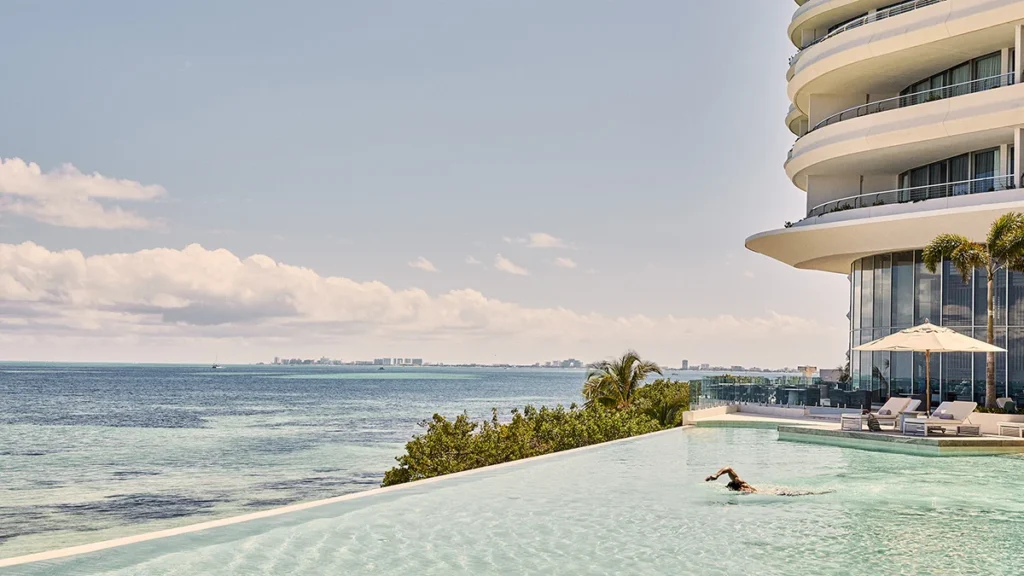
In the burgeoning industry of "biohacking" and longevity science, few names carry as much weight as SHA Wellness Clinic. Following the massive success of its flagship location in Spain’s Costa Blanca, the brand expanded its reach to the pristine coastline of Mexico, just outside Cancún. For the health-obsessed traveler, the promise is seductive: a fusion of cutting-edge Western clinical medicine, ancient Eastern therapeutic traditions, and a rigorous, data-driven approach to slowing the biological clock.
But does the experience live up to the lofty price tag—starting at $9,800 for a week-long stay? For those seeking to optimize their cellular health, the answer is as complex as the protocols themselves.
The Architecture of Wellness: A "Stylish Prison"
Upon arrival at SHA Mexico, the immediate impression is one of clinical exclusivity. The property is a waterfront fortress, characterized by imposing walls and an aesthetic that oscillates between high-end resort luxury and a sterile, high-tech research facility. It is, as some guests affectionately joke, a "stylish wellness prison."
The facility is designed for total immersion. First-time guests are required to commit to a minimum four-night stay, though the "Longevity Track"—the program of choice for those serious about measurable health outcomes—demands at least a week. The demographic is predictably specific: a mix of high-achievers, tech moguls, and health enthusiasts, many of whom are seen wandering the halls in plush white robes or shifting into high-performance activewear for a scheduled yoga session.

The atmosphere is one of deliberate rhythm. The days are structured around a mosaic of appointments, where breakfast on a sun-drenched terrace gives way to a carousel of consultations. By design, the social life here is muted; the focus is singular, internal, and relentlessly scheduled.
Chronology of a Longevity Track
To understand the SHA methodology, one must look at the daily progression. A typical day on the Longevity Track functions like a clinical trial for one’s own body:
- Morning: A focus on digestion and metabolic priming. The day often begins with a specific, nutrient-dense breakfast, consistently accompanied by a cup of miso soup—a staple that many guests find surprisingly addictive for its depth of umami flavor.
- Mid-Day: The "Clinical Mosaic." This is where the heavy lifting occurs. A typical schedule might include IV ozone therapy, designed to oxygenate the blood, followed by a session on the "Human Regenerator" machine, which uses cold atmospheric plasma to theoretically rebalance cellular electromagnetic impulses.
- Afternoon: Recovery and integration. This is the time for "soft" treatments—yoga nidra, lymphatic drainage using the Icoone system, or specialized personal training sessions.
- Evening: Decompression. A quiet, plant-forward dinner, followed by early nights, ensuring that the body’s circadian rhythms are recalibrated by the time the sun rises over the Mexican Caribbean.
The Spectrum of Efficacy: Life-Enhancing vs. Life-Limiting
The efficacy of the treatments provided at SHA can be divided into three distinct categories:
1. Life-Enhancing
The standout performer during the week was the IV ozone therapy. Despite initial skepticism, the results were palpable; the typical mid-afternoon energy slump—a universal human experience—simply vanished. The "Human Regenerator" also provided a surprising benefit, offering a sensation of floating that effectively zapped cortisol levels, even if the primary benefit was a restorative nap.

2. Life-Prolonging
These are the protocols that rely on long-term data. The Oura ring, a wearable staple among guests, often registers the deep relaxation of yoga nidra as actual sleep, proving the efficacy of these sessions in nervous system regulation. The Icoone lymphatic drainage, while requiring the guest to wear an unflattering "skinsuit," provides a deep-tissue massage experience that a human practitioner could rarely replicate with such mechanical precision.
3. Life-Limiting
Not all interventions are created equal. The dietary approach—the "Biolight" diet—is a point of contention. While nutrition is clearly a pillar of longevity, the food often veered into the "stodgy" category. Guests in the heart of the Yucatán, surrounded by fresh, vibrant Mexican produce, were often served heavy, uninspired fare like spelt pizza. Furthermore, some treatments, such as cupping, were described as more akin to a hostile encounter with a professional wrestler than a Zen-like healing modality.
The Logistics Gap: Where Science Meets Service
Despite the world-class medical equipment, the human element of the operation occasionally falters. A recurring issue for guests is the logistical disconnect between the clinical ambition and the operational execution.
For the modern traveler, connectivity is not just a luxury; it is a requirement. Guests frequently work from the facility, yet the scheduling software remains a source of frustration. In one instance, a guest’s pre-arranged schedule—meticulously coordinated with conference calls—was completely overridden upon check-in, leading to hours of administrative friction.

Furthermore, the integration of a "dermaesthetic" specialist into a facility ostensibly focused on deep, internal longevity felt disjointed. When a medical professional attempts to sell Botox and "Cryo Slim" as a way to combat the "stigmas of aging," the mission drifts from holistic health into the opportunistic realm of cosmetic vanity. It raises a valid question: is this a clinic for health, or a spa for the affluent?
Implications for the Future of Wellness
SHA Mexico sits at the center of a growing global movement that seeks to commodify the extension of the human lifespan. The data gathered during these stays—biomarkers, blood panels, and metabolic testing—is incredibly valuable. However, the experience highlights a crucial lesson for the luxury wellness market: high-end medical tech cannot compensate for poor logistical management.
For the serious biohacker, the value of SHA lies in its diagnostic capabilities and the ability to "press reset" on one’s lifestyle. If you go, enter with a clear objective: trust the scientists with your blood work, but trust yourself with your calendar.
Ultimately, the retreat succeeds in its primary goal: providing a sanctuary where the body is treated as a high-performance machine. Whether you choose to return depends on whether you value the scientific rigor of the treatments enough to overlook the occasional operational inefficiency. In the quest for longevity, perhaps the most important skill is learning how to navigate the system without losing your sense of peace.
Quick Facts: The SHA Experience
- Location: Outside Cancún, Mexico.
- Core Philosophy: A fusion of Western clinical medicine and Eastern healing modalities.
- Signature Diet: "Biolight," focusing on nutrient density and digestive health.
- Pricing: Advanced Longevity packages start at $9,800 for a seven-night stay.
- Recommended For: Those looking for a deep-dive, clinical approach to health optimization who can tolerate a highly structured, sometimes rigid environment.