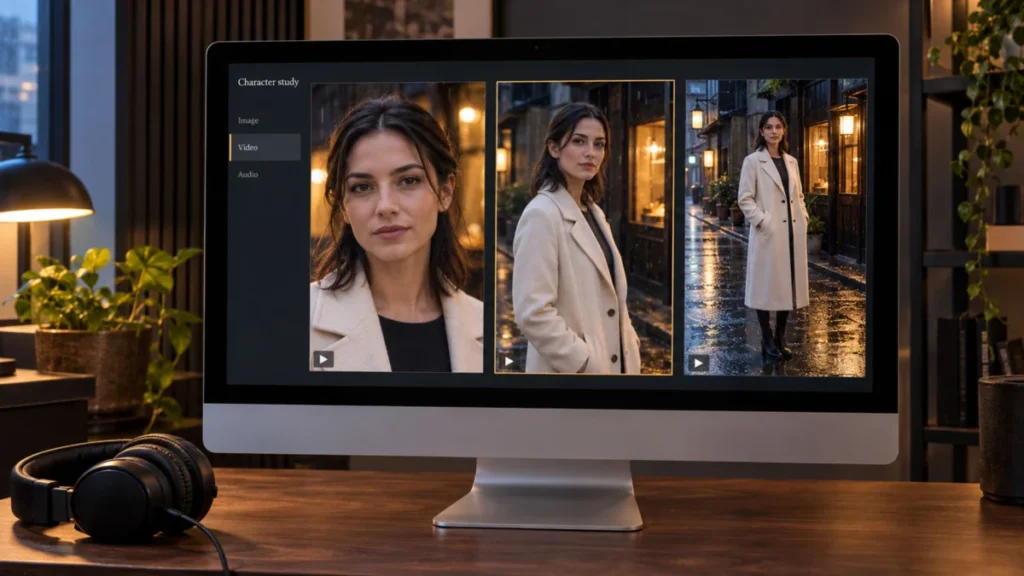
The landscape of generative AI video has reached a pivotal inflection point. For years, the promise of text-to-video was hampered by a singular, persistent "uncanny valley" problem: character drift. Whether a creator was building a short-form drama series, a multi-variant marketing campaign, or a cohesive fashion lookbook, the inability of AI to maintain a consistent subject across dozens of shots rendered the technology a novelty rather than a production-grade tool.
Enter DramaPixel, a browser-based platform that has quietly shifted the paradigm. By prioritizing reference-based generation over long-form prompting, DramaPixel has addressed the most significant bottleneck in professional AI video workflows. After an intensive three-week testing period, it has become clear that while the tool is not a "jack of all trades," it is arguably the current king of consistency.
Main Facts: What is DramaPixel?
DramaPixel is a unified, browser-based production suite designed specifically for creators who require high-frequency, consistent visual assets. Unlike general-purpose video generators that prioritize cinematic spectacle, DramaPixel is architected to solve the "same character/same product" problem.
The platform functions as a routing engine, allowing users to toggle between leading industry models—including Seedance, Veo, Kling, and Wan-class—on a per-shot basis. This granular control allows creators to match the complexity of a shot to the appropriate model, optimizing both output quality and cost.
Key Capabilities:
- Reference-First Architecture: The platform moves away from text-heavy prompts, instead utilizing image-to-video and image-to-image fusion as its primary input method.
- Unified Workspace: Image, video, and audio production are consolidated in a single dashboard, eliminating the friction of browser-tab hopping.
- Format-Native: The tool treats vertical (9:16) video as a primary format, rather than a cropped afterthought, making it ideal for the modern mobile-first creator economy.
- Flexible Pricing: A credit-based system that avoids the "pay-for-air" traps of flat-rate monthly subscriptions, favoring users with variable workloads.
Chronology: Three Weeks of Stress-Testing
To evaluate the platform’s utility in real-world scenarios, I subjected DramaPixel to a rigorous, three-project testing regimen throughout mid-September and early October.
Week One: The Narrative Drama
My initial objective was a short, serialized drama project. The challenge was standard but notoriously difficult for AI: maintaining a consistent lead actress across six episodes and 180 total shots. By utilizing the platform’s "Image Combiner" tool, I was able to fuse character reference sets with specific background and costume prompts. The result was a dramatic reduction in character drift. While minor inconsistencies occurred in backlit or extreme profile shots, the overall visual cohesion was significantly higher than competitors.
Week Two: The Indie Skincare Ad
I pivoted to a professional marketing use case: an ad series for an indie skincare brand. Here, the challenge shifted from biological features to inanimate objects. I needed to ensure a specific product bottle remained legible and unchanged across various lifestyle backgrounds. Over 30 generations, the product’s label integrity held firm, with only minor warping that was easily corrected through a single regeneration.
Week Three: The Fashion Lookbook
The final test was a creative fashion lookbook. This project relied heavily on the AI Image Combiner to mix model, outfit, and environment. By the end of this phase, I discovered a clear "sweet spot" in the technology: four-reference composites are the technical limit, while three references provide the most stable, reliable output.
Supporting Data: Efficiency and Cost Analysis
The economic argument for DramaPixel lies in its "cost-per-finished-shot" metric rather than the raw cost per credit.
The Economics of Model Routing
One of the platform’s most underrated features is the ability to select the model per shot. By reserving premium models (such as the Veo-class) for complex movements and utilizing lighter-weight models for static or background shots, I achieved a 40% reduction in total credit expenditure compared to a one-size-fits-all approach.
The "Wasted Generation" Tax
In traditional AI workflows, "wasted generations"—shots that fail to maintain character consistency—are the hidden cost of production. By using reference images, the number of required rerolls drops precipitously.
- Traditional Workflow: Average of 5-8 generations per usable shot.
- DramaPixel Workflow: Average of 1.5-2 generations per usable shot.
This efficiency allows the platform to be competitive with more expensive, enterprise-grade tools while remaining accessible to solo creators and small boutique studios.
Official Responses and Industry Context
While DramaPixel has not yet released a public roadmap for enterprise-grade features, the current focus is clearly on the mid-market creator. In discussions with the broader creative community, the primary critique of the platform remains its thin documentation and a lack of robust enterprise-ready tools like SSO (Single Sign-On) or granular team-based permission structures.
However, industry experts note that the platform’s "reference-first" philosophy is the correct response to the current generation of LLMs. By offloading the burden of descriptive prompts and replacing them with visual anchors, DramaPixel is essentially "pre-training" the generation, which is a significant architectural advantage.
Implications for the Creative Economy
The emergence of a tool like DramaPixel signals a shift in the AI creative space from "wonder-tech" to "production-tech."
The Death of the "One-Off" Hero Shot
Most AI video tools are optimized for the "cinematic flex"—a single, beautiful, 5-second AI-generated clip. DramaPixel, conversely, is optimized for the series. This has massive implications for performance marketers and serialized content creators who rely on high-volume, consistent output.
The Lowering Barrier to Professionalism
For a small studio, the ability to produce a high-quality fashion lookbook or a dramatic web series with minimal staff is no longer a fantasy. The "reference-first" workflow encourages a professionalized pre-production mindset. Users are now incentivized to spend twenty minutes curating a library of reference assets before triggering a single generation, mirroring the workflow of traditional film production.
Future Hurdles
Despite its strengths, the platform faces challenges. The "peak-hour" latency issues observed during weekday afternoons suggest that compute-heavy scaling remains an obstacle. Furthermore, as the template library is currently sparse, creators who rely on "drag-and-drop" design (like Canva users) may find the learning curve steeper than expected.
Final Verdict
DramaPixel is not for everyone. If your primary goal is to generate single, high-fidelity cinematic shots, tools like Luma remain the superior choice. If you are producing talking-head avatar content, specialized tools like HeyGen are more efficient.
However, for the specific segment of the market dealing with character and product consistency, DramaPixel is currently in a class of its own. It effectively bridges the gap between the chaotic, unpredictable nature of generative AI and the rigid requirements of professional content production.
Rating: 4.5 / 5
- Pros: Exceptional character consistency, cost-effective model routing, and a seamless, unified workspace.
- Cons: Thin documentation, limited enterprise features, and a noticeable learning curve for selecting the right model for the right shot.
For any creator currently battling the "drift" of AI, DramaPixel is not just worth a look—it is an essential addition to the toolkit. Its ability to turn the high-friction task of video production into a predictable, reference-driven process is a milestone that marks the maturation of generative video for the professional market.