Main Facts: A $40 Million Autumnal Offering at Christie’s
William “Bill” Koch, the billionaire industrialist, America’s Cup champion, and one of the world’s most prolific polymath collectors, is preparing for another significant liquidation of his vast holdings. Christie’s auction house announced this week that Koch will offer a curated selection of European and Latin American masterpieces during its prestigious November marquee sales in New York. The collection, which features seminal works by Impressionist and Modern masters including Claude Monet, Paul Cézanne, and Henri Matisse, is conservatively estimated to fetch in excess of $40 million.
This upcoming auction represents a pivot in Koch’s selling strategy. While his previous high-profile sales focused on the rugged aesthetics of the American West and the refined world of oenology, this latest group dives into the heart of 19th- and 20th-century avant-garde movements. Leading the consignment are two formidable works by Monet and Cézanne, each carrying an individual high estimate of $18 million. These pieces are not merely decorative assets; they are cornerstone examples of the artists’ most celebrated periods, having resided in Koch’s private collection for nearly four decades.
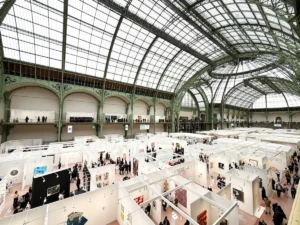
The sale will be distributed across three of Christie’s primary categories: the 20th Century Evening Sale, the Impressionist and Modern Art Day Sale, and the Works on Paper Sale. This tiered approach ensures that Koch’s holdings will anchor the auction house’s "Marquee Week," a period when the global art elite descends upon Manhattan to gauge the health of the high-end art market.
Chronology: A Multi-Year Liquidation Strategy
The November announcement is the latest move in what appears to be a systematic and highly lucrative "housecleaning" of Koch’s diverse portfolio. Over the past two years, the 85-year-old billionaire has engaged in a series of high-stakes divestments that have redefined the landscape of private collections coming to market.
- June 2025: The Oenological Purge. The cycle of major sales began in earnest during the summer of 2025 when Christie’s handled "The Cellar of William I. Koch." The auction of his legendary wine collection realized a staggering $28.8 million. Koch, famously known for his successful pursuit of wine counterfeiters, proved that his own provenance was beyond reproach, as buyers competed fiercely for rare vintages.
- January 2026: The American West Auction. Following the success of the wine sale, Koch turned his attention to his unparalleled collection of Western American art. In a single evening at Christie’s, he parted with $84 million worth of artworks, including iconic depictions of the frontier. The sale exceeded expectations, signaling a robust appetite for historical Americana with blue-chip provenance.
- January 2025 – July 2026: The Aspen Real Estate Saga. Parallel to his art and wine sales, Koch has been attempting to offload one of his most significant physical assets: Elk Mountain Lodge. The 52-acre estate in Aspen, Colorado, was initially listed for $125 million in early 2025. After the property failed to secure a buyer at that price point, Koch demonstrated a pragmatic willingness to meet the market, slashing the price to $99 million and moving the property to an auction format in July 2026.
- November 2026: The Impressionist and Modernist Turn. The upcoming November sales represent the fourth major pillar of Koch’s divestment plan, bringing his total realized and estimated sales from art and wine alone to over $150 million within a 24-month window.
Supporting Data: The Masterpieces Under the Hammer
The strength of the November offering lies in the historical significance and impeccable provenance of the individual lots. Christie’s has released detailed data on the primary works, showcasing a collection built on scholarly appreciation rather than mere speculation.
The Monet Landscape
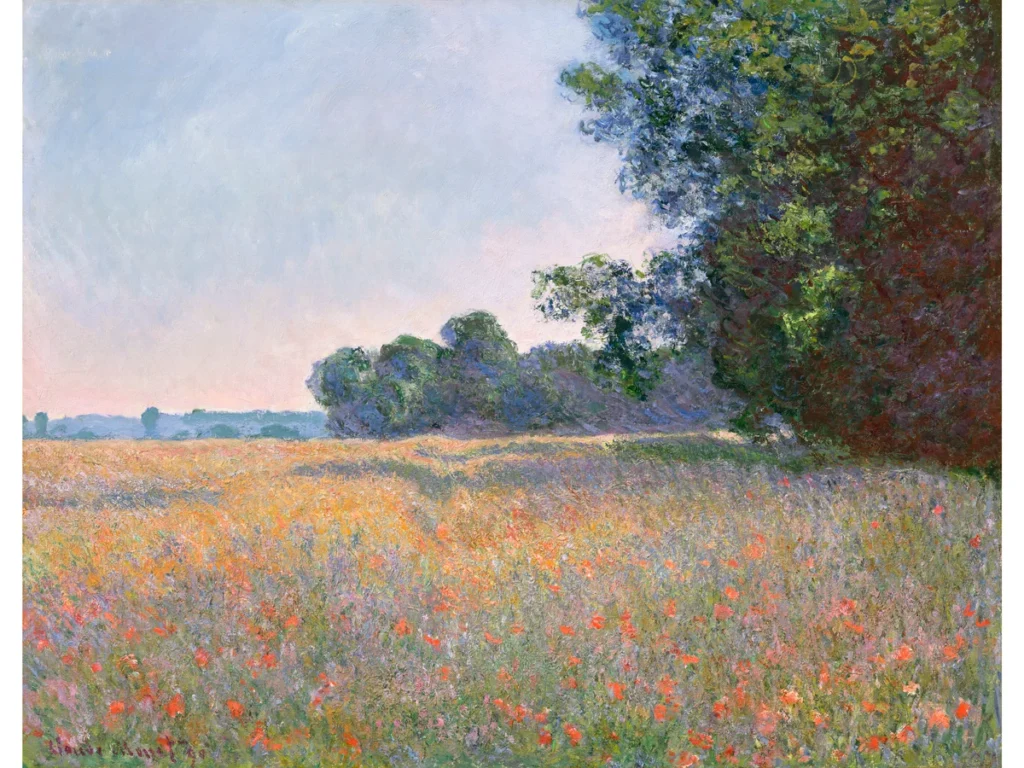
The undisputed star of the group is Claude Monet’s Champ d’avoine et coquelicots (1890). Painted during a pivotal year for the artist—just as he was beginning his famous "Series" paintings—this landscape captures a field of oats and poppies near his home in Giverny. Koch acquired the work in 1985, a period of significant growth for his collection. The painting’s estimate of $12 million to $18 million reflects its status as a quintessential Monet, characterized by the fleeting play of light and vibrant color that defined Impressionism.
The Cézanne Still Life
Sharing top billing is Paul Cézanne’s Tasse, verre et fruits (ca. 1877). This still life is a masterclass in the geometric reduction of form that would later inspire the Cubist movement. Featuring a carefully balanced arrangement of apples, a cup, and a glass, the work has been in Koch’s possession since 1986. Christie’s has matched its estimate to the Monet at $12 million to $18 million, highlighting the rarity of such high-quality Cézanne works appearing on the open market.
Modernist Highlights
Beyond the two lead lots, the collection includes:
- Henri Matisse: Jeune femme fardée à l’orientale (La bayadère) (1929). A nude inspired by the classical ballet, estimated at $5 million to $7 million.
- Edgar Degas: Scène de ballet. A pastel over monotype with a storied history, having been purchased directly from the artist by Philadelphia collector Annie Riddle Scott on the advice of Mary Cassatt. It carries an estimate of $3 million to $5 million.
- Diego Rivera: Vendedora de flores en Xochimilco (1929). A significant Latin American work estimated at $2.5 million to $3.5 million.
- Joan Miró: Peinture (1950). A mid-century surrealist work also estimated at $2.5 million to $3.5 million.
Official Responses: Koch and Christie’s on the Record
Despite the massive scale of these sales, Bill Koch has maintained a tone of philanthropic sharing rather than financial necessity. In an official statement released through Christie’s, Koch reflected on his journey as a collector.

"I feel very fortunate that with hard work, business success, and a great deal of luck, I have been able to collect things that resonate with me," Koch stated. "The masterpieces in this sale are among my favorites. My hope is that art lovers around the world can take the same enjoyment as I have, in collecting these works… my hope is that collectors will find something that speaks to their passion and that they are able to share it with their friends and loved ones."
Christie’s has echoed this sentiment, positioning the sale as a landmark event. A spokesperson for the auction house noted that the "lucrative relationship" between Koch and Christie’s is built on the billionaire’s reputation for quality. "Both the wine and Western art sales exceeded expectations," the house remarked, suggesting that the "Koch provenance" has become a value-added brand in the auction room.
While observers have speculated on the reasons for this rapid deaccession—ranging from estate planning at age 85 to a simple desire for a more minimalist lifestyle—neither Koch nor his representatives have confirmed a specific motivation beyond the desire to see the works move into new hands.
Implications: The "Great Wealth Transfer" and Market Stability
The Koch sales serve as a microcosm of a larger trend currently sweeping the high-end art market: the "Great Wealth Transfer." As a generation of legendary collectors reaches their 80s and 90s, massive, museum-quality collections are returning to the market. This influx of supply can be a double-edged sword, providing rare opportunities for new buyers while testing the depth of the market’s liquidity.
Koch’s decision to sell through Christie’s, rather than via private treaty sales, indicates a confidence in the public auction model. By placing these works in the "Marquee" evening sales, he is betting that the competitive atmosphere of the auction room will drive prices toward—or beyond—their high estimates.
Furthermore, the diversity of the works being sold—from 19th-century French landscapes to 20th-century Mexican muralist paintings—reflects a shift away from "siloed" collecting. Today’s top-tier collectors often seek cross-category masterpieces, and the Koch collection provides exactly that.
For the broader market, the successful sale of the Koch Monet and Cézanne would signal that despite global economic fluctuations, there remains a solid "floor" for blue-chip Impressionist and Modernist works. As the art world looks toward November, all eyes will be on the 85-year-old industrialist to see if his "housecleaning" will once again set new benchmarks for the industry.
Ultimately, the dispersal of the Bill Koch collection marks the end of an era for one of America’s most storied private holdings. Whether motivated by a desire to simplify his estate or a genuine wish to share his "favorites" with a new generation, Koch’s strategic exit is being executed with the same precision that won him the America’s Cup: with an eye on the wind, a firm hand on the tiller, and an unwavering focus on the finish line.