The Mineral and the Masterpiece: Tiffany & Co.’s Archival Treasures Meet American Art at Crystal Bridges
By
•
October 23, 2026
A landmark exhibition in Bentonville, Arkansas, unites rare native gemstones, historic jewelry, and masterworks of American painting to examine how the natural world shaped the nation’s aesthetic identity.
Main Facts: A Historic Confluence of Luxury and Landscape
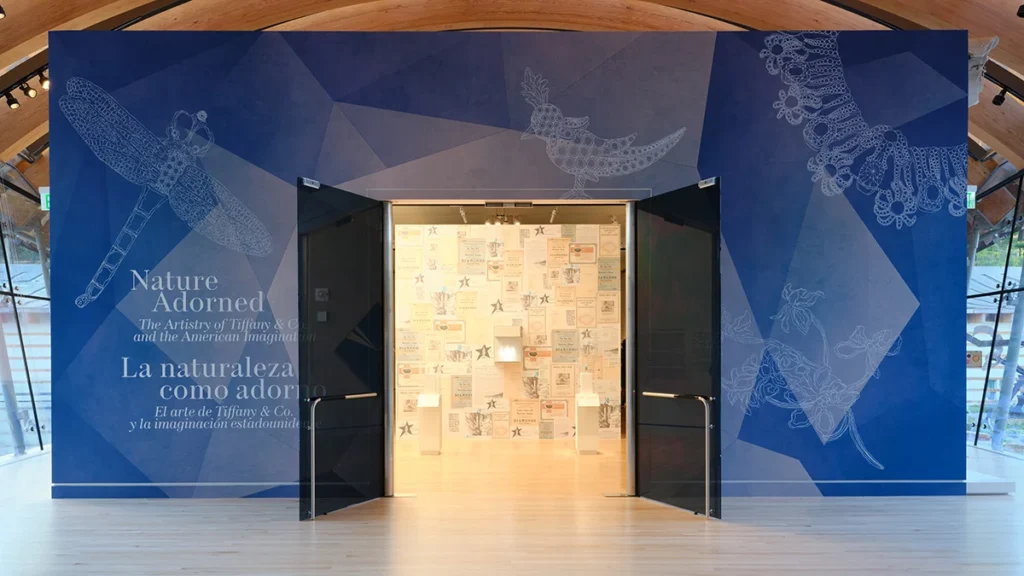
In a major institutional collaboration between an American luxury house and one of the nation’s preeminent art institutions, the Crystal Bridges Museum of American Art in Bentonville, Arkansas, has unveiled Nature Adorned: The Artistry of Tiffany & Co. and the American Imagination. Running through March 29, 2027, the comprehensive exhibition re-examines more than a century of American design by placing high jewelry, rare archival lapidary creations, and historic decorative objects in direct dialogue with canonical works of American painting and sculpture.
Founded in 2011 by philanthropist Alice Walton, daughter of Walmart founder Sam Walton, Crystal Bridges has steadily reshaped the geography of American cultural philanthropy by situating world-class collections within the rolling hills of the Ozarks. With Nature Adorned, the museum turns its lens toward the decorative arts, drawing dozens of historic masterworks from the Tiffany & Co. Archives in New York. The objects on display span an evocative historical corridor from 1885 through 1987—a period during which the American luxury firm not only defined national tastes but also challenged European decorative hegemony.
Crucially, the exhibition emphasizes material provenance, specifically the domestic discovery of precious and semi-precious stones. At the center of the installation is the celebrated Arkansas Diamond, a 27.21-carat rough gemstone discovered in the state’s interior in the early 20th century and later acquired by Tiffany & Co. By pairing such geological wonders with late 19th- and 20th-century landscape and still-life paintings from the Crystal Bridges permanent collection, the exhibition investigates how raw natural topography became the foundational iconography of American luxury.
In keeping with Crystal Bridges’ founding charter to democratize cultural heritage, Nature Adorned is open to the public without admission fees or ticketing barriers—an uncommon gesture for an exhibition containing some of the most historically valuable jewelry objects in North America.
Chronology: From Frontier Gemstones to Mid-Century Modernity
To understand the scope of Nature Adorned, curators have organized the narrative around key moments of artistic and mineralogical transformation spanning nearly 150 years.
+---------------------------------------------------------------------------------------+
|                                    HISTORIC TIMELINE                                  |
+---------------------------------------------------------------------------------------+
| 1837: Charles Lewis Tiffany establishes Tiffany & Young in New York City.             |
| 1879: Gemologist George Frederick Kunz joins Tiffany, championing domestic minerals.  |
| 1889: George Paulding Farnham unveils enameled orchid brooches at Paris Exposition.    |
| 1890s–1910s: Clara Driscoll & Agnes Northrop pioneer Tiffany Studios leaded glass.    |
| 1926: The 27.21-carat Arkansas Diamond is unearthed on a farmland tract near Searcy.   |
| 1946: Tiffany & Co. officially acquires the Arkansas Diamond for its permanent archive.|
| 1956: Jean Schlumberger joins Tiffany, launching a new era of sculptural naturalism.  |
| 1965: Schlumberger introduces the iconic "Bird on a Rock" mounting.                   |
| 2026: Crystal Bridges and Tiffany & Co. debut "Nature Adorned" in Bentonville.        |
+---------------------------------------------------------------------------------------+
The Turn-of-the-Century Realism (1885–1915)
The late 19th century represented a profound pivot in American decorative arts. While the Gilded Age had previously looked eastward toward Parisian ateliers and London jewelers for aesthetic cues, Tiffany & Co. deliberately pivoted toward the frontier. With the appointment of legendary mineralogist George Frederick Kunz in 1879, the house began acquiring native stones—Montana sapphires, Maine tourmalines, and Mississippi River pearls. This era culminated in the groundbreaking work of head jewelry designer George Paulding Farnham, whose hyper-realistic enameled orchid brooches swept the 1889 Exposition Universelle in Paris, announcing American botanical design as a sovereign creative movement.
The Mid-Century Reinvention (1956–1987)
Following the economic dislocations of the Great Depression and World War II, Tiffany underwent a mid-century creative renaissance spearheaded by French-born designer Jean Schlumberger. Arriving at the Fifth Avenue flagship in 1956, Schlumberger introduced whimsical, dynamic interpretations of flora and fauna. His sculptural work, defined by vivid colored gemstones set in intricate yellow gold and platinum armatures, pushed naturalism into modern abstraction. The archival pieces presented at Crystal Bridges trace this evolution up to the late 1980s, illustrating how nature transitioned from empirical scientific cataloging into expressive, narrative art.
Supporting Data: Gemology, Provenance, and Curatorial Pairings
The curatorial structure of Nature Adorned relies on thematic juxtapositions between fine art and decorative mastery. Rather than isolating jewelry inside freestanding, neutral display cases, the exhibition integrates archival vitrines directly beside museum paintings to demonstrate shared cultural and philosophical impulses.
Curatorial Pairings and Highlighted Objects
Jewelry / Decorative Masterwork
Artist / Fabricator
Paired Fine Art Masterwork
Curatorial Connection
Enameled Orchid Brooches (ca. 1889)
George Paulding Farnham
Martin Johnson Heade, Orchids and Passion-Flowers
Botanical hyper-realism and scientific cataloging of exotic flora during the Gilded Age.
The Arkansas Diamond (27.21 Carats, rough)
Discovered 1926, Acquired 1946
19th-Century Hudson River School Landscapes
The raw, unworked American wilderness as a repository of immense natural and mineral wealth.
Stained-Glass Mountainscape
Tiffany Studios (Attributed to Agnes F. Northrop)
William Jacob Hays Sr., Wildlife and Wilderness Studies
The translation of rugged American light and topography into revolutionary art glass.
The manipulation of domestic interior light mimicking the natural diffusion of twilight.
The Gemological Significance of the Arkansas Diamond
Foremost among the geological specimens on view is the Arkansas Diamond. Unearthed in 1926 near Searcy, Arkansas, the uncut 27.21-carat stone remains one of the largest gem-quality diamonds ever retrieved from North American soil. At the time of its emergence, commercial diamond mining in the United States was largely considered nonviable compared to the prolific volcanic pipes of South Africa.
Tiffany & Co.’s purchase of the stone in 1946 underscored an institutional philosophy that prioritized mineral provenance over mere commercial cut-weight. Maintained in its rough octahedral formation rather than being cleaved and faceted for sale, the stone serves as an emblem of geological pride for Arkansas—making its display at Crystal Bridges a homecoming of profound regional significance.
The Role of Women Designers at Tiffany Studios
The exhibition also shines a light on historical attribution within Tiffany Studios, highlighting the work of Agnes F. Northrop and Clara Driscoll. For decades credited solely to Louis Comfort Tiffany, archival scholarship over the past two decades has established that Driscoll led the "Tiffany Girls"—the women’s glass-cutting department responsible for defining lamp designs like the Dragonfly and Wisteria. In Nature Adorned, a Driscoll-designed table lamp and a sweeping landscape window attributed to Northrop are presented not merely as decorative furnishings, but as technical masterpieces of color theory, utilizing opalescent, drapery, and mottled glass to capture atmospheric moisture and shifting terrain.
Official Responses: Curatorial and Institutional Perspectives
Curators from both institutions emphasized that Nature Adorned is not a conventional historical retrospective, but rather an aesthetic inquiry into how material wealth and artistic ambition coalesced around the concept of nature.
Victoria Reynolds, Chief Gemologist and Vice President of High Jewelry Diamond and Gemstone Acquisition at Tiffany & Co., highlighted the historical bridge between geographic exploration and gemological artistry:
“I hope visitors appreciate how the American landscape inspired Tiffany’s enduring vision of color artistry, artfully curating American-origin gemstones, exceptional jewelry, and artistic works that reflect the nation’s natural grandeur. This exhibition honors our legacy of sourcing native minerals and transforming the organic majesty of the continent into objects of timeless technical precision.”
From the host institution, Jen Padgett, Crystal Bridges’ Windgate Curator of Craft, underscored the importance of dissolving rigid hierarchies between the fine arts and decorative craftsmanship:
“This exhibition reveals the power of seeing the Tiffany Archives and Crystal Bridges collection in conversation. Through this collaboration, we can highlight the remarkable creativity, attention to materials, and skilled making that have shaped American art and design across generations. When you place a Paulding Farnham brooch beside a Martin Johnson Heade canvas, the boundaries between the fine artist and the master jeweler completely evaporate; both were responding to the same cultural fascination with natural history, preservation, and light.”
Implications: Cultural Tourism, Archive Modernization, and the Democratization of Luxury
The debut of Nature Adorned carries notable ramifications for the museum landscape, luxury brand heritage, and cultural tourism in the American heartland.
Redefining the Geography of High Culture
Historically, major exhibitions of archival high jewelry have been concentrated within traditional global capitals—Paris, London, New York, and Tokyo—frequently staged at institutions such as the Musée des Arts Décoratifs, the Victoria and Albert Museum, or the Metropolitan Museum of Art. By hosting an exhibition of this caliber in Bentonville, Crystal Bridges reinforces the decentralization of the American art world. Since its 2011 inauguration, the museum has demonstrated that regional institutions, when backed by substantial philanthropic vision and endowments, can attract elite corporate and private loans once reserved for metropolitan coastal hubs.
The Strategic Value of Corporate Heritage Archives
For Tiffany & Co., owned since 2021 by French luxury conglomerate LVMH Moët Hennessy Louis Vuitton, the collaboration underscores a broader strategy of leveraging historic archives to reinforce brand equity. In an era where modern luxury consumers increasingly seek authenticity and heritage, Tiffany’s ability to highlight a continuous 160-year lineage of American craft offers a powerful narrative counterweight to European heritage houses. By showcasing historic mineral acquisitions like the Arkansas Diamond, the brand reaffirms its foundational identity as America’s premier jeweler.
Democratizing Access to Historic Design
Perhaps the most striking aspect of the exhibition is its accessibility model. High jewelry exhibitions frequently command premium ticket surcharges. Crystal Bridges’ decision to integrate Nature Adorned into its admission-free model aligns with Alice Walton’s founding vision: removing economic barriers to high culture for rural and underserved audiences. Visitors traveling from across the Ozark region and beyond can experience museum-grade jewelry scholarship, geology, and fine art without a fee.
Ultimately, Nature Adorned: The Artistry of Tiffany & Co. and the American Imagination establishes that the stones beneath the American soil and the flora blooming across its wetlands did more than fuel industrial expansion—they provided an aesthetic vocabulary that forever altered the course of decorative design.