“You’ve been wearing more suits lately,” a colleague remarked to me a couple of years ago. His tone was a blend of genuine curiosity and mild bewilderment, as if he had just watched a lifelong vegetarian sit down to a medium-rare steak.
He wasn’t wrong. For the better part of a decade, my office wardrobe had been defined by a aesthetic I affectionately dubbed "middle-aged skater." It was a uniform of reliable, low-stakes comfort: plaid overshirts, crisp white tees, relaxed-fit trousers, and worn-in sneakers. It was a cycle of ease that required zero cognitive load each morning.
I still reach for that comfort on occasion, but the shift toward tailoring has been deliberate. When asked why, I initially offered the pragmatic answer: it’s a uniform. You slip it on, you don’t have to wonder if your pants match your shirt, and you look put-together. But that was only a partial truth. The deeper reality is that, in a world dominated by the "casual Friday" ethos, the act of putting on a suit has evolved from a professional requirement into a private act of rebellion.
The Evolution of the American Silhouette
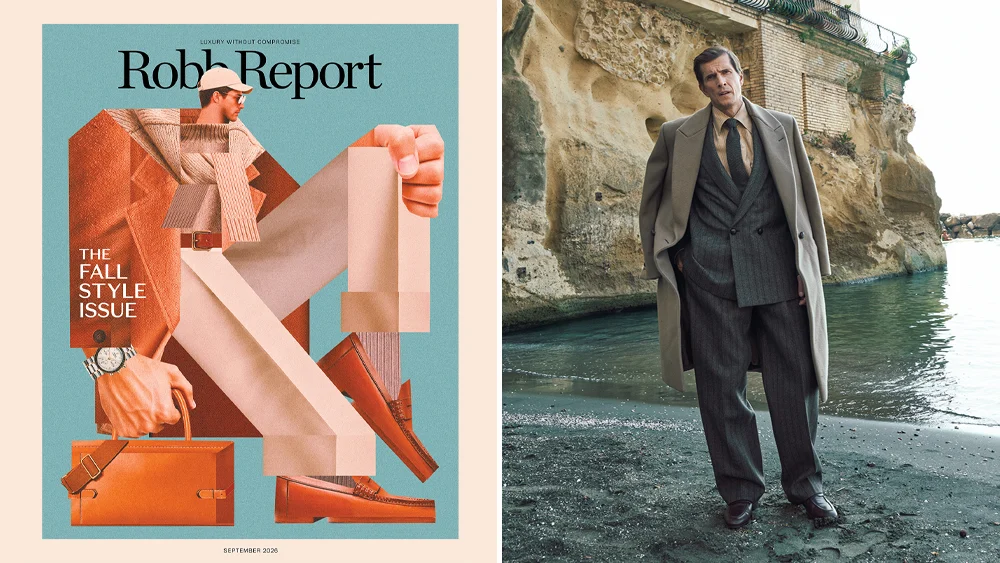
For those of us raised on the West Coast, where a clean T-shirt often qualifies as formal wear and board shorts are treated as a year-round state of mind, the suit once felt like a costume. However, as I delved into Eric Twardzik’s recent Robb Report feature, "Measure of a Nation," a quote from Ryan Devens, founder of San Francisco’s Tailors’ Keep, resonated with me: "The suit is a rebellious garment."
In an era where "business casual" has devolved into "sweatpants-adjacent," wearing a structured jacket on a Tuesday isn’t just about looking sharp—it’s a subversive statement. It is a refusal to blend into the sea of technical fabrics and athleisure. The suit is no longer mere office furniture; it has become theatrical, louche, and unapologetically personal.
A New Taxonomy of Style
The current landscape of American tailoring is defined by its lack of a singular "American" look. Unlike the rigid traditions of Savile Row, domestic makers are pulling from a global tapestry of influences, creating something entirely new.
- J. Mueser (New York): By synthesizing the soft, unstructured Neapolitan aesthetic with global construction techniques, Mueser creates a look that is distinctly urban and downtown. It is the suit for the man who wants to look tailored, not stiff.
- Haitch (USA): Moving toward a more architectural silhouette, Haitch leans into elongated jackets and bold, squared-off shoulders, providing a visual counterweight to the "soft" trend.
- Angel Ramos: A master of the crossover, Ramos blends the relaxed ease of Southern Italy with the cinematic bravado of Golden Age Hollywood, proving that tailoring can be both comfortable and commanding.
- Richfresh: Perhaps the most radical of the bunch, Richfresh applies the high-level language of bespoke craftsmanship to unlikely materials, such as scuba fabric, creating color-blocked tracksuits that challenge the very definition of a "suit."
Chronology of a Wardrobe Shift
The journey toward this renaissance didn’t happen overnight. It is the result of a decade-long reaction against the hyper-casualization of the 2010s.
2012–2016: The Peak of Tech-Casual
During this period, the "Silicon Valley uniform"—hoodies, vests, and tech-fleece—became the global gold standard. Tailoring was largely relegated to weddings and funerals.
2017–2020: The "Soft Suit" Emergence
Designers began experimenting with deconstructed tailoring. The canvas was removed, the shoulder pads were discarded, and the suit became something you could wear with a sneaker. This bridged the gap for the "skater-style" crowd.
2021–2023: The Great Return to Structure
Following the prolonged lockdowns of the pandemic, a psychological shift occurred. People became tired of the comfort-first wardrobe. The suit became a symbol of intentionality—a way to reclaim a sense of order and ceremony in a chaotic world.
2024–Present: The Era of Personal Expression
We are currently in a phase where the "rules" of menswear have effectively vanished. A man is just as likely to wear a bespoke blazer with high-end knitwear as he is to wear a full three-piece set. The focus has shifted from "dressing for the office" to "dressing for oneself."

Data: The Market’s Response to Tailoring
While the casual-wear market remains saturated, high-end bespoke and made-to-measure services have reported consistent growth among younger demographics (ages 25–40). According to luxury fashion index reports, searches for "tailored coats" and "bespoke suits" have seen a 22% year-over-year increase.
This growth is driven by a desire for longevity. In a world of fast fashion, the bespoke suit represents the antithesis of disposability. A well-made jacket, cared for properly, can last for decades. This shift in consumer mindset—from volume to value—is a key driver in the success of independent American tailors.
Global Influence: The Neapolitan Legacy
While we celebrate the American frontier of tailoring, we cannot ignore the source of much of the modern "soft" movement: Naples. Our current fall fashion portfolio explores the Italian commitment to sprezzatura—a studied carelessness.
The Neapolitan approach is defined by its lack of rigidity. The jackets are light, the shoulders are "natural," and the drape is effortless. This is not about the "power suit" of the 1980s; it is about an elegance that feels as natural as wearing a shirt. This influence has permeated everything from high-end boutiques to entry-level menswear, proving that even as American tailors innovate, they remain indebted to the masters of the Mediterranean.
The Rise of Statement Knitwear
As the suit jacket reclaims its place in the rotation, the role of the undershirt is undergoing a radical transformation. We are seeing a move away from the traditional dress shirt toward "statement knitwear."
Designers like Louis Vuitton, Kiton, and Canali are pushing the boundaries of what a sweater can be. By utilizing bold graphics, oversized patterns, and vibrant color-blocking, these pieces are no longer designed to be hidden under a blazer. They are built to be the focal point of an outfit. The Fair Isle and Nordic patterns of the past have been modernized with high-contrast palettes, turning the humble sweater into a piece of wearable art.
Implications: The Death of the "Uniform"
The most profound implication of this sartorial shift is the death of the "universal uniform." For decades, menswear was dictated by a singular hierarchy: the suit for work, the chinos for the weekend, the gym gear for the workout.
Today, that hierarchy is collapsed. The modern man feels empowered to mix the high with the low. He might wear a bespoke jacket with a technical performance trouser, or a high-fashion graphic sweater with tailored wool trousers.
This is the ultimate expression of personal freedom. The "rebellion" that Ryan Devens spoke of isn’t just about wearing a jacket; it’s about the autonomy to curate one’s identity. When you choose to wear a suit, you are no longer doing it because your boss or society demands it. You are doing it because you choose to participate in a tradition of elegance, even if you’re pairing it with a pair of beat-up sneakers.
Conclusion
Whether you are a newcomer to the world of tailoring or a seasoned veteran, the current landscape offers more variety, creativity, and craftsmanship than ever before. American menswear is no longer obsessed with "getting it right" according to old-world European standards; it is obsessed with "getting it right" for the individual.
The next time you stand before your closet, consider the suit. It is a garment of history, yes, but it is also a garment of the future—one that allows you to stand out in a world that is all too happy to have you blend in. As we move into the fall season, let your clothing reflect that intentionality. Wear the jacket. Wear the bold sweater. Dress like you mean it.