Every Broadway season seems to possess that one singular production—a theatrical event that transcends mere entertainment to become a cultural mandate. It is the show that dominates dinner party conversations and makes empty seats a rarity. This autumn, that mantle is claimed by the highly anticipated, star-studded return of Aaron Sorkin’s A Few Good Men.
Returning to the boards at the Lincoln Center Theater (LCT) for a strictly limited 13-week engagement, the production marks a profound homecoming for the play that launched Sorkin’s meteoric career. With a cast led by the magnetic Tom Blyth and the legendary Bradley Whitford, under the visionary direction of six-time Tony Award winner Michael Arden, the production is already shaping up to be the definitive courtroom drama of the decade.
The Main Facts: A Modern Take on a Classic
The narrative arc of A Few Good Men remains as razor-sharp and socially resonant as it was upon its 1989 debut. The play centers on the court-martial of two U.S. Marines charged with the murder of a fellow soldier, a case that uncovers a harrowing web of institutional corruption and the dangerous gray areas between blind obedience and moral integrity.
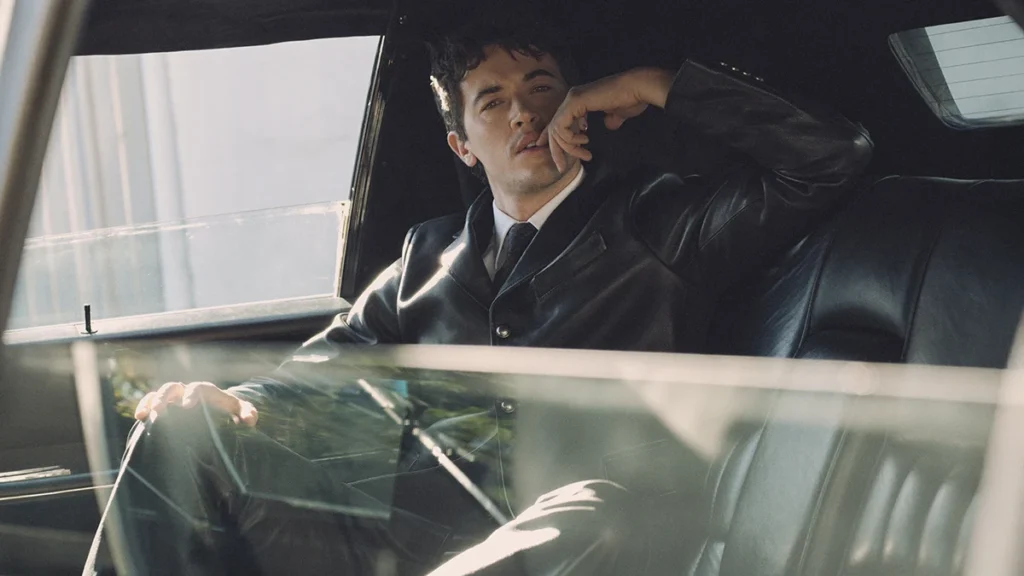
Stepping into the boots of Lt. Daniel Kaffee—a role immortalized by Tom Cruise in Rob Reiner’s 1992 film adaptation—is British rising star Tom Blyth. Blyth, known for his compelling performance as Coriolanus Snow in The Hunger Games: The Ballad of Songbirds & Snakes, brings a fresh, kinetic energy to the role of the sharp-tongued, cynical attorney. He is joined by Emmy Award winner Bradley Whitford, who tackles the formidable Col. Nathan Jessep. Whitford, a veteran of Sorkin’s The West Wing and a powerhouse in The Handmaid’s Tale, brings a deep, personal history to the production; he appeared in the original 1989 Broadway cast, playing both Lt. Jack Ross and later, Kaffee himself.
This intersection of legacy and modern stardom represents a growing trend on the Great White Way: the marriage of established, high-caliber Hollywood talent with the gritty intimacy of live theater. It is a formula that guarantees buzz, but in the case of this revival, the artistic pedigree suggests a production that will offer substance to match its star power.
A Chronology of a Masterpiece
To understand the gravity of this revival, one must look at the trajectory of A Few Good Men. The play served as Aaron Sorkin’s breakthrough, written on napkins while he was working as a bartender at the Palace Theatre. Its success catalyzed a career that would redefine television and film dialogue.
- 1989: The play premieres on Broadway at the Music Box Theatre, starring Tom Hulce as Kaffee and Stephen Lang as Jessep. It is an immediate critical success, earning a Tony nomination for Best Play.
- 1992: The feature film adaptation, directed by Rob Reiner and written by Sorkin, hits theaters. With Jack Nicholson’s iconic “You can’t handle the truth!” monologue, it becomes a permanent fixture in American pop culture.
- 2026 (October 8): The LCT revival officially begins previews, signaling a new era for the script.
- 2026 (October 29): The official Opening Night, an event expected to draw the industry’s most prominent figures.
- 2027 (January 10): The final scheduled performance, marking the end of a whirlwind 13-week run.
Supporting Data: The Economics of Broadway Stardom
The theatrical landscape has shifted significantly in the post-pandemic era. Data from the Broadway League suggests that while general attendance is recovering, the "star-vehicle" model is the most consistent driver of premium ticket sales.

For A Few Good Men, the demand is already reflecting this trend. Center-orchestra seats at the Vivian Beaumont Theater are currently commanding prices in excess of $300, with secondary market projections suggesting that as the show approaches its closing date, these prices could climb significantly higher.
The production’s budget, while not publicly disclosed in granular detail, is rumored to be one of the highest for a non-musical play this season. This is attributed to the complex, revolving set design led by director Michael Arden, whose previous works—including Spring Awakening and Parade—are renowned for their immersive, high-concept aesthetics. Arden’s ability to modernize classic texts without losing their original punch is likely what secured the interest of high-profile backers for this LCT run.
Official Perspectives: The Director’s Vision
In a recent press statement, Michael Arden discussed the decision to revisit a script that many consider "perfectly formed."
"We aren’t trying to rewrite Sorkin," Arden noted. "We are trying to excavate the truth that exists between the lines of his dialogue. The world has changed drastically since 1989, and the power dynamics within the military and the courtroom are perceived through a different lens today. Tom Blyth and Bradley Whitford bring a tension to the stage that feels entirely contemporary. It’s not just about the iconic lines; it’s about the human cost of the ‘truth’ we are all so desperate to handle."
Bradley Whitford, in a separate interview, reflected on his return to the material. "There is a strange, circular beauty in coming back to this play after nearly four decades. When I was in the original cast, I was the young guy trying to find his footing. Now, playing Jessep, I’m the weight that the young guy has to push against. The script hasn’t aged a day—which is both a compliment to Sorkin and a commentary on the endurance of the themes he explores."
Implications for the Theater Industry
The success of this production carries significant implications for the future of Lincoln Center Theater and Broadway at large. If A Few Good Men succeeds as expected, it reinforces the "prestige revival" model—taking established properties with massive name recognition and pairing them with A-list television and film actors who are eager to burnish their theatrical resumes.
Furthermore, the casting of Tom Blyth—an actor whose fanbase is largely comprised of the coveted Gen Z and Millennial demographics—signals a concerted effort by Broadway producers to bridge the gap between "prestige theater" and younger audiences who typically gravitate toward streaming platforms.

There is also the "Sorkin Effect." As the writer’s work continues to be revived, analyzed, and adapted, his style of rapid-fire, intellectualized dialogue has become the gold standard for dramatic tension. This revival may well set a new standard for how classic American dramas are presented to modern audiences, balancing historical reverence with the need for immediate, visceral storytelling.
Conclusion: The Final Verdict
The real trial, as noted, will not unfold under the stage lights of the Vivian Beaumont; it will take place at the box office. With a limited run and a cast that bridges the gap between generations of actors, the window to experience this production is narrowing by the day.
For those who have only seen the 1992 film, the theatrical experience offers a different, more claustrophobic, and arguably more intense look at the story. The stage allows for the nuances of the courtroom to breathe in a way that cinema sometimes obscures.
As we look toward the closing date in January 2027, the industry expectation is that A Few Good Men will be remembered as one of the defining highlights of the mid-2020s. It is a show that demands to be seen, a show that challenges the audience to confront their own moral compass, and, perhaps most importantly, a show that proves that even the most well-known truths can still surprise us when placed in the right hands.
If you are planning to attend, do not wait for the reviews to settle or the word-of-mouth to reach its peak. In the high-stakes world of Broadway, the truth is that the best seats are already vanishing. Secure your place at the trial before the final curtain falls in January.