

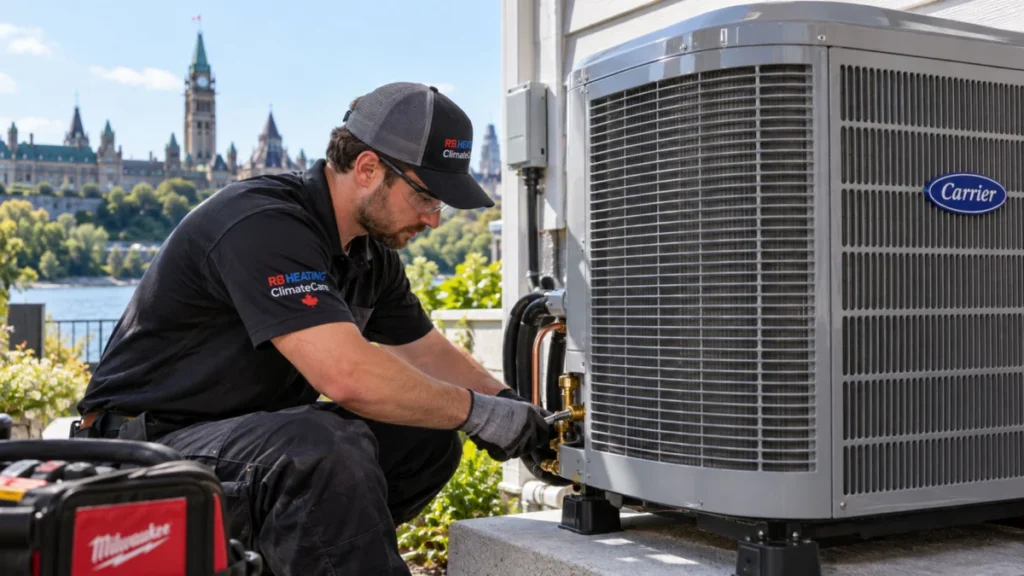
As the Ottawa region navigates the mid-decade climate shift, homeowners are increasingly prioritizing cooling efficiency. Whether you are replacing an aging unit or upgrading from radiators to a modern climate-controlled system, the financial landscape for air conditioning in 2026 is nuanced. With installation costs ranging from $3,000 to $9,000 for standard setups—and potentially exceeding $20,000 for complex retrofits—understanding the variables is essential for any homeowner.
The State of Ottawa HVAC: Main Facts and Market Overview
In 2026, the cost of installing a new air conditioning system in Ottawa is primarily dictated by the existing infrastructure of your home. For the majority of local residences—those already equipped with gas furnaces and functional ductwork—a central air conditioning system remains the gold standard. Homeowners in this category should expect to pay between $4,000 and $9,000 for a professional installation.
However, the "sticker price" is only part of the equation. Costs fluctuate based on system type, tonnage (cooling capacity), SEER2 efficiency ratings, and the specific labor requirements of the installation. For homes lacking pre-existing ducts, the market offers alternative solutions such as ductless mini-split systems, which provide surgical, zone-based cooling, or comprehensive air-source heat pumps that handle both heating and cooling requirements.
A Chronology of Installation: From Quote to Cool Air
The journey to a new HVAC system is a structured process. For those unfamiliar with the timeline, here is what a typical installation cycle looks like in the Ottawa market:
- Initial Consultation and Site Visit: Unlike retail purchases, an HVAC installation begins with a professional site visit. A technician assesses the home’s heat gain, evaluates the current ductwork condition, and checks the electrical panel capacity.
- The Load Calculation: Professionals use the CSA F280 method to determine exactly how many tons of cooling power your specific home requires. Relying on "rule-of-thumb" square footage estimates is a common pitfall that can lead to inefficient cooling or premature system failure.
- Permitting and Scheduling: Once the proposal is accepted, the contractor handles the necessary municipal permits. In Ottawa, building permits are frequently required for first-time installs or significant ductwork modifications.
- The Installation Day: A standard central AC swap-out typically spans 4 to 8 hours. The process includes the decommissioning of the old unit, refrigerant recovery, installation of the new condenser and indoor coil, and system testing.
- Commissioning and Handoff: The final stage involves verifying airflow, checking electrical connections, and ensuring the homeowner understands the thermostat programming and maintenance schedule.
Supporting Data: Comparative Costs and Efficiency
Understanding how costs break down is vital for budgeting. Below is a comparative look at the primary systems available to Ottawa homeowners.
System Cost Comparison Table
| System Type | Installed Cost (Ottawa) | Ideal Application |
|---|---|---|
| Central AC | $4,000 – $9,000 | Homes with existing ducts/furnace |
| Single-Zone Mini-Split | $3,000 – $6,000 | Finished basements/home additions |
| Multi-Zone Mini-Split | $5,500 – $15,000 | Older homes (radiator heat/no ducts) |
| Ducted Heat Pump | $6,000 – $15,000 | Year-round heating/cooling efficiency |
Efficiency and Long-Term Savings
The transition to SEER2 (Seasonal Energy Efficiency Ratio 2) ratings has changed the way we calculate long-term value. While an entry-level unit (approx. 13.4 SEER2) is cheaper upfront, upgrading to a variable-speed unit (18+ SEER2) usually incurs a premium of $800 to $1,500. Over a 10-year lifespan, this premium is often offset by significant reductions in monthly electricity consumption, particularly during Ottawa’s increasingly humid summers.
Official Guidance: Navigating Rebates and Regulatory Standards
The Ontario government, through various energy-saving programs, incentivizes homeowners to move toward high-efficiency climate control. As of October 2026, the Home Renovation Savings Program offers substantial rebates for heat pumps.
- For Gas-Heated Homes: Rebates are approximately $500 per ton, capped at $2,000.
- For Non-Gas Homes (Electric/Oil/Propane/Wood): Rebates can reach $1,250 per ton, capped at $7,500.
Crucial Caveat: Cooling-only central air conditioners do not qualify for these specific heat pump rebates. Homeowners are strongly advised to check the current status of provincial funding before committing to a purchase, as program availability is subject to change based on government budget cycles.
Implications: The "Hidden" Costs of Installation
A common mistake homeowners make is assuming the quote for the unit is the final price. In reality, the "installation" is often a small part of the total project cost.
Electrical and Structural Barriers
For older homes, the electrical panel may be maxed out. A required panel upgrade can add $1,500 to $4,000 to the total cost. Furthermore, if your existing ductwork is leaky or undersized, neglecting these repairs will force your new AC to work harder, shortening its lifespan and increasing your hydro bill. Repairs to these systems can range from $500 to $5,000 depending on the extent of the damage.
The "No-Duct" Challenge
If you live in a heritage home or a residence heated by radiators, the cost of installing central air is dominated by the ductwork, not the AC unit itself. Installing a full system in a finished home requires opening walls and ceilings, which brings the total cost (including drywall and paint restoration) to between $9,000 and $12,000+. For these homeowners, a ductless multi-zone mini-split is often the more cost-effective and less intrusive alternative.
Expert Insight: Why Professional Installation Matters
RB Heating ClimateCare, a veteran in the Ottawa HVAC space since 1992, emphasizes that the quality of the installation is just as important as the brand of the equipment. "Every home has a unique thermal signature," says an industry expert. "An online price range is a starting point, but a true cost can only be determined by a site visit that factors in insulation quality, window orientation, and ceiling height."
The Warranty and Support Factor
When investing in a new system, ensure the package includes a minimum 10-year warranty on parts and the compressor. Reputable installers will also offer a satisfaction guarantee. For instance, some local programs allow for the replacement of a unit within the first year if the homeowner is unsatisfied with the performance.
Maintenance and Operational Costs
Once the system is installed, the ongoing cost of operation is a recurring consideration. In Ottawa, a standard home can expect to pay between $140 and $370 per cooling season. These figures are heavily dependent on the SEER2 rating of the equipment. A 1,500 sq. ft. home using an older 10 SEER unit might pay $325 per season, whereas an upgraded 18 SEER unit can slash that cost to $180.
Final Recommendations for Homeowners
- Don’t Wait for the Heatwave: Booking an installation in the fall or late winter is often cheaper and ensures that you avoid the "emergency" rush when the first heatwave hits in June.
- Prioritize Load Calculations: If an installer provides a quote without measuring your home or calculating your cooling load, look elsewhere.
- Think Long-Term: While the upfront cost of a high-efficiency variable-speed unit is higher, the lower monthly hydro bills and increased comfort levels (less humidity, quieter operation) generally make them the superior investment for long-term homeowners.
- Confirm Inclusions: Always ask for a written quote that explicitly lists the removal of old equipment, permit fees, and electrical upgrades.
By taking a structured approach to your HVAC upgrade, you ensure that your investment provides comfort and value for years to come, regardless of how the Ottawa climate evolves.



