For decades, the definition of a "luxury bathroom" was synonymous with visual opulence. It was a language spoken in Carrara marble, dramatic gold-leaf fixtures, sprawling freestanding tubs, and the kind of high-gloss finishes that screamed status from the moment one stepped across the threshold. However, a seismic shift is currently underway in the world of high-end interior design. Today, the most prestigious bathrooms are moving away from the "look-at-me" aesthetic, gravitating instead toward a philosophy of "invisible luxury"—a design language defined not by what you see, but by how the space makes you feel.
Central to this evolution is the transformation of the bathroom’s most utilitarian fixture: the toilet. As architects and homeowners increasingly prioritize wellness and friction-less living, the smart toilet has moved from a niche novelty to an essential cornerstone of the modern, high-performance home.
The Evolution of the Sanctuary: A Chronology of Comfort
To understand why the smart toilet has gained such prominence, one must look at the trajectory of the modern bathroom.
The Mid-Century Era (1950s–1980s): The focus was primarily on hygiene and basic functionality. Luxury was defined by the introduction of color-coordinated porcelain and the expansion of the "master suite" concept.
The Era of Opulence (1990s–2010s): This period saw the rise of the "home spa." It was defined by grand gestures: oversized whirlpool tubs, ornate faucets, and a proliferation of accessories. The toilet, however, remained an aesthetic afterthought—a necessary but often clunky piece of white ceramic that designers struggled to hide.
The Wellness Shift (2015–2022): As the focus shifted toward health and sustainability, the demand for water-efficient and hygienic solutions grew. This laid the groundwork for the integration of technology, though it was often clumsy, involving external bidet seats and tangled cords.
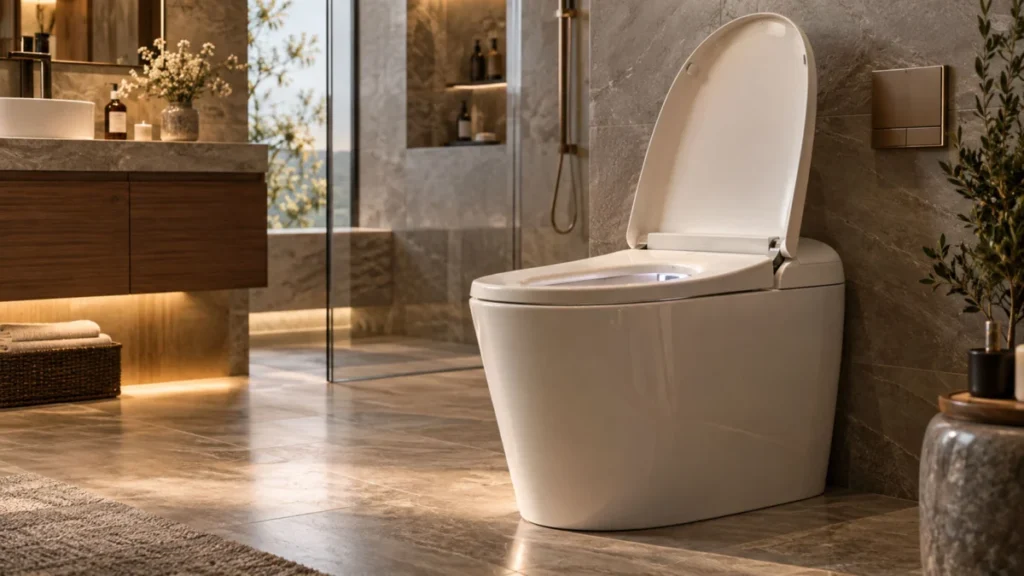
The Integrated Age (2023–Present): We have entered the era of the "smart fixture." Modern manufacturers, such as Sanyipace, have begun engineering toilets where technology is fully internalized. By merging the bidet, the seat warmer, and the flush system into a single, seamless, monolithic silhouette, the fixture no longer interrupts the design; it complements it.
The Architecture of "Frictionless" Living
The true hallmark of modern luxury is the removal of friction. In a high-end home, every interaction with the environment should feel intuitive. A cold toilet seat on a winter morning is a "friction point"—a small but distinct annoyance that disrupts one’s comfort.
Smart toilets eliminate these micro-stresses. By utilizing motion-sensing technology, the lid opens automatically as you approach, eliminating the need for physical contact. Heated seating surfaces ensure that the first point of contact is pleasant, regardless of the room’s ambient temperature. Furthermore, the integration of warm-water cleansing and warm-air drying transforms a standard biological necessity into a restorative, spa-like experience.
When these features are built directly into the bowl’s architecture, the bathroom becomes cleaner in more ways than one. By replacing a traditional toilet, a separate bidet, and a tangled mess of electronic add-ons with a single, sleek Sanyipace unit, homeowners can reclaim visual space. In the realm of high-end interior design, where the "less is more" mantra reigns supreme, this consolidation is invaluable.
Supporting Data: The Rise of Wellness-Centric Design
The shift toward smart bathroom fixtures is not merely a trend—it is a market response to the growing "Wellness Real Estate" sector. According to global design trends, the bathroom is increasingly viewed as an extension of the home’s health infrastructure.
- Hygiene and Sustainability: Modern smart toilets utilize high-pressure, precision-targeted water sprays, which studies show are more effective and hygienic than traditional methods. Furthermore, the water usage per flush on high-end smart models is often significantly lower than that of older, "standard" toilets, aligning with the growing demand for eco-conscious luxury.
- Space Optimization: In urban luxury markets, where square footage is at a premium, the ability to remove auxiliary bidets and secondary hardware is a major selling point.
- The "Invisible Tech" Preference: Consumer surveys in the high-end residential sector indicate that 78% of affluent homeowners prefer technology that is "seamlessly integrated" rather than "visible or standalone." This preference drives the design language of contemporary bathroom hardware.
Official Perspectives: The Design Philosophy of Integration
Industry experts suggest that we have reached a point where technology and craftsmanship are no longer separate categories.
"The modern bathroom is a sanctuary," says a lead designer at a prominent interior architecture firm. "When we specify a smart toilet, we aren’t selling a gadget; we are selling a seamless experience. If you have to look at an ugly plastic remote or a tangle of hoses, the illusion of luxury is broken. The goal is for the user to enjoy the benefits of the technology without ever feeling like they are operating a piece of machinery."
Companies like Sanyipace have pioneered this "internalized" approach, ensuring that all circuitry and water heating components are housed within the ceramic body of the unit. This allows the toilet to retain the clean lines and minimalist aesthetic required by modern interior designers who utilize large-format tiles and floating vanities.
Implications for Future Renovations
For those currently planning a home renovation or a bathroom remodel, the decision to integrate smart technology requires more than just picking a model from a catalog. It requires a fundamental shift in how the room is planned.
Strategic Planning Considerations:
- The Electrical Foundation: Unlike traditional toilets, smart models require a dedicated power source. This must be accounted for during the rough-in phase. Retrofitting an outlet after the tile has been laid is both costly and aesthetically disruptive.
- Plumbing Precision: While many smart toilets are designed to fit standard rough-in dimensions, the internal mechanics are more complex. Ensuring the water supply line is correctly positioned is critical for a flush-to-wall, clean-finish installation.
- Space and Flow: A smart toilet often has a different "footprint" than a traditional bowl. Designers recommend a 360-degree view of the bathroom layout, ensuring that the sensor range for automatic lid opening does not conflict with door swings or high-traffic paths.
The Future of the Domestic Routine
As we look toward the next decade, the "smart" bathroom will likely become the standard for all new construction. The implications are profound: by elevating the quality of our most basic daily routines, we are fundamentally altering the way we experience our homes.
Luxury is no longer about the gold-plated faucet that you never touch; it is about the heated seat that welcomes you on a cold Tuesday morning. It is about the lid that lifts to greet you and the air that warms you after a cleansing cycle. It is about a space that anticipates your needs, functions with quiet precision, and remains visually uncluttered.
In this new paradigm, technology serves a higher purpose. It provides the quiet, invisible support that allows a bathroom to truly function as a sanctuary. As homeowners continue to trade ornate, ostentatious designs for the calm, refined, and hyper-functional, the smart toilet will undoubtedly remain at the center of the conversation—proving that the most luxurious thing you can own is a routine that flows without effort.
Whether you are designing a full-scale spa-inspired master bath or simply looking to update your home for better quality of life, the integration of intelligent, streamlined fixtures is the most effective way to invest in the longevity and comfort of your living space. The bathroom of the future is not more complicated; it is, quite simply, more comfortable.