For centuries, the allure of gemstones has captivated humanity, their brilliance and rarity sparking fascination and desire. Yet, beneath their dazzling exteriors lies a complex inner world, a universe of chemical composition and atomic structure that dictates their identity, origin, and value. In the modern era of gemmology, the scientific discipline dedicated to the study of gemstones, a powerful tool has emerged as the key to unlocking these hidden secrets: spectroscopy. This sophisticated analytical technique, which examines the interaction of electromagnetic radiation with matter, has revolutionized how gemmologists identify, authenticate, and even understand the very genesis of these precious treasures.
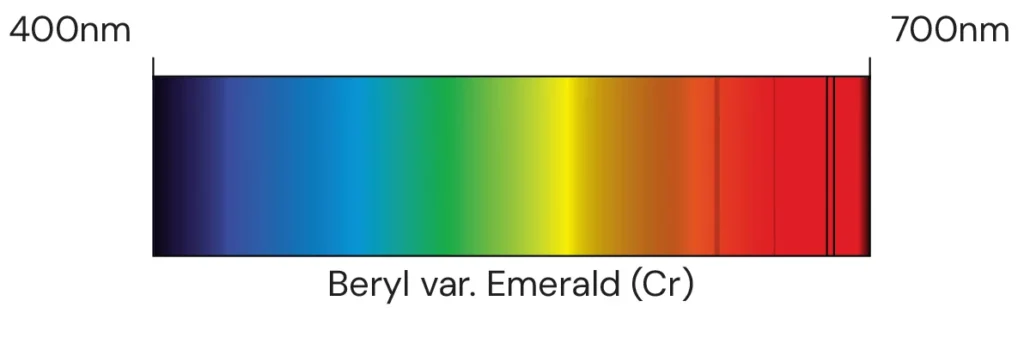
Spectroscopy, at its core, is the observation and measurement of how substances absorb and emit electromagnetic radiation. For gemstones, this translates into analyzing the unique spectral "fingerprints" they leave when exposed to light across various parts of the electromagnetic spectrum. These spectral patterns, much like human fingerprints, are distinct for each mineral species, offering an irrefutable method for identification. Beyond mere identification, spectroscopy can also shed light on a gemstone’s origin, whether it is natural or synthetic, and even reveal evidence of treatments designed to enhance its appearance. As Gem-A Gemmology Tutor Pat Daly eloquently explains, "This methodology and its associated tools are vital for gemmologists and can be used to reliably indicate a gemstone’s identity."
The Dawn of Spectral Revelation: A Historical Odyssey
The journey of spectroscopy from a fundamental scientific discovery to an indispensable gemmological tool is a testament to human ingenuity and the relentless pursuit of knowledge. While the foundational principles of light and its spectrum were explored centuries ago, their application to the intricate world of gemstones is a more recent development.
The story begins with the pioneering work of Sir Isaac Newton, who, in 1672, meticulously observed and documented the spectrum of visible light. However, it was in the early 19th century that Joseph Fraunhofer made a pivotal advancement by developing a spectroscope. His instrument, equipped with a narrow slit to precisely control light entry and a diffraction grating to elegantly spread spectral colors, allowed for unprecedented detail in observation. When Fraunhofer turned his spectroscope towards the light of day, he noticed a series of dark lines within the spectrum. These "Fraunhofer lines," now understood to represent wavelengths of light absorbed by specific chemical elements in the sun’s atmosphere, were not just astronomical curiosities. They laid the groundwork for understanding how materials interact with light, a principle that would later prove invaluable to gemmologists.
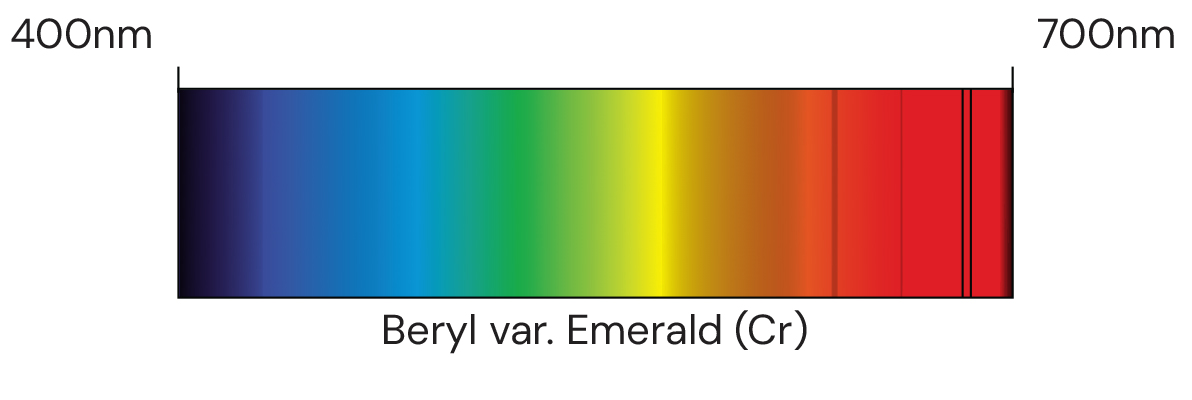
The direct application of spectroscopy to gemstones began to gain traction in the 1860s, with early recordings of absorption spectra. Notable early work included the spectral analysis of zircon and almandine, documented in A.H. Church’s influential book, "Precious Stones." The development of the hand-held spectroscope in the 1930s marked a significant leap forward for gemmological practice. This portable and accessible instrument transformed spectroscopy from a laboratory curiosity into a practical, field-ready tool. The Gem Testing Laboratory in London played a crucial role in popularizing its use, and it quickly became an essential component of a gemmologist’s toolkit, standing shoulder-to-shoulder with other indispensable instruments like the refractometer and microscope. The power of the spectroscope lies in its ability to reveal the characteristic positions, widths, and intensities of absorption and emission bands within a gemstone. These spectral signatures serve as highly reliable indicators of a gemstone’s identity, and in many cases, can even distinguish between natural and synthetic stones, as well as detect the presence of color treatments.
Expanding the Spectrum: Beyond Visible Light
The principles of spectroscopy are not confined to the visible light spectrum. As technology advanced, gemmologists began to harness the analytical power of invisible forms of radiation, such as infrared (IR) and ultraviolet (UV) light, as well as X-rays. The commercial availability of instruments capable of analyzing these wavelengths, however, lagged behind their initial scientific discovery, often waiting for crucial technological breakthroughs.
The interaction of infrared radiation with materials, for instance, was recognized in the early 1900s. However, the sophisticated infrared spectrometers needed for precise analysis were not widely marketed until the 1940s. Similarly, the Raman effect, a phenomenon where light scattering causes a shift in wavelength, was first observed in the late 1920s. Yet, its practical application in gemmology remained elusive until the invention and subsequent development of lasers in the 1960s. Lasers provided the intense, monochromatic light source necessary to reliably induce and detect the subtle Raman scattering.
A Spectrum of Techniques: Modern Spectrometers in Gemmology
Today, a diverse array of spectroscopic techniques and instruments are employed by professional gemmologists, each offering unique insights into a gemstone’s composition and characteristics.
FTIR Spectroscopy: Unveiling the Infrared Signature
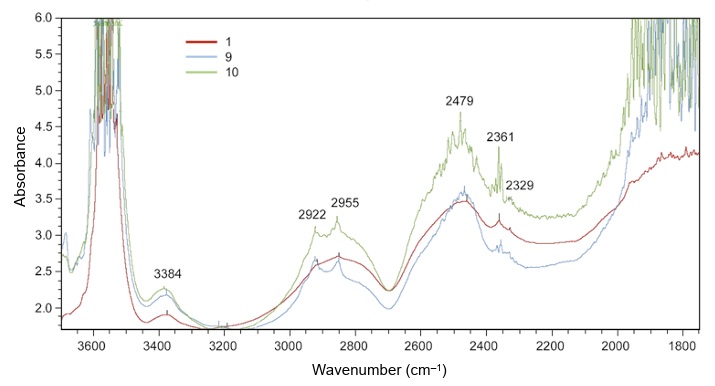
FTIR (Fourier Transform Infrared) spectroscopy is a cornerstone technique in modern gemmology. This method quantifies the absorption of infrared radiation across a range of wavelengths, typically expressed in wavenumbers (the reciprocal of wavelength, representing the number of waves per centimeter). The infrared spectrum extends from approximately 700 nanometers (nm) to 1 millimeter (mm).
The absorption patterns generated by FTIR spectroscopy are incredibly informative. They can be used to:
- Identify Gem Materials: Each mineral has a unique IR absorption spectrum, allowing for definitive identification.
- Distinguish Natural from Synthetic Stones: Many synthetic gemstones exhibit subtle differences in their IR absorption compared to their natural counterparts, often due to variations in trace element incorporation or lattice defects.
- Detect Coatings and Filling Materials: Surface treatments like coatings or the impregnation of porous stones with resins leave distinct spectral signatures.
A prime example of FTIR’s utility is in the classification of diamond types. Naturally colored blue diamonds are almost invariably Type IIb, characterized by the presence of boron and the absence of detectable nitrogen. Conversely, near-white Type I diamonds, which contain significant amounts of nitrogen (hundreds to thousands of parts per million, or ppm), can be accepted as natural. This is because most comparable synthetic diamonds contain considerably less nitrogen, typically less than 5 ppm. Furthermore, treatments like resin impregnation, which can be challenging to detect with standard tests, often produce distinctive infrared absorption peaks, providing crucial evidence of the treatment. The accompanying image illustrating FTIR spectra of demantoid samples clearly shows an asymmetric band related to the presence of hydroxyl (OH) groups, a characteristic that can inform our understanding of the gemstone’s formation environment.
UV-Vis-NIR Spectroscopy: The Dance of Light and Color
UV-Vis-NIR (Ultraviolet-Visible-Near Infrared) spectroscopy probes a broader range of the electromagnetic spectrum, from short-wave ultraviolet light to approximately one to a few thousand nanometers. This technique is particularly adept at analyzing the causes of color in gemstones.
In diamonds, for instance, absorption bands within the UV-Vis-NIR spectrum provide critical information:
- Natural vs. Synthetic Diamonds: An absorption at 415 nm, attributed to nitrogen aggregates, is a strong indicator of a natural diamond. Conversely, absorptions at 484 nm and 884 nm, linked to nickel, and at 737 nm, associated with silicon, are more commonly observed in synthetic diamonds.
Beyond diamonds, UV-Vis-NIR spectroscopy plays a vital role in tracing the origins of other precious stones:
- Sapphires and Emeralds: The spectral analysis can help differentiate sapphires originating from igneous versus sedimentary rocks. For emeralds, the proportions of chromium and iron, which vary significantly between different geological localities, can be determined through UV-Vis-NIR, aiding in origin determination.
- Paraiba Tourmalines: The presence of characteristic copper peaks in the spectrum can definitively distinguish valuable Paraiba tourmalines, known for their vibrant electric blue color, from less expensive, visually similar stones that lack this essential element.
X-ray Diffractometry: Peering into Atomic Architecture
While not strictly a "spectroscopy" in the same vein as analyzing light absorption, X-ray diffractometry (XRD) utilizes the interaction of X-rays with a material’s atomic structure to reveal its crystalline makeup. Just as light waves diffract when encountering regular structures, X-rays are diffracted by the orderly arrangement of atoms within a gemstone.
XRD instruments measure the precise distances between atomic layers. Given that atoms of different elements possess distinct sizes and arrange themselves differently in various materials, this information serves as a highly sensitive identifying test for mineral species. XRD can even distinguish between different mineral phases within polycrystalline aggregates, including rocks. For single crystals, XRD can elucidate their atomic structures and symmetry, a crucial step in the study of newly discovered minerals. The mineral taaffeite, famously first identified as a fashioned stone rather than a raw mineral, is a classic example where XRD analysis was instrumental in its description.
Furthermore, X-rays and other forms of radiation can interact with the inner shells of atoms, causing electrons to be ejected. When an outer-shell electron fills this vacancy, an X-ray photon is emitted with an energy characteristic of a particular element. Detectors can record these emissions, providing a partial chemical analysis. This technique, often referred to as X-ray fluorescence (XRF), is valuable for:
- Identifying Stones and Coatings: Detecting elemental compositions helps in identifying unknown materials and surface treatments.
- Separating Natural from Synthetic Stones: The presence of elements like nickel or silicon in diamonds, which are more typical of synthetic varieties, can be readily identified.
- Distinguishing Ruby Origins: Trace element proportions of chromium, vanadium, and iron can help differentiate natural rubies from synthetic ones, and even offer clues about their geographical origin.
Raman Spectroscopy: The Vibrational Fingerprint
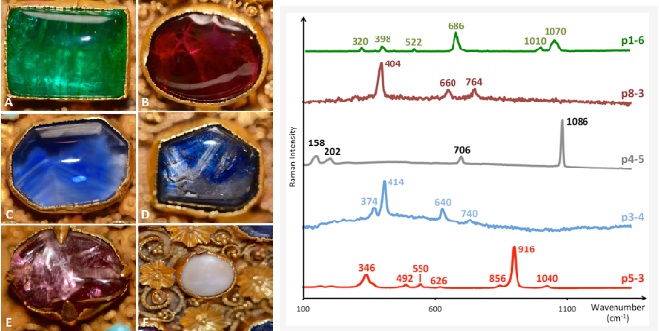
Raman spectroscopy employs a narrow laser beam, either in the infrared or visible spectrum, directed at a gemstone. While most of the light is scattered at its original wavelength, a small fraction undergoes a shift in wavelength. This subtle shift, known as the Raman effect, creates a diagnostic series of peaks when analyzed and displayed. These spectral patterns, much like a fingerprint, can be compared against a database to identify the material. While Raman spectroscopy is excellent for identification, it often faces challenges in definitively distinguishing between natural and synthetic stones.
However, its capabilities extend further:
- Identifying Inclusions: Sophisticated Raman instruments can analyze microscopic inclusions within a gemstone, even those not reaching the surface, provided they are sufficiently close.
- Analyzing Diamonds: Raman spectroscopy is particularly effective for diamonds. By cooling the stones with liquid nitrogen, results are significantly improved, as the technique is more sensitive at low temperatures. While diamonds can withstand this process, other gem species may be susceptible to damage.
- Detecting Defects and Treatments: Defects within the diamond lattice, detectable at very low concentrations, can provide evidence of natural or synthetic origin and reveal the presence of treatments such as high-pressure, high-temperature (HPHT) color enhancement, which can be difficult to confirm by other methods. The image showcasing Raman spectra of gemstones in the Crown of Namur exemplifies the application of this technique in archaeological and historical contexts.
Advanced Spectroscopy for the Modern Gemmologist
The ongoing advancements in synthesis and treatment technologies necessitate equally sophisticated analytical tools for gemmologists. While many spectroscopic methods are non-destructive and require no sample preparation, some advanced instruments are capable of vaporizing minute amounts of material from the gemstone’s surface, creating a shallow pit no wider than a human hair. This micro-sampling, though seemingly invasive, is often justified by the significant value premium placed on natural stones and those originating from specific renowned localities.
The vaporized material is then analyzed by a spectrometer, enabling detailed elemental and isotopic analysis. By meticulously comparing these results with extensive databases, gemmologists can gain compelling evidence of a gemstone’s geographical origin. This level of analytical precision is crucial in an era where the provenance of a gem can dramatically influence its market value.
The Enduring Significance and Future of Gemmological Spectroscopy
Spectroscopy has been an indispensable ally to gemmologists for over a century. Its journey from the fundamental observation of light to its sophisticated application in modern gemmological laboratories reflects a continuous evolution driven by scientific curiosity and technological innovation. As synthetic techniques and treatment methods become increasingly complex, the demand for equally advanced analytical instruments, both for large-scale laboratories and for everyday office use, will only grow.
The promise of spectroscopy lies not only in its ability to solve the challenges of today but also in its potential to adapt and address the new mysteries that will undoubtedly emerge in the ever-evolving world of gemstones. From the subtle spectral lines that betray a diamond’s origin to the infrared signatures that reveal hidden treatments, spectroscopy continues to illuminate the path towards a deeper understanding and appreciation of these natural wonders.
For those seeking to delve deeper into the fascinating world of gemmology, introductory courses and accredited programs offer pathways to acquire the knowledge and skills necessary to utilize these powerful analytical techniques. The spectrum of truth, revealed through the lens of spectroscopy, continues to expand, offering ever-clearer insights into the heart of every precious stone.