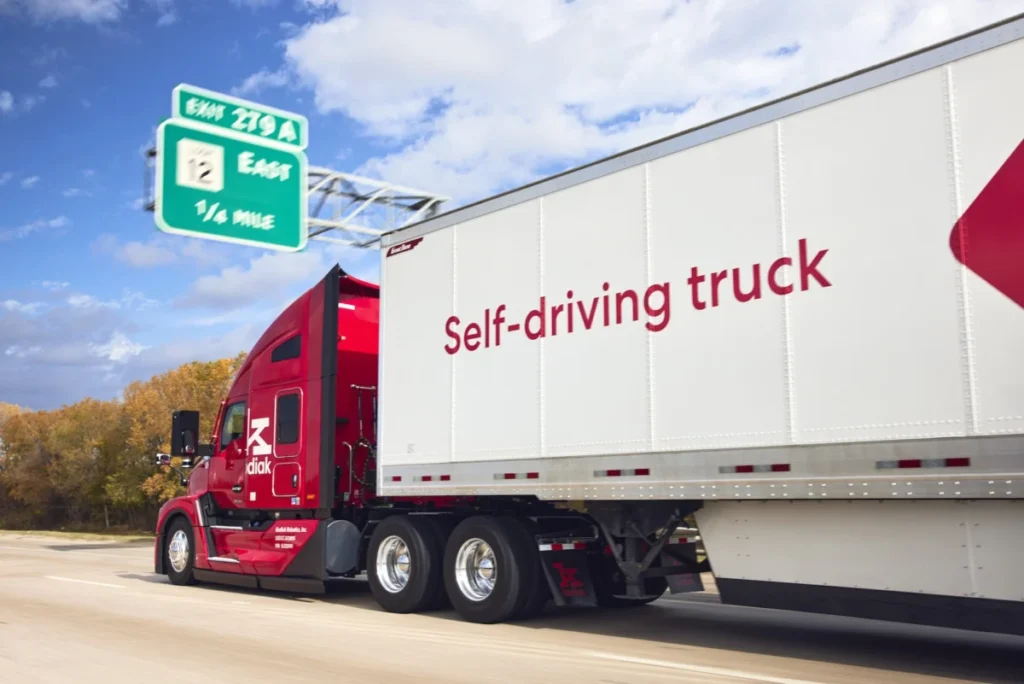
The landscape of American logistics is undergoing a tectonic shift. After years of confining their heavy-duty autonomous vehicle (AV) development to the more permissive regulatory environments of states like Texas, industry leaders Aurora Innovation and Kodiak Robotics have officially brought their technology home. Following the California Department of Motor Vehicles’ (DMV) decision to update its regulatory framework, both companies have secured the necessary permits to begin testing self-driving big rigs on California’s public roadways.
For the AV industry, this represents a major victory in the quest to commercialize autonomous freight. However, for labor unions and public safety advocates, the development is a flashpoint, triggering legal challenges and renewed scrutiny regarding the economic and safety implications of replacing human truckers with silicon-based drivers.
The Regulatory Turning Point: A New Path for Heavy Freight
The catalyst for this shift was a deliberate policy evolution within the California DMV. For years, the state maintained a strict prohibition on the testing of autonomous vehicles weighing more than 10,000 pounds on public roads. This effectively forced California-based startups to export their primary innovation efforts to states like Texas, where the regulatory climate was more favorable to the deployment of autonomous freight.
On April 28, the DMV finalized a new set of rules that lifted the ban on heavy-duty autonomous testing. This regulatory pivot created a clear, albeit rigorous, pathway for companies to prove that their vehicles can navigate the complex, high-traffic corridors of the Golden State. To earn their permits, both Aurora and Kodiak had to meet stringent criteria, including exhaustive proof of insurance, technical safety documentation, verified vehicle registration, and the certification of human safety operators.
Under the new permit conditions, these autonomous trucks are not yet "driverless" in the full sense; a human safety operator must remain behind the wheel at all times to intervene in case of system failure. Furthermore, the DMV has imposed operational limitations: the trucks are generally prohibited from traveling on roads with posted speed limits of 25 mph or less, except when navigating a direct route between testing destinations.
Chronology: From the Permian Basin to the Pacific Coast
The path to this moment has been paved with years of data collection and operational expansion.
2025: The Texas Foundation
- January 2025: Kodiak Robotics achieved a significant milestone by launching commercial driverless operations in the remote, off-road environments of West Texas’ Permian Basin. This served as a controlled laboratory for testing long-haul logistics software.
- May 2025: Aurora Innovation followed suit by launching its commercial self-driving truck service in Texas, debuting a high-traffic route between Dallas and Houston.
2026: Scaling the Network
- Early 2026: Aurora expanded its footprint, demonstrating the robustness of its system by connecting Fort Worth and El Paso.
- Mid-2026: Further expansion saw Aurora linking El Paso to Phoenix and Fort Worth to Phoenix, effectively building an autonomous freight "spine" across the American Southwest.
2027: The Return to California
- April 2027: The California DMV updates its regulations, allowing for the testing of heavy-duty autonomous vehicles.
- Mid-2027: Aurora and Kodiak secure their California permits. Kodiak immediately initiates testing cycles centered around its Mountain View headquarters, signaling the start of a new chapter for the company’s home-state operations.
The Technological Argument: Why California Matters
Why move testing back to California when the companies already have established, successful routes in Texas? The answer lies in the diversity of the testing environment.
Autonomous driving systems thrive on edge cases—the rare, complex, or unexpected scenarios that a vehicle might encounter. While the flat, wide-open highways of Texas are ideal for long-haul efficiency testing, California offers a significantly more challenging landscape. Between the intense, multi-lane congestion of the Bay Area, the complex mountainous terrain of the Sierra Nevada, and the varying weather patterns of the Pacific Coast, California provides a rigorous "stress test" for AI models.
By refining their algorithms in the diverse environment of their home state, developers hope to create more versatile systems capable of operating safely across the entirety of the North American interstate network.
Labor and Opposition: The Battle Over Economic Impact
The arrival of autonomous trucks on California’s roads is not universally welcomed. The Teamsters Union, a powerful force in the logistics sector, has emerged as the primary antagonist to the rapid deployment of autonomous freight.
Last week, Teamsters California took direct legal action against the DMV, filing a lawsuit in the Superior Court of Alameda County. The core of the complaint is procedural and economic: the union alleges that the DMV circumvented state laws requiring a comprehensive study of the potential economic displacement of human workers.
Key Allegations in the Lawsuit:
- Economic Neglect: The suit argues that the DMV failed to properly assess how the widespread adoption of self-driving trucks will impact the livelihoods of thousands of California truck drivers.
- Public Safety Concerns: Beyond the economic impact, the lawsuit contends that the DMV did not adequately consider the public safety risks inherent in placing heavy, autonomous machinery alongside passenger vehicles, particularly during the transition period where human-driven and autonomous vehicles must share the road.
- Lack of Transparency: The Teamsters argue that the regulatory approval process was rushed and lacked the necessary level of public disclosure regarding the potential consequences of "driverless" freight.
For the Teamsters, the issue is not merely about safety—it is about the future of a middle-class profession. They argue that if the state allows for the deployment of these technologies, it has a moral and legal obligation to ensure that the transition does not result in a sudden, catastrophic loss of jobs for the state’s workforce.
Implications: The Road Ahead
The permitting of Aurora and Kodiak to test in California serves as a bellwether for the entire AV industry. Several critical implications emerge from this development:
1. The "Human-in-the-Loop" Limitation
It is vital to note that the current permits do not authorize truly driverless, long-haul trucking. The requirement for a human safety operator is a safeguard that will remain in place for the foreseeable future. This "human-in-the-loop" model is designed to build public trust and provide a fallback in the event of software errors, but it also increases the operational cost for companies like Aurora and Kodiak.
2. Regulatory Standardization
As California establishes its framework, it is likely to influence other states. The DMV’s cautious, permit-based approach serves as a potential blueprint for other states that have yet to formalize their stance on heavy-duty autonomous vehicles. By creating a regulatory "pathway," California is signaling that it intends to lead in the governance of the technology rather than merely reacting to it.
3. The Future of Commercial Logistics
If Aurora and Kodiak can successfully demonstrate safety in California’s complex environment, the transition toward fully autonomous, long-haul commercial logistics will likely accelerate. This would fundamentally change the cost structure of shipping, potentially lowering the price of consumer goods by allowing trucks to operate for longer hours without the limitations of human fatigue.
4. Societal and Political Friction
The friction between technological advancement and labor security is reaching a boiling point. The lawsuit filed by the Teamsters is likely just the beginning of a broader, national debate over the "right to work" in an automated future. Lawmakers will soon face increasing pressure to balance the innovation demands of Silicon Valley with the protections requested by organized labor.
Conclusion
The sight of an autonomous-ready truck navigating the streets of Mountain View is a stark reminder that the future of transportation is no longer a theoretical exercise—it is a tangible, evolving reality. As Aurora and Kodiak begin their testing cycles, they do so under the watchful eyes of regulators, the persistent opposition of labor unions, and the scrutiny of a public that remains deeply divided on the safety and societal necessity of autonomous machines.
The road ahead is not just about perfecting the software; it is about navigating the complex social contract that governs how new technology is integrated into the fabric of American society. While the industry views this as the beginning of a logistics revolution, the coming months in the Alameda County courts will determine whether that revolution proceeds at a measured pace or hits a major legal roadblock. One thing is certain: the conversation surrounding the future of the American trucker has only just begun.