Introduction: A Color Beyond Criticism
The gemstone peridot, often described with the seemingly peculiar moniker "oily green," possesses a captivating allure that has fascinated humanity for millennia. Far from being a critique, this descriptive term is deeply rooted in the gem’s historical associations and offers a unique window into its geological origins and optical characteristics. This article delves into the multifaceted world of peridot, exploring its rich history, geological formation, the meaning behind its distinctive hue, and its enduring appeal in the realm of fine jewelry.
The Genesis of Green: Peridot’s Geological Story
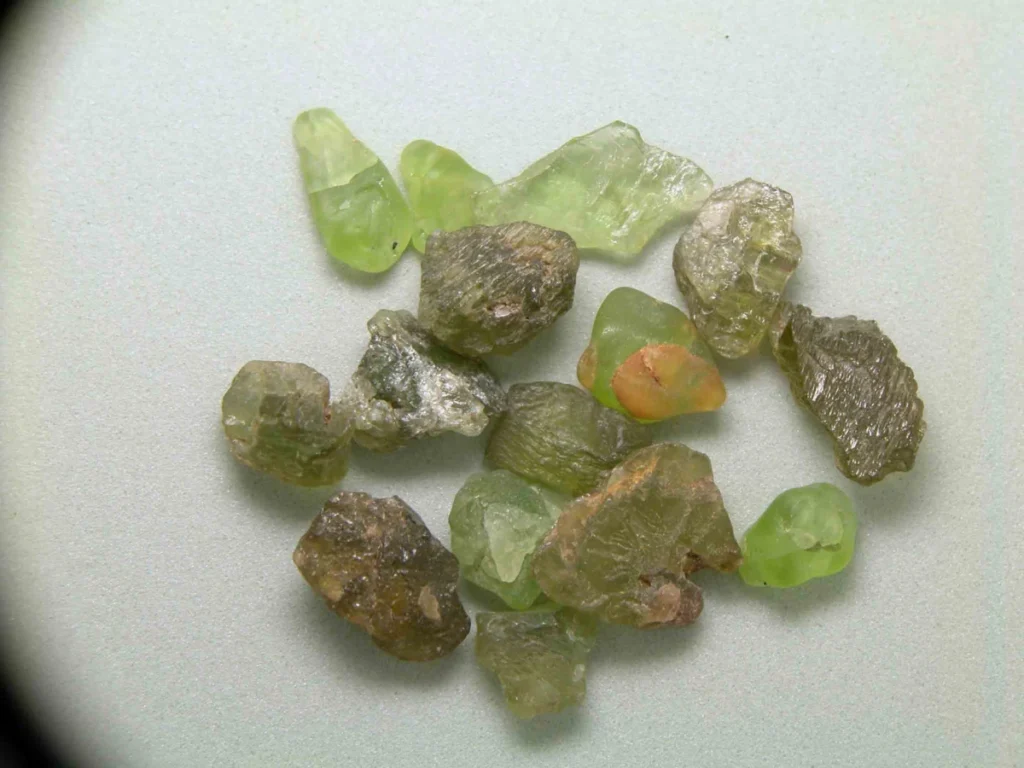
Peridot, a member of the olivine mineral group, is a silicate of magnesium and iron. Its vibrant green color, which can range from a pale yellow-green to a deep olive hue, is primarily attributed to the presence of iron. The percentage of iron within the crystal structure dictates the intensity and shade of the green. Furthermore, trace elements like nickel and chromium are believed to play a role in subtly modifying these colors, an interesting phenomenon given their relative abundance in the mantle rocks where peridot typically forms.
While peridot can occasionally exhibit brown or yellow tones, gem-quality specimens are almost invariably green. This preference for green is not arbitrary; it is a direct consequence of the geological environments in which peridot crystallizes. Unlike many other gemstones that form through a variety of geological processes, gem-quality peridot is predominantly found within the Earth’s mantle. It is brought to the surface through volcanic activity, often embedded within peridotite rock masses. These mantle-derived rocks are the crucible in which peridot’s characteristic color is forged.
A Chronology of Radiance: Peridot Through the Ages
The history of peridot is as rich and storied as its color. Ancient civilizations were captivated by this verdant gem, with its earliest known source being the isle of Zabargad (also known as St. John’s Island) in the Red Sea. For centuries, this remote island was the primary supplier of peridot to the ancient world, adorning the regalia of pharaohs and the treasures of royalty. The Romans, in particular, held peridot in high esteem, valuing its luminous green for its perceived ability to ward off evil spirits and bring good fortune. They called it "chrysolite," meaning "golden stone," a testament to its often yellowish-green hue.
As trade routes expanded and geological exploration advanced, other significant sources of peridot emerged. Burma (modern-day Myanmar) became renowned for producing large, fine-quality stones. In more recent times, the United States, specifically Arizona, has become a major producer, offering abundant supplies of this beautiful gemstone. Other notable sources include Norway, Pakistan, and more recently, significant deposits have been discovered in China, which now contributes substantially to the global jewelry trade.
The geological processes that bring peridot to the Earth’s surface are as fascinating as its history. Typically, gem-quality peridot originates deep within the Earth’s mantle. It is then transported upwards through the crust via volcanic eruptions. In some cases, it is found within xenoliths – fragments of mantle rock carried up by magma. Alternatively, it can be found in large masses of peridotite, a rock type formed from the deformation and recrystallization of mantle material. These geological journeys are critical in shaping the peridot we find today, influencing its color, inclusions, and overall character.
Unpacking the "Oily" Descriptor: Peridotite and the Olive Connection

The enigmatic "oily green" description finds its roots in the geological term "peridotite." Peridotite, the rock from which peridot is derived, is composed primarily of the mineral olivine. The mineral olivine itself was named after the olive fruit due to its characteristic yellowish-green color. Over time, this color resemblance has transcended from the fruit to the oil extracted from it. Olive oil, a staple in many cultures and a globally significant commodity, often possesses a dominant yellow hue with a subtle greenish tinge.
It is this pervasive association with olive oil that has likely contributed to the descriptive term "oily green" being applied to peridot. While olive oil is predominantly yellow, peridot is almost unequivocally green. However, the visual parallel, particularly concerning the slight translucence and subtle sheen, has created a linguistic link that has endured through centuries of gemological discourse. The term, therefore, is not intended to suggest any actual oil content within the gemstone, but rather to evoke a visual and historical connection to the color of olive oil.
The "Oily" Appearance: Inclusions and Optical Phenomena
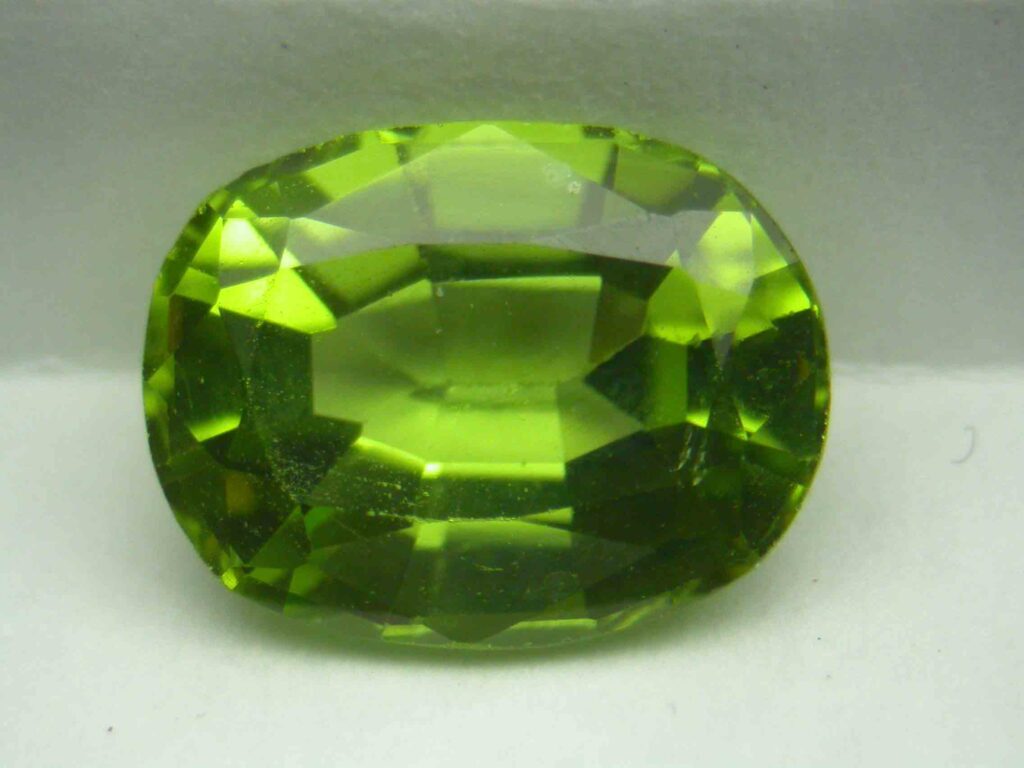
The term "oily" in relation to peridot can also be attributed to certain optical phenomena and the presence of microscopic inclusions within the gemstone. While peridot is highly valued for its remarkable clarity and lack of treatments – a rarity in the gemstone world – some specimens can exhibit a slightly muted or "sleepy" appearance. This can be due to sub-microscopic inclusions that scatter light within the stone, leading to a diffusion of brilliance.
Another contributing factor to this perception of "oiliness" can be the phenomenon of double refraction, which is characteristic of peridot. In some directions, when viewed through the stone, the pavilion facet edges can appear blurred. This strong doubling, combined with the light scattering from inclusions, can create a visual effect that some have interpreted as resembling the sheen or texture of oil.

It is important to note that these characteristics, while sometimes perceived as less desirable, do not necessarily detract from a peridot’s beauty. In fact, controlled light scattering from certain inclusions can, in some instances, enhance a stone’s visual appeal by illuminating areas that might otherwise appear dark, even in well-cut and polished gems. Gemologists understand that these features are intrinsic to the stone’s formation and contribute to its unique character.
The Uniqueness of Peridot: A Single Gem, Infinite Appeal
While many commercially significant gemstones boast a spectrum of colors, diverse optical effects, and numerous named varieties, peridot stands apart in its relative simplicity. Essentially, peridot presents a singular, captivating green, a hue that has enchanted observers for thousands of years. This consistent, pleasing green color, coupled with its typically good transparency, makes it a highly desirable choice for jewelry designers, gem cutters, and their discerning clientele.
The current global supply of peridot is robust, with fine gem material regularly entering the market. This consistent availability allows peridot to be offered at moderate price points, making it an accessible yet exquisite gemstone. However, as with all precious stones, the largest and finest specimens, those exhibiting exceptional color saturation, clarity, and precise cutting, can command prices in the thousands of pounds, reflecting their rarity and superior quality.
Peridot’s uniqueness lies not in its complexity, but in its unwavering commitment to its signature green. It is a gemstone that offers a pure, unadulterated expression of its color, a testament to its geological origins and the unique processes that forged it deep within the Earth. Its historical significance, geological intrigue, and distinctive "oily green" charm solidify its place as a treasured gem, a vibrant symbol of nature’s artistry.

Conclusion: A Gemstone of Enduring Fascination
The description "oily green" for peridot, while perhaps unconventional at first glance, is a term rich with history and geological insight. It speaks to the gemstone’s ancient lineage, its formation within peridotite rocks, and the subtle optical phenomena that contribute to its unique visual character. Far from being a flaw, this descriptor is an integral part of peridot’s identity, distinguishing it from other green gemstones and offering a deeper appreciation for its natural beauty. As a gemstone that is rarely treated and consistently delivers its signature verdant hue, peridot continues to captivate and inspire, solidifying its enduring appeal in the world of fine jewelry. For those seeking to delve deeper into the fascinating world of gemstones, understanding the nuances of peridot, from its geological story to its evocative name, is a rewarding journey into the heart of gemology.