

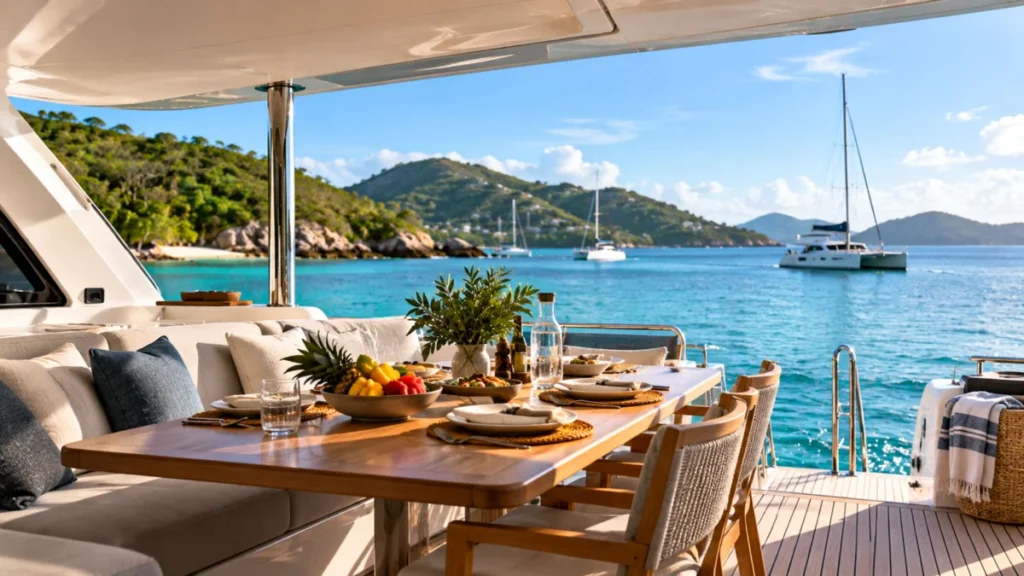
For the seasoned traveler, the evolution of a vacation often follows a predictable trajectory. It begins with the all-inclusive resort, graduates to the exclusivity of a private villa, and eventually reaches a plateau where the scenery feels static and the service, while professional, remains impersonal. It is at this juncture—where the desire for both privacy and fluid adventure converges—that the crewed Caribbean yacht charter emerges as the ultimate solution.
While the concept of yachting is often unfairly relegated to the realm of the ultra-wealthy, a closer look at the market reveals a compelling economic reality: when compared to a high-end villa staffed with private chefs and house managers, the "yachting premium" is far narrower than the glossy brochures suggest.
The Architecture of an Experience: Beyond the Villa Model
To understand the appeal of a crewed charter, one must first dismantle the comparison between a yacht and a hotel. A hotel is a static entity; a villa is a static entity. A yacht is a mobile, private, and hyper-personalized hospitality ecosystem.
When you charter a crewed yacht, you are essentially leasing a private estate that shifts its view every morning. The staff—typically a captain, a chef, and often a stewardess or deckhand—are dedicated exclusively to your party. Unlike a villa, where you may share a beach or a concierge with other guests, the yacht is an isolated sanctuary.
The Economics of Symmetry
The market favors the "twelve-guest" threshold. Beyond this number, vessels are subject to rigorous commercial certifications (such as the Passenger Yacht Code), which significantly inflate operational costs. Consequently, the charter fleet naturally clusters in the six-to-twelve-passenger range. The most common vessel in the Caribbean is the catamaran, frequently configured with four equal cabins. For families or groups of couples, this symmetry is a massive advantage. When splitting the bill, the "equal cabin" layout eliminates the awkward, seniority-based debates over who gets the master suite, ensuring that every guest experiences the same level of luxury.
Decoding the Financial Structure
Budgeting for a yacht charter is often the most significant hurdle for first-time clients. Understanding the difference between the two primary contract structures—All-Inclusive and Plus Expenses—is vital to maintaining financial control.
The All-Inclusive Standard
In the Caribbean, the all-inclusive model is the industry standard. This structure provides a transparent, all-encompassing weekly rate that covers:
- The vessel lease and crew salaries.
- All gourmet meals prepared by an onboard chef.
- A comprehensive bar selection.
- Fuel for standard cruising itineraries.
- The use of water toys, ranging from paddleboards and kayaks to towed inflatables.
This model is designed for simplicity. What you are quoted is, in essence, the total cost of the experience.
The "Plus Expenses" (MYBA) Model
Commonly found in the Mediterranean and among the global superyacht fleet, the "Plus Expenses" structure operates differently. You are quoted the base rate for the vessel and crew, but you must account for the Advance Provisioning Allowance (APA). This is typically 25% to 30% of the base charter fee, deposited prior to departure.
The APA acts as a floating bank account. The captain uses these funds to pay for fuel, premium dockage fees, exotic provisions, and specialized shore excursions. Any remaining balance is returned to the client at the end of the trip. While it may seem opaque, it is the most equitable way to manage a bespoke voyage where expenses fluctuate based on the intensity of the cruising schedule.
The Art of the Preference Sheet
If the yacht is the body of the charter, the "Preference Sheet" is its soul. Several weeks before boarding, guests are required to complete this document. To the uninitiated, it looks like a mundane administrative task; to a veteran broker, it is the most important document in the entire process.
A high-end crew does not simply read the sheet; they study it as a manifesto for your week. It covers everything from the granular—allergies, specific dietary restrictions, and preferred brands of gin—to the emotional—anniversaries, birthdays, and preferred morning routines.
- Tailoring vs. Catering: A "catered" experience provides you with a menu. A "tailored" experience, driven by the preference sheet, anticipates that you prefer your espresso at 7:00 AM on the aft deck and that your partner has an allergy to shellfish that necessitates a complete overhaul of the galley’s standard protocol. This level of customization is what separates a yacht charter from a five-star hotel stay.
Strategic Timing: Navigating the Seasons
The Caribbean charter season is a well-oiled machine that operates on a strict seasonal clock.
The High-Season Calendar
- December through April: This is the prime window. The trade winds are consistent, and the humidity is manageable.
- Christmas and New Year: These are the "trophy weeks." They command the highest premiums and are often booked 9 to 12 months in advance by returning clients.
- The "Shoulder" Months: For those looking for better value, late January or early May can offer the same pristine conditions at a fraction of the cost, provided the booking is secured four to five months out.
The Payment Chronology
Charter payments are staged to protect all parties. A typical schedule requires a 50% deposit to secure the dates, with the final 50% due 60 days before the start of the charter. This "60-day rule" often catches first-time charterers off guard, as it necessitates a faster commitment to the final balance than the typical 30-day window found in luxury villa rentals.
Implications for the Modern Traveler
As the demand for privacy and personalized service grows, the yachting industry is seeing a demographic shift. Younger, affluent travelers who previously gravitated toward high-end resorts are increasingly identifying the yacht charter as a more efficient use of their leisure time.
The "Sunk Cost" of Flexibility
It is important to note that yacht charters do not "scale down" easily. If you book a seven-day charter but only intend to stay for five, you will likely still pay the full weekly rate. The vessel is a finite asset, and once the crew is committed for a week, the yacht cannot easily resell the "orphaned" days. This creates an implication for the traveler: the charter is a "full-immersion" commitment. It is designed to be the entirety of the vacation, not just a day-trip accessory.
The Role of the Professional Broker
In an era of DIY travel, the yachting industry remains one of the last bastions where a professional intermediary is not just helpful, but necessary. Brokers—such as those at Vital Charters—provide the essential vetting process. They understand which crews have the best chemistry, which yachts have the most reliable mechanics, and which itineraries align with the specific desires of the chartering party.
Conclusion: The Horizon is Yours
Choosing to charter a yacht in the Caribbean is a departure from the passive consumption of travel. It is an active, collaborative effort between the guest and the crew to craft a week of existence that is entirely your own. Whether you are navigating the British Virgin Islands, exploring the secluded cays of the Bahamas, or tracing the Windwards, the yacht serves as a vessel of liberation.
The view never has to be the same twice, the staff is uniquely yours, and the service is entirely bespoke. In a world of increasing standardization, the ability to control one’s own horizon is the ultimate luxury. For those prepared to move beyond the villa, the Caribbean fleet awaits.



