

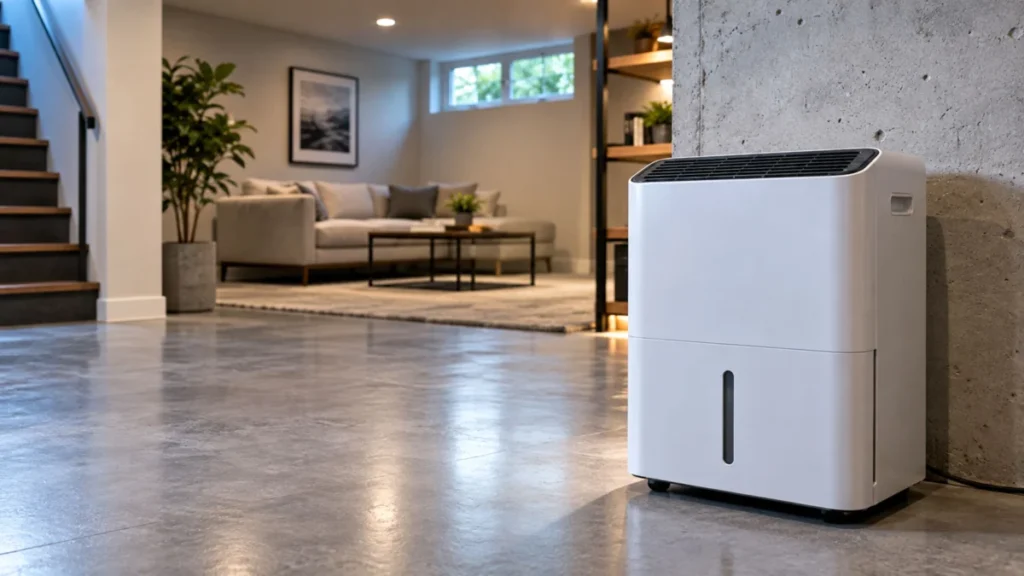
A finished basement is the ultimate home luxury—a sprawling extension of your living space that can function as a cinematic home theater, a secluded professional office, or a cozy guest suite. Yet, for many homeowners, the dream of an additional living level is marred by the reality of the subterranean environment: that persistent, tell-tale "basement smell" and the creeping sensation of dampness.
A finished basement should feel like an integrated part of the home, not a pressurized chamber that requires "airing out" before guests arrive. Achieving this level of comfort requires a fundamental shift in perspective. Moisture control is not merely an afterthought or a quick fix; it is a critical component of home infrastructure that deserves the same meticulous attention to detail as your lighting design, flooring choices, and architectural finishes.
Understanding the Subterranean Environment: The Core Facts
At its core, moisture control is a science of balance. Basement dampness is rarely the result of a single factor; rather, it is a complex interplay between geography, physics, and home maintenance. Understanding where moisture begins is the first step toward a permanent solution.
The Physics of Condensation
Basements are inherently prone to moisture due to their position below grade. When warm, humid air—whether from the outdoors during a summer storm or from indoor activities like showering and cooking—comes into contact with the cool, concrete surfaces of a foundation wall, condensation occurs. This is the "cold glass of water" effect on a structural scale. Relying on open windows to "freshen" a damp basement is often a counterproductive strategy; in muggy weather, you are effectively introducing more water vapor into a space that is already struggling to regulate itself.
External vs. Internal Sources
Before you invest in high-end climate control equipment, you must address the building envelope. Moisture typically infiltrates a home through:
- Hydrostatic Pressure: Groundwater pushed against foundation walls by poor exterior grading or inadequate downspouts.
- Capillary Action: Water wicking through porous concrete.
- Internal Humidity: Moisture generated by laundry rooms, bathrooms, and even the simple act of breathing in an enclosed space.
Failure to address active leaks or poor drainage before installing expensive flooring or drywall is a recipe for long-term structural failure and mold growth.
Chronology of Moisture Remediation: A Strategic Roadmap
Achieving a dry basement is not a task for a single afternoon; it is a multi-stage process that must be executed in the correct order to ensure lasting success.
Phase 1: The Exterior Audit (Pre-Renovation)
Before a single stud is placed, conduct a thorough audit of your home’s exterior. Ensure that gutters are clear and downspouts discharge water at least six to ten feet away from the foundation. Check that the ground slopes away from the home at a rate of at least one inch per foot for the first six feet.
Phase 2: Structural Integrity Assessment
Inspect the foundation for cracks or efflorescence—a white, powdery substance that indicates water has been passing through the concrete. If you discover structural water entry, consult a foundation repair specialist. Attempting to mask these issues with paint or sealants is a temporary aesthetic fix that often leads to internal rot.
Phase 3: The Climate Control Installation
Only once the exterior is secure should you focus on mechanical dehumidification. Integrating a high-capacity unit into the design phase allows you to plan for continuous drainage, ensuring the appliance works silently in the background without requiring manual intervention.
Phase 4: Long-term Monitoring and Maintenance
Once the space is finished, the process shifts to observation. Use a digital hygrometer to track humidity levels through the changing seasons. Establishing a baseline during the driest and wettest months of the year will allow you to calibrate your equipment for maximum efficiency.
Supporting Data: Setting the Standard for Humidity
The U.S. Environmental Protection Agency (EPA) provides clear guidelines for indoor air quality, which are particularly relevant for below-grade spaces.
The 30-50% Rule
The EPA recommends keeping indoor relative humidity (RH) levels below 60%, with a target range of 30% to 50%. When humidity consistently exceeds 60%, the environment becomes a breeding ground for dust mites, mold, and mildew.
Measuring vs. Guessing
Many homeowners rely on the "sniff test" to determine if their basement is damp. This is scientifically unreliable. Odors are a lagging indicator—by the time you smell mold, the infestation may already be established in the subfloor or behind the drywall. Investing in a high-quality hygrometer allows for objective data collection. If your readings hover above 55% during the summer months, it is time to reassess your mechanical dehumidification strategy.
Professional Perspectives and Technical Implications
When choosing a dehumidifier, the market is flooded with consumer-grade appliances that promise "total coverage." However, engineering specifications tell a different story.
Capacity and Energy Efficiency
Capacity is measured in "pints removed per day" (PPD). Do not conflate this with the size of the water collection bucket. In a finished basement, you should aim for a unit that offers continuous drainage, bypassing the bucket entirely.
Furthermore, consider the Integrated Energy Factor (IEF). This metric measures how many liters of water are removed per kilowatt-hour of electricity. In a space that requires near-constant operation, a high-efficiency unit will pay for itself in reduced utility bills within a few seasons.
The Temperature Factor
Many standard dehumidifiers are rated for operation at room temperature (around 75°F). Basements, however, are naturally cooler, often hovering between 60°F and 68°F. If you install a standard unit in a cool basement, the cooling coils may freeze over, leading to a complete loss of performance. Always look for units specifically rated for low-temperature operation.
Airflow Dynamics
A common mistake is tucking a dehumidifier into a utility closet or a corner behind a sofa. For a unit to be effective, it requires consistent airflow. If your basement is segmented into multiple rooms, a single portable unit may struggle to regulate the entire footprint. In such cases, professional-grade ducted dehumidification systems—which integrate with your existing HVAC system—often provide a superior, more consistent result.
Implications for Home Valuation and Health
The implications of failing to control basement moisture extend far beyond the inconvenience of a damp room.
- Structural Integrity: Long-term moisture exposure can lead to the corrosion of metal support columns and the deterioration of joists, creating significant safety risks.
- Indoor Air Quality: Basements often serve as the "lungs" of the house. Air from the basement is frequently drawn upward through the floorboards and through the heating/cooling ducts into the main living areas. If your basement is damp, you are effectively circulating mold spores and allergens throughout your entire home.
- Property Value: A finished basement is a major asset. However, if a home inspection reveals moisture-related damage, the investment in high-end finishes is effectively negated. Proper moisture control is an insurance policy for your home’s market value.
Conclusion: Prioritizing the Invisible
As you plan your basement project, remember that the most important features are the ones you won’t see once the work is complete. By focusing on drainage, structural integrity, and proper climate control, you create a foundation for a healthy home.
A dehumidifier is not just a white box sitting in a corner; it is the heartbeat of your basement’s environment. When paired with proactive moisture reduction strategies—such as venting your dryer, insulating cold-water pipes, and using bathroom exhaust fans—you ensure that your basement remains a comfortable, safe, and inviting space for years to come. Do not wait for the first sign of mildew to act; prioritize the invisible, and your home will reward you with lasting comfort and air quality.