
In the lexicon of luxury, few brands possess an identity as inextricably linked to the mechanics of transit as Louis Vuitton. Founded on the mastery of trunk-making, the house has long positioned itself not merely as a purveyor of goods, but as a curator of the journey itself. With the unveiling of its 2026 holiday campaign, Louis Vuitton has doubled down on this narrative, transforming the "Great Railway Bazaar" of our collective imagination into a sophisticated, global, and multi-sensory experience.
The Cinematic Vision: A Departure into Elegance
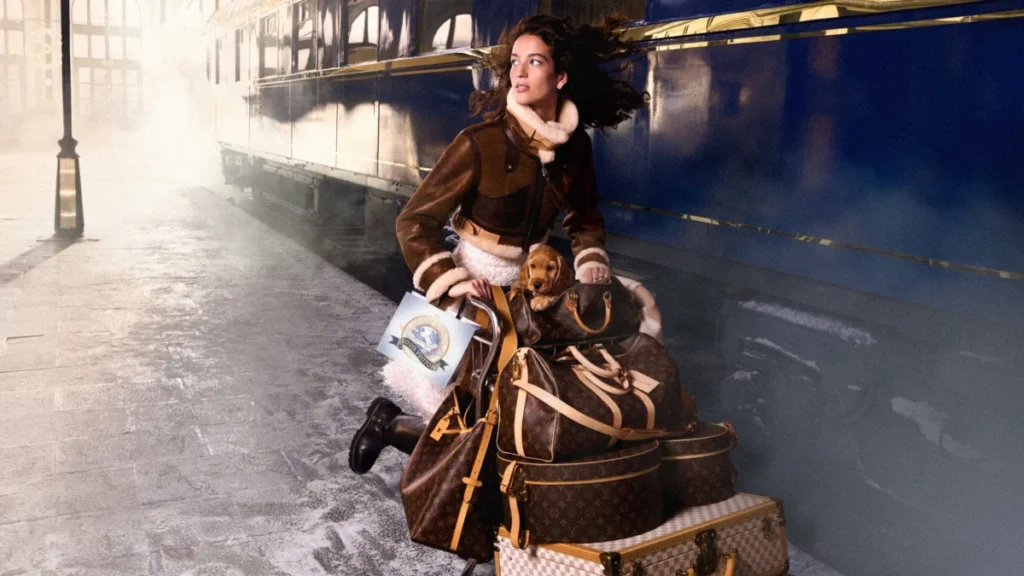
The campaign, which officially breaks this Thursday across the brand’s digital ecosystem and social media platforms, is a masterclass in atmospheric storytelling. Lensed by renowned photographer Oliver Hadlee Pearch, the imagery captures the ephemeral beauty of transit—the fleeting glances in a station, the anticipation of an arrival, and the quiet luxury of movement.
At the heart of the campaign is an accompanying film directed by the creative duo Rubberband (Jason Filmore Sondock and Simon Davis). Set within the evocative, frost-dusted confines of a vintage-inspired train station, the film is anchored by the rhythmic, infectious pulse of Joe Jackson’s 1982 classic, "Stepping Out." The choice of soundtrack is deliberate; it captures the restless, nocturnal glamour of the 1980s, providing a nostalgic yet forward-looking rhythm to the brand’s exploration of the "magic of reunions and the excitement of departure."
The film does not focus on a single destination, but rather on the interstitial spaces of travel—the platforms, the waiting rooms, and the rhythmic clatter of tracks. This aligns with the brand’s historic "Art of Travel" philosophy, suggesting that for the Louis Vuitton traveler, the journey is not a chore to be endured, but an experience to be savored.
A Legacy of Motion: From Screen to Runway
The campaign serves as a poignant extension of the creative vision established by Artistic Director of Women’s Collections, Nicolas Ghesquière. His Fall 2025 womenswear collection was heavily influenced by the cinematic history of trains, a theme that emerged from an unconventional collaborative process. Ghesquière famously polled his design team to identify the films that best captured the romantic, suspenseful, and transformative nature of rail travel.
The resulting list of influences—which includes the melancholic romance of Brief Encounter, the neo-noir aesthetics of Wong Kar-wai’s 2046, the visceral tension of Snowpiercer, and the whimsical wonder of Harry Potter and the Sorcerer’s Stone—informs the visual language of the 2026 holiday campaign. This deep dive into film history demonstrates a trend within the maison to bridge the gap between high fashion and cultural critique, framing the luxury garment as a costume for the protagonist of one’s own cinematic life.

Strategic Synergies: LVMH and the Future of Luxury Transit
Beyond the aesthetic appeal, this campaign highlights the strategic alignment between Louis Vuitton and the broader ambitions of its parent conglomerate, LVMH Moët Hennessy Louis Vuitton. The focus on rail travel is not merely a stylistic choice; it reflects LVMH’s significant capital investment in the luxury hospitality and transit sectors.
Most notably, the campaign echoes the group’s strategic partnership with the French hotelier Accor to revitalize and expand the iconic Orient Express brand. By integrating the imagery of train travel into its most visible holiday marketing, Louis Vuitton is effectively "priming the pump" for a future where LVMH-owned luxury trains, hotels, and even sailing vessels define the pinnacle of high-end, slow-travel tourism. It is a vertical integration of lifestyle—where the brand provides the luggage, the clothing, and ultimately, the vessel for the journey itself.
The Global Retail Experience: Miniature Worlds
The "Great Railway Bazaar" theme is set to physically manifest across Louis Vuitton’s global retail network. The brand’s holiday window displays have been reimagined as dioramas of wonder, featuring five distinct "worlds": the Alpine Horizon, the Big Apple, the Blossom Garden, the Moonlight Valley, and the Golden Dunes.
In these displays, intricately crafted miniature trains navigate between these varied landscapes, serving as a metaphor for the interconnectedness of the modern global traveler. This motif extends into the stores themselves, where Christmas trees will be adorned with train-inspired garlands, weaving the brand’s narrative into the very fabric of the festive season.
To further deepen this immersion, a special pop-up experience is scheduled to open this Saturday in Tokyo’s Shibuya district. This installation will house a series of these "miniature worlds" and feature an exclusive, tactile room where products are displayed within a setting inspired by the brand’s signature wooden trunks—the very items that built the Vuitton empire.
Product Innovation: Beauty and the Monogram Rouge
While the campaign is rich in narrative, it remains grounded in the tangible luxury of the house’s offerings. The holiday collection highlights a curated selection of leather goods, luggage, and accessories, but the star of the season is the debut of the "Louis Vuitton La Beauté" holiday capsule.

Inspired by the iconic Monogram Rouge lipstick shade, the beauty line is a testament to the brand’s expansion into the color cosmetics sector. The collection features five products housed in burgundy lacquered cases, adorned with hand-painted Monogram flowers. A highlight is the new matte version of the signature lip color, which, according to early industry reports, is intended to evoke the classic, timeless allure of old-world travel.
This beauty launch is complemented by a series of canvas accessories in the same rich, red hue, providing a cohesive aesthetic that spans from makeup to travel gear. By tying its beauty collection directly to its core design motifs, Louis Vuitton ensures that the consumer’s experience is holistic, extending the brand identity from the suitcase to the vanity.
Implications and Market Positioning
The 2026 holiday campaign arrives at a critical juncture for the luxury sector. As consumers increasingly prioritize "experiential" luxury over mere acquisition, Louis Vuitton’s emphasis on the "Art of Travel" serves as a powerful differentiator.
- Brand Cohesion: By aligning its seasonal campaign, retail displays, and product launches with a unified, narrative-driven theme, Louis Vuitton reinforces its position as a lifestyle brand rather than a mere fashion house.
- Cultural Relevance: The collaboration with creative directors and the engagement with film history allow the brand to remain culturally relevant to a demographic that values intellectual depth alongside aesthetic beauty.
- Synergy as Strategy: The emphasis on trains highlights a long-term play to dominate the "luxury travel" market. By romanticizing rail transit, the brand is effectively building demand for future LVMH-led transit experiences.
- Digital-to-Physical Bridge: The transition from a digital film release to a physical pop-up in Tokyo demonstrates a sophisticated "phygital" strategy, ensuring that the brand reaches the digital native while maintaining the exclusivity of in-store, tactile experiences.
As the industry looks toward 2027, Louis Vuitton’s "Great Railway Bazaar" serves as a blueprint for how legacy brands can navigate the modern retail landscape. By anchoring their identity in their historical foundations—in this case, the trunk and the train—they create a narrative that is both nostalgic and perpetually relevant.
For the consumer, the message is clear: whether one is traversing the globe or simply navigating the festivities of the holiday season, one should do so with the precision, elegance, and, above all, the spirit of adventure that has defined Louis Vuitton for over 170 years. The journey, as they suggest, is not just the path we take; it is the ultimate destination.