
In a landmark revelation that reshapes our understanding of pre-Hispanic celestial navigation, researchers from Mexico’s National Institute of Anthropology and History (INAH) have unveiled a sophisticated solar observatory buried within the lush landscape of the Teteles de Ávila Castillo archaeological site. Located in the rugged terrain of the Sierra Norte de Puebla, this 2,500-year-old structure offers a rare, crystalline window into the astronomical prowess of ancient Mesoamerican societies.
The discovery, the culmination of nearly a decade of meticulous excavation, serves as a testament to the scientific rigor of cultures that flourished long before the rise of the great imperial centers like the Aztecs. By aligning their ceremonial architecture with the rhythmic dance of the heavens, the inhabitants of Teteles de Ávila Castillo did not merely build structures; they built timekeepers.
The Discovery: A Celestial Blueprint
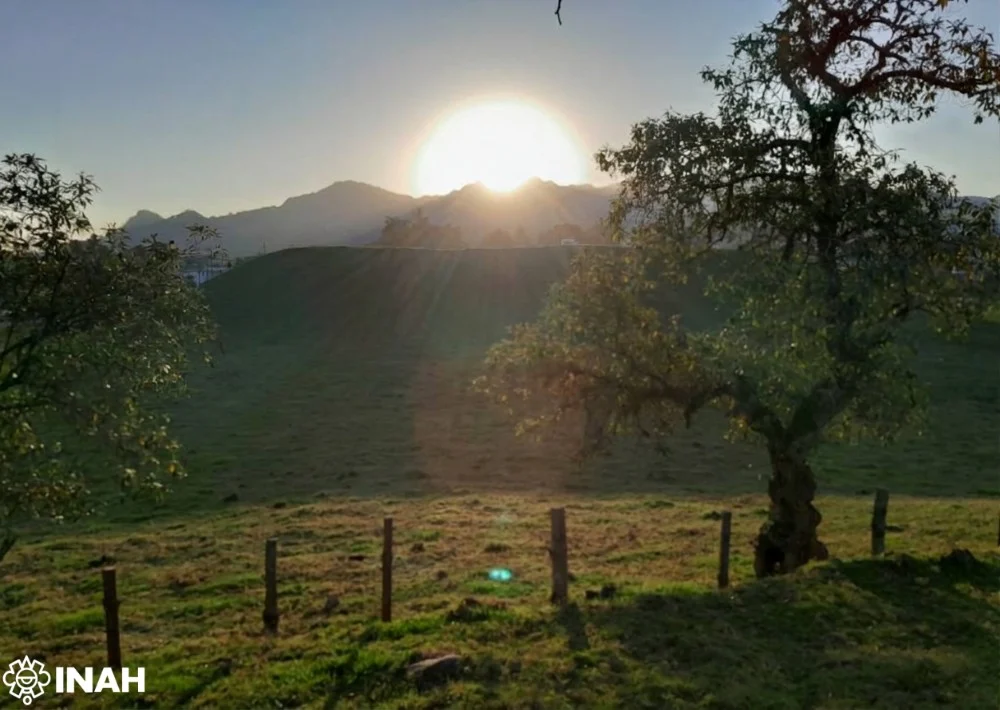
The site, which has been under active investigation by INAH since 2015, represents a significant chapter in the Middle Preclassic period (900 BCE – 600 BCE). According to Alberto Diez Barroso Repizo, the archaeological project’s director, the site’s layout is anything but coincidental. The observatory’s eastern base acts as a stone-carved calendar, tracking the sun’s trajectory with remarkable precision.
As the sun rises, its position aligns with the structure’s facade during critical turning points of the agricultural and ritual calendar, specifically marking the dawn of the Mesoamerican year in February and the pivotal harvest season in October. This alignment confirms that for the people of Teteles, the sky was not a distant mystery, but a functional, predictable framework upon which their survival and religious life depended.
Chronology: The Life and Decline of Teteles
To understand the significance of this observatory, one must place Teteles within the broader timeline of Mesoamerican history.
The Rise (900 BCE – 600 BCE)
During the Middle Preclassic, Teteles de Ávila Castillo served as a thriving hub. Its location in the Sierra Norte was strategic, situating it along vital trade routes that crisscrossed the region. The discovery of green obsidian beads at the site provides a crucial archaeological link to the powerful city of Teotihuacan. Because Teotihuacan controlled the primary quarries for this precious material, the presence of these beads in Teteles suggests a sophisticated, long-distance trade network and a social hierarchy capable of importing luxury goods.
The Peak and Transition
As the site matured, its inhabitants integrated complex astronomical knowledge into their urban planning. The observatory was not an isolated project; it was the heart of a ceremonial complex designed to harmonize the community’s social life with the movements of the solar system.
The Decline (c. 100 CE)
The site’s eventual decline around 100 CE is thought to be tied to the shifting geopolitical winds of the era. As the regional influence of nearby Cantona expanded, smaller settlements like Teteles likely saw their resources redirected or their influence eclipsed. The site was gradually reclaimed by the jungle, keeping its solar secrets hidden for two millennia until modern archaeology brought them back into the light.
Supporting Data: Evidence of Astronomical Mastery
The INAH team’s analysis of the observatory’s architecture reveals a deep intersection between geometry and cosmology. The researchers noted that the structure’s orientation is not merely for aesthetic or defensive purposes; it is a mathematical instrument.
- Solar Alignment: The eastern base serves as a marker for equinoxes and solstices, confirming that the architects possessed a nuanced understanding of the solar cycle.
- Trade Connectivity: The presence of green obsidian indicates that the site was part of a larger, interconnected Mesoamerican world, challenging the notion that these regional sites were isolated or primitive.
- Urban Integration: The placement of the observatory within a ceremonial space suggests that astronomical observations were not just for priests or rulers, but were central to the community’s religious identity.
By analyzing the movement of shadows against the building’s stone walls, the researchers have been able to map how the inhabitants tracked the year. This discovery adds a new layer to the narrative of Mesoamerican science, proving that the obsession with time and the heavens was deeply rooted in the Preclassic era, centuries before the Maya or Aztecs reached their respective zeniths.
Official Responses and Cultural Significance
The discovery has been met with significant enthusiasm from both the scientific community and the Mexican government. Claudia Curiel de Icaza, Mexico’s Secretary of Culture, highlighted the discovery as a catalyst for national pride and academic inquiry.
"The architecture of Teteles de Ávila Castillo tells us about societies that developed astronomical knowledge and incorporated it into the organization of their ceremonial spaces," Curiel de Icaza stated. She emphasized that the site is a vital piece of the puzzle in reconstructing the identity of Mexico’s ancestral civilizations.
For the INAH team, the mission now shifts from discovery to preservation and public engagement. Director Alberto Diez Barroso Repizo has confirmed that plans are currently in motion to open the site to the public. The vision includes the development of an onsite museum, which will house the artifacts—such as the green obsidian beads—and provide an educational experience for visitors to understand the site’s astronomical significance.
Implications: A New Lens on Pre-Hispanic History
The excavation at Teteles de Ávila Castillo forces a re-evaluation of the "pre-classical" label often applied to this era. If these communities were capable of such precise architectural alignments, their intellectual and scientific capacities were far more advanced than early 20th-century scholarship suggested.
Shifting the Narrative
Traditionally, the "high science" of Mesoamerica is attributed to the later Classic and Post-Classic periods. The Teteles observatory challenges this linear narrative of progress. It suggests that complex astronomical and logistical systems were in place early on, forming the bedrock upon which later, larger civilizations were built.
The Role of Trade and Exchange
The connection to Teotihuacan through the obsidian trade is particularly illuminating. It paints a picture of a dynamic, interconnected landscape where scientific knowledge, prestige goods, and religious ideas flowed alongside economic commodities. The observatory was not just a tool for farming; it was a symbol of the site’s status within a competitive regional economy.
Preservation for Future Generations
As Mexico continues to invest in the research of the Sierra Norte de Puebla, the site of Teteles stands as a beacon of cultural heritage. The transition from an active archaeological site to a public monument is a delicate process, requiring a balance between academic preservation and the need for the public to connect with their history.
Conclusion: Looking Toward the Future
The story of the Teteles solar observatory is far from finished. As excavation continues, archaeologists hope to find more evidence of how this knowledge was recorded and transmitted across generations. Did they have written records of these solar cycles? How did the common citizen interact with the observatory on a daily basis?
These questions remain at the forefront of the INAH team’s work. What is certain, however, is that this site has fundamentally altered our understanding of the Preclassic period. We are no longer looking at simple agrarian villages, but at sophisticated societies that looked to the horizon and saw a calendar, a religion, and a roadmap for their existence.
As the sun continues to rise over the ruins of the Sierra Norte, it illuminates not just the stone, but the enduring legacy of a people who, 2,500 years ago, were among the first to bridge the gap between the earth they walked upon and the stars that guided them. The work at Teteles de Ávila Castillo is a reminder that history is never truly buried; it is merely waiting for the right moment to be brought back into the light of day.