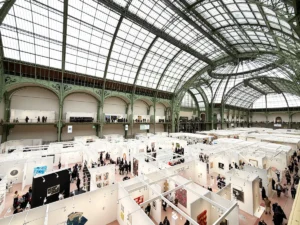
In the rarified air of the world’s leading auction houses, the atmosphere is one of triumph and record-breaking momentum. However, just outside the doors of Christie’s, Sotheby’s, and Phillips, the broader luxury retail sector is grappling with a profound existential crisis. While high-street luxury brands are reporting a mass exodus of "aspirational" consumers, the secondary market for watches, jewelry, and rare handbags is seeing unprecedented inflows of capital.
This phenomenon, which analysts are calling a "Great Divergence," suggests that the luxury market is no longer a monolithic entity. Instead, it has fractured into two distinct realities: a struggling primary retail sector burdened by aggressive price hikes, and a booming secondary auction market fueled by rarity, provenance, and the resilient spending power of the ultra-wealthy.
Main Facts: A Tale of Two Markets
The data emerging from the first half of the 2020s paints a startling picture of contrast. On one hand, the broader luxury industry is shrinking in terms of its consumer base. According to research from the consulting firm Bain & Company, approximately 50 million customers exited the luxury market between 2022 and 2024. This represents a staggering one-eighth of the total global buyer base, which fell from 400 million to 350 million in just two years.
Conversely, the major auction houses are reporting figures that seem to defy gravity.
- Christie’s saw luxury sales jump 30 percent year-on-year in the first half of 2025, reaching $468 million. By the first half of 2026, that figure climbed another 15 percent to $539 million.
- Sotheby’s has seen even more explosive growth. Luxury sales hit a record $2.7 billion in 2025, accounting for nearly 40 percent of the house’s total annual turnover.
- Phillips recently recorded the most successful spring watch season in its history, with sales in Geneva, New York, and Hong Kong exceeding $235 million.
The disconnect is driven by a "K-shaped" economic reality. While the middle-class "aspirational" buyer has been squeezed by inflation and a perceived decline in the "value proposition" of entry-level luxury goods (such as $2,000 sneakers or canvas handbags), the ultra-high-net-worth (UHNW) individual remains largely insulated. For this elite tier, the auction house offers something the primary boutique often cannot: investment-grade rarity.
Chronology: From Pandemic Boom to the Current Bifurcation
2020–2022: The Post-Pandemic Surge
Following the initial lockdowns of 2020, the luxury market experienced a "revenge spending" spree. Low interest rates and accumulated savings drove record sales across both retail and auction sectors. During this period, the distinction between primary and secondary markets was blurred, as everything from Rolex Submariners to Hermès Birkins saw price appreciation.
2023–2024: The Great Retrenchment
As central banks raised interest rates to combat inflation, the "aspirational" consumer began to retreat. In May 2024, at the Financial Times Business of Luxury Summit in Puglia, industry leaders voiced concerns over "weak consumer sentiment" and "fragile Chinese demand." It was during this window that Bain & Company tracked the departure of 50 million buyers—mostly those who felt that luxury brands had pushed price increases too far without a corresponding increase in quality or exclusivity.
2025–2026: The Auction Ascendance
While retail brands like Saint Laurent and those under the LVMH umbrella began focusing on "client retention" to survive the slump, auction houses pivoted to capitalize on the shift. By early 2026, Sotheby’s reported a 64 percent year-on-year increase in watch sales. The secondary market effectively became the "primary" source for collectors seeking items that are no longer in production, such as antique Kashmir sapphires or vintage Patek Philippe references.
Supporting Data: The Numbers Behind the Boom
The resilience of the auction sector is best understood through the lens of specific category performance and demographic shifts.
Category Breakdown
The growth in luxury auctions is not evenly distributed but is concentrated in "hard assets."
- Watches: Sotheby’s reported a 64 percent increase in global watch sales in the first half of 2026. Phillips’ $235 million spring season further cements the watch category as a dominant force.
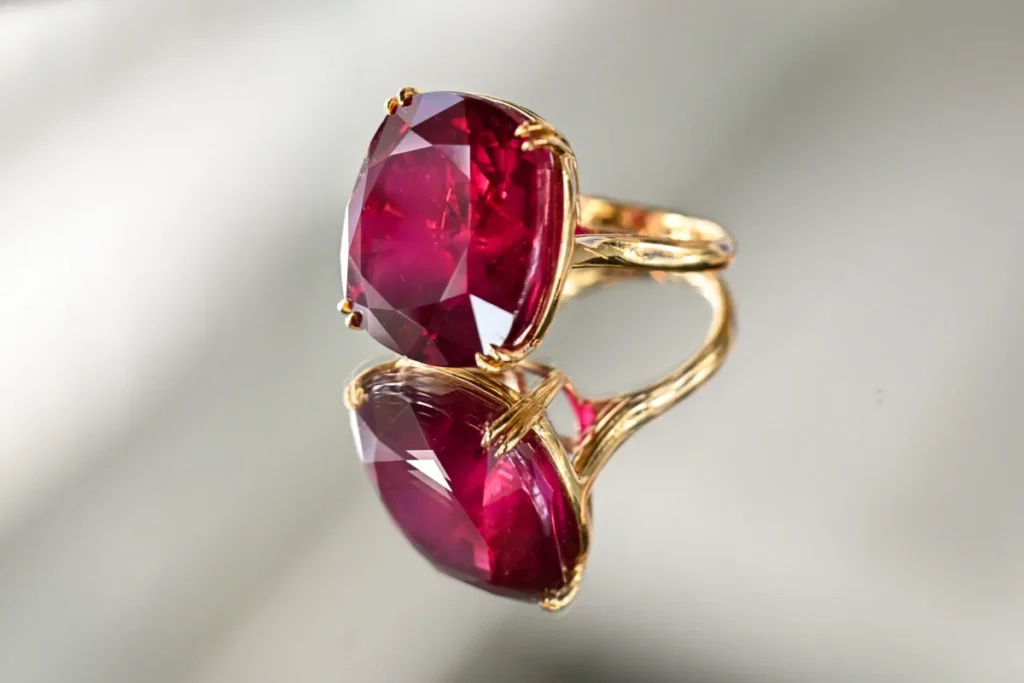
- Jewelry: Christie’s and Sotheby’s both saw double-digit growth (13–15 percent) in jewelry. The demand is particularly high for "old-mine" stones and signed period pieces from maisons like Cartier and Van Cleef & Arpels.
- Organic Growth vs. Reported Revenue: LVMH’s watches and jewelry division grew 9 percent organically in H1 2026, yet overall reported revenue for the conglomerate dropped by 3 percent. This highlights that even within luxury giants, the "hard luxury" sector (jewelry/watches) is outperforming "soft luxury" (fashion/leather goods).
The Gateway Effect
Luxury has become the primary "on-ramp" for new auction participants. At Christie’s, 38 percent of all new buyers in 2025 made their first purchase in a luxury category rather than fine art. This suggests that while a $10 million Picasso might be intimidating, a $20,000 Rolex or a $15,000 Birkin bag feels like an accessible entry point for a younger, digitally-savvy generation.
Demographic and Geographic Shifts
The buyer profile is getting younger. At Phillips, millennials and Gen Z bidders accounted for nearly one-third of all participants in the recent spring season. Geographically, while the sellers remain predominantly European (often offloading multi-generational collections), the buying power has shifted decisively toward the United States, the Middle East, and parts of Asia.
Official Responses: Insights from the C-Suite
Industry leaders suggest that the divergence is a matter of market "narrowness."
Max Fawcett, Christie’s Global Head of Jewelry, argues that the auction world operates at a much higher, narrower peak than the general retail market. "When we have so many people trying to buy the best things because there are very few of them, it just hasn’t linked through yet from that broader contraction," Fawcett told ARTnews. He emphasizes that for items like Kashmir sapphires—which can no longer be mined—the secondary market is the only market.
Josh Pullan, Sotheby’s Global Head of Luxury, attributed his house’s record-breaking H1 2026 results to a flight to quality. Collectors, he noted, are responding to "quality, rarity, and provenance" over the mass-produced luxury found in many flagship retail stores.
Guillaume Cerutti, former CEO of Christie’s, has previously noted that the house’s strategy is to use luxury as a "bridge." By capturing a client with a high-end watch, the house can eventually migrate that collector into the contemporary art or Old Masters markets.
Implications: The Future of the Luxury Ecosystem
The current state of the market suggests several long-term shifts that will redefine how we perceive "luxury."
1. The "Experiential" Pivot
Recognizing that they cannot always compete with the "white-glove" service of a Chanel or Hermès boutique, auction houses are moving into the travel and lifestyle space. Sotheby’s partnership with Indagare to offer $20,000-per-person trips to Venice or the Tour de France is a direct attempt to provide the "VVIP access" that keeps billionaires loyal to primary brands. If auction houses can successfully bundle rare objects with "money-can’t-buy" experiences, they pose a significant threat to the loyalty programs of traditional luxury maisons.
2. The Price Advantage Paradox
Ironically, the secondary market is becoming more attractive because it often offers better "value" than the primary market. As Max Fawcett noted, a stone bought at auction can often be repolished and reset, potentially appearing later in a luxury maison’s high-jewelry collection at a significant markup. Savvy collectors are realizing they can "cut out the middleman" by buying the raw rarity at auction.
3. The Risk of a Top-Down Contraction
While the auction market is currently insulated by its UHNW clientele, it is not invincible. The "Great Divergence" relies on the continued wealth accumulation of the top 0.1 percent. If the broader economic slowdown eventually hits this group—or if geopolitical instability further cools demand in China and the Middle East—the auction houses could see a delayed correction.
4. The New "Entry-Level"
The fact that 38 percent of new auction buyers start with luxury goods indicates that the "art world" of the future may be built on a foundation of "luxury objects." Auction houses are no longer just places to sell estates; they are becoming high-end e-commerce platforms and lifestyle clubs for a new generation of wealth.
In conclusion, the auction houses aren’t just surviving the luxury downturn; they are thriving by occupying a different economic strata. By focusing on the irreplaceable rather than the merely expensive, Christie’s, Sotheby’s, and Phillips have decoupled themselves from the struggles of the high street. For now, the "K-shaped" recovery ensures that as long as there is rarity to be found, there will be a billionaire ready to bid.