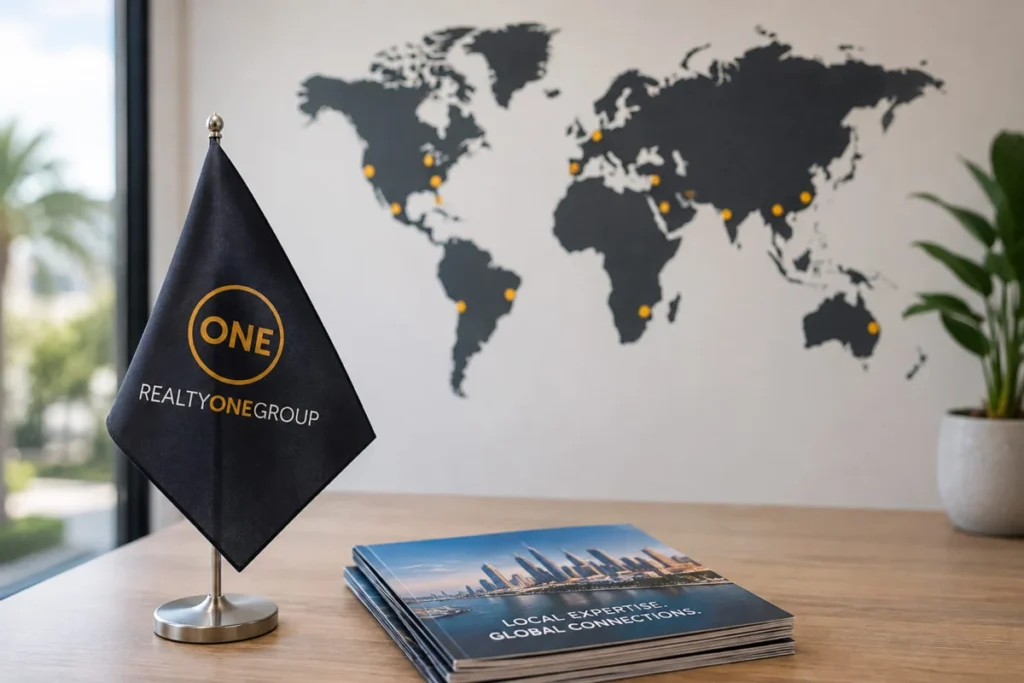
For decades, the luxury real estate sector operated under a rigid, geographic conceit: your reach was defined by your license. A brokerage based in Los Angeles or London was a master of its own zip code, but once a client’s portfolio crossed an international border, the professional relationship fractured. High-net-worth individuals (HNWIs) were forced to piece together a patchwork of local advisors, often losing the continuity, trust, and strategic oversight that define elite wealth management.
Today, that model is being dismantled. A silent revolution is transforming the industry as major American brokerage brands—spearheaded by powerhouses like Realty ONE Group—export their operational DNA across continents. This is not merely an attempt to capture commissions in foreign markets; it is a fundamental shift toward creating a global, unified ecosystem for the world’s most mobile capital.
The Evolution of International Brokerage: A Chronology of Expansion
The globalization of real estate brokerage did not happen overnight. It is the result of a decades-long maturing process within the franchise model.
- 1990s–2000s: The Referral Era: During this period, the "global" strategy was defined almost exclusively by referral networks. Firms relied on loose associations or "hand-offs" to local entities. If a client moved from New York to Paris, their advisor would refer them to a local counterpart, effectively ending the original relationship and hoping for a reciprocal deal down the road.
- 2010s: The Rise of the Managed Franchise: As technology allowed for better data integration, brands began to realize that referrals were inefficient. Companies like Realty ONE Group, founded in 2005, began to see the potential of replicating their operational infrastructure in foreign jurisdictions.
- 2020–Present: The Era of the Global Brand Ecosystem: We are currently in the third phase, characterized by the export of "systems" rather than just names. Today, a franchise brand doesn’t just put a sign on a building in a foreign capital; they export proprietary software, training modules, and, crucially, a unified brand standard that gives a client in Tokyo the same service experience as one in Miami.
Strategic Logic: Why Brands are Going Global
While the average observer might assume that international expansion is driven by the hunt for volume, the reality is far more strategic. For major brokerages, the goal is the continuity of relationship.
Modern wealth is increasingly borderless. An individual with a primary residence in Manhattan, a vacation home in the South of France, and an investment property in Dubai expects a single, high-level advisor to oversee these assets. When a brokerage can provide that continuity, they move from being a transactional service provider to a core pillar of a client’s wealth management team. This secures the referral flow, facilitates repeat transactions across jurisdictions, and, ultimately, captures the long-term estate planning needs of the client.
The Role of Government Facilitation
The expansion of these brokerages is so systemic that it is now treated by the U.S. government as an export commodity. The U.S. Commercial Service, operating through the Trade Administration, maintains a dedicated franchising team. With over 100 offices domestically and 70 internationally, the federal government actively assists U.S. franchise systems in navigating the legal and operational hurdles of entering foreign markets. In this view, a real estate brokerage is no different from a hotel chain or a fast-food franchise—it is an American intellectual property export.
The Anatomy of the Export: What Actually Crosses the Border?
A common misconception is that when a firm expands, it exports inventory or agents. In reality, neither of these is portable. Inventory is, and will always be, hyper-local. Furthermore, real estate agents must be licensed according to the specific, often draconian, requirements of the host country.
So, what is being exported? It is an operating system.
1. Technology and Data Infrastructure
Local independent brokerages often lack the capital to invest in sophisticated CRM, lead management, and transaction platforms. By joining a global franchise, they gain access to technology that makes a boutique firm function with the efficiency of a global conglomerate.
2. The Training and Coaching Framework
Consistency is the hallmark of luxury. American firms export their pedagogical models—how to conduct a showing, how to value a property, and how to communicate with HNWIs. This creates a standardized service experience that allows a buyer to move from one country to another with the expectation of predictability.
3. Marketing Templates
The "look and feel" of luxury is universal. By utilizing centralized marketing assets, international affiliates benefit from the brand equity built in the U.S., allowing them to punch well above their weight in their local markets.
Navigating the Regulatory Landscape: The Limits of the FTC
The expansion model is not without its perils. The most significant challenge for any American firm moving abroad is the divergence in regulatory environments.
Domestically, the Federal Trade Commission (FTC) provides a rigorous framework. Under the FTC’s Franchise Rule, a franchisor must provide a prospective franchisee with a Franchise Disclosure Document (FDD) containing 23 specific items of information at least 14 days before a contract is signed. This protects the investor and ensures transparency.
However, these protections are not universal. As noted by legal experts, the FTC’s jurisdiction is confined to the United States. When a firm moves abroad, it is subject to the local franchise laws of the host country. Some nations, like Indonesia, have implemented strict requirements, such as mandatory intellectual property registration and proof of historical profitability, before a foreign brand can operate.
For the franchisor, this creates an asymmetric risk profile: the brand gains market presence and referral data, while the local franchisee assumes the capital risk and the burden of local regulatory compliance.
The "Private Banking" Standard
The most profound implication of this trend is the change in client expectations. Real estate brokerages are finding themselves in direct competition with the service standards of private banks.
A client who is accustomed to the seamless, high-touch service of a global private bank will no longer accept a fragmented, local-only approach to their real estate portfolio. They expect their real estate advisor to be as sophisticated, available, and technologically connected as their financial advisor.
This is why the map of international brokerage expansion today looks remarkably like the map of hotel chains two decades ago. Just as the hospitality industry consolidated to ensure that a traveler could expect the same level of comfort from a luxury brand in Singapore as they did in New York, real estate brokerages are consolidating to provide a global standard of transaction safety and service excellence.
Future Outlook: Consolidation and Convergence
As we look toward the next decade, we can expect three distinct developments:
- Technological Homogenization: The gap between the tools available to an agent in a Tier-1 city and an agent in a developing market will shrink as cloud-based brokerage platforms become the industry standard.
- Increased Regulatory Scrutiny: As American brands move into emerging markets, expect to see more countries mirror the U.S. FTC approach to franchising, creating a more standardized global regulatory landscape.
- The Rise of the "Global Advisor": We will see the emergence of a new breed of real estate professional who is cross-trained in international tax implications, currency fluctuations, and cross-border property law, effectively blurring the lines between a traditional broker and a wealth advisor.
The flags of major brokerage brands are being planted quietly, often with little fanfare in the national media. However, the consolidation they represent is a seismic shift. We are moving away from an era of fragmented, local fiefdoms toward a future of borderless, high-standard luxury real estate—a global market for a global class of investor. For those who can master the logistics of this expansion, the rewards are not just in the volume of transactions, but in the absolute ownership of the client relationship.