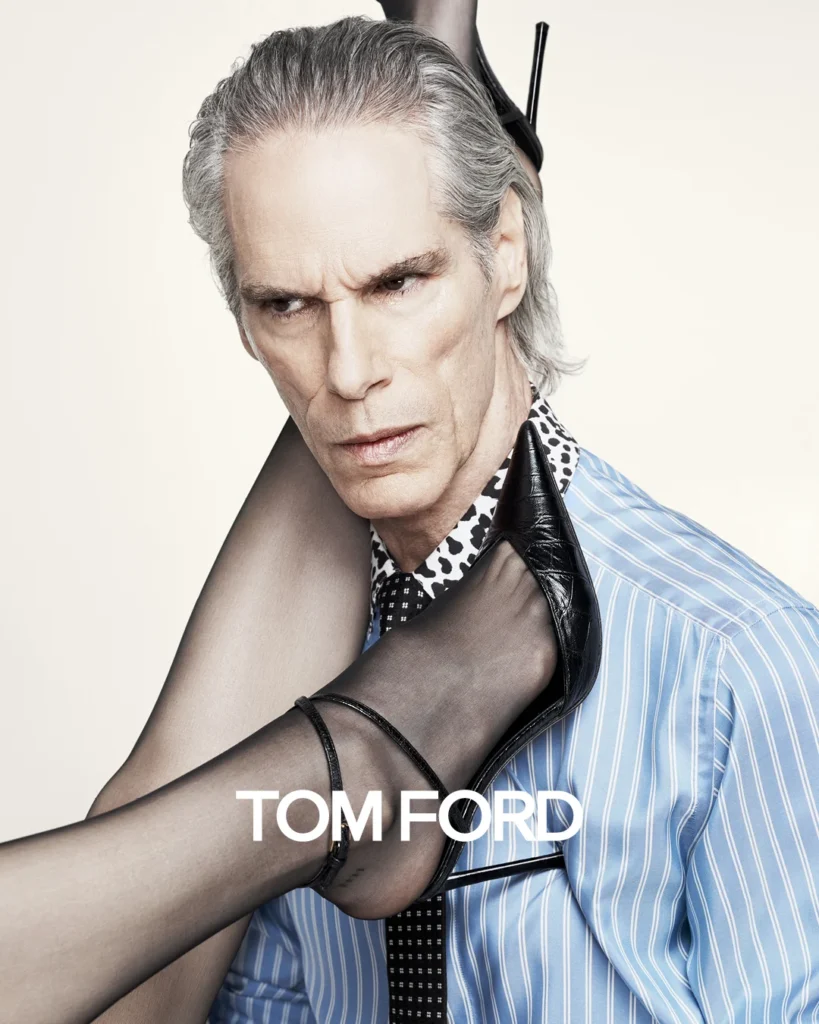
In the high-stakes theater of global luxury fashion, few creative transitions have been as closely watched as Haider Ackermann’s appointment at Tom Ford. Following his debut runway collection presented in Paris this past March—a show that effectively signaled a new, sharpened chapter for the American heritage brand—Ackermann is now cementing his aesthetic footprint. The launch of the Fall 2026 advertising campaign, lensed by the discerning eye of Stuart Winecoff, serves not merely as a marketing vehicle, but as an expansion of the cinematic, tension-filled world Ackermann debuted on the Place Vendôme.
The Aesthetic of Seductive Tension
The Fall 2026 collection was defined by its "seductive tension"—a juxtaposition of rigid, military-flecked tailoring against the fluid, dark-edged sensuality that has long been synonymous with the Tom Ford name. Ackermann’s vision for the house moves away from the overtly garish and toward something more psychological. His approach involves a sophisticated manipulation of staples: the crisp white shirt, the sharp pinstripe, and the dramatic, floor-sweeping silhouettes that demand attention through cut rather than volume.
The campaign imagery mirrors the spare, clinical environment of the runway show. By stripping away ornate backdrops and complex styling, Winecoff and Ackermann have focused the lens entirely on the garment and the individual wearing it. The result is a series of portraits that feel simultaneously classic and aggressively modern.
A Chronology of a Creative Vision
To understand the gravity of this campaign, one must look at the timeline of Ackermann’s tenure at the house:
- September 2024: Haider Ackermann is officially appointed as Creative Director of Tom Ford, succeeding Peter Hawkings. His arrival is met with industry-wide anticipation, given his reputation as a "designer’s designer."
- March 2026: The Fall 2026 runway debut in Paris. The collection is staged in a minimalist, stark white space at Place Vendôme, acting as a clean slate for the house’s new direction.
- August 2026: The official release of the Fall 2026 advertising campaign. The imagery reinforces the narrative established during the show, signaling a cohesive, long-term brand strategy.
- October 27, 2026: The WWD Honors gala at Cipriani South Street, where Ackermann is slated to receive the Womenswear Designer of the Year award, marking a critical milestone in his career.
The Casting as a Character Study
One of the most distinct elements of the Fall 2026 season is Ackermann’s approach to casting. Moving beyond the traditional youth-centric focus of luxury advertising, the campaign serves as a broad-spectrum character study. The lineup—including Liu Wen, Aluel Makuach, Malick Bodian, Kristen McMenamy, Alfredo Ramirez, and Scott Barnhill—represents a conscious decision to highlight "individuals of every age and walk of life."
This diversity is not a performative box-ticking exercise; it is structural. The clothing, characterized by its sharp edges and precise construction, requires a wearer with a history. By selecting models who possess a distinct, lived-in gravity, Ackermann allows the clothes to act as a frame for the human condition. As the designer noted, the campaign seeks to capture "the scribbles an existence intensely lived has left all over their faces."

Official Commentary: The Lens of Substance
In a rare and candid statement regarding the campaign’s philosophy, Ackermann described the images as a "lens that magnifies and amplifies the feelings, emotions and thoughts of the fashion show."
For Ackermann, the studio setting was essential to strip away the distractions of contemporary fashion marketing. "I wanted the images to be pure and direct, stark but trembling with human substance," he explained. "There is a sense of presence and awareness in such characters, caught either alone or in groups, highlighting the respective individualities."
He further articulated the narrative arc of the models portrayed in the campaign, describing them as figures who "all flirted with debauchery, but now they stand straight." This thematic thread of redemption and quiet defiance provides the collection with its emotional core, distinguishing it from the purely commercial output often seen in the luxury sector.
The Designer’s Path: From Bogotá to Place Vendôme
The Colombian-born Ackermann has long been regarded as one of the most intellectually rigorous designers in fashion. His career path has been characterized by a refusal to dilute his aesthetic, even when working within the confines of established luxury houses.
His history, which includes a successful tenure at the French house Berluti and his ongoing leadership at Canada Goose, has equipped him with the ability to balance commercial viability with avant-garde sensibilities. At Tom Ford, he occupies a unique space: a brand that is inherently American in its roots but globally recognized for a specific brand of hyper-glamour. Ackermann’s challenge—and his success—has been to pivot that glamour toward something more intimate and introspective.
Implications for the Tom Ford Brand
The reception of this campaign and the preceding collection suggests a broader shift in the luxury market. As consumers grow increasingly fatigued by the "logomania" and "quiet luxury" trends that have dominated the last decade, there is a clear appetite for designers who can offer a strong, singular vision—a "point of view" that transcends seasonal shifts.

By leaning into the "clinical" and the "unfiltered," Ackermann is positioning Tom Ford as a brand that is not merely selling clothes, but a specific type of cultural attitude. The upcoming recognition at the WWD Honors gala further validates this shift, positioning him as a central figure in the contemporary fashion landscape.
The Broader Market Context
The success of the Fall 2026 campaign comes at a time of consolidation for the luxury industry. With many houses struggling to find a balance between historical archives and the need for modern relevance, Ackermann’s ability to weave the past—the dark-edged, sultry DNA of Tom Ford—with his own signature "trembling" humanism is a significant strategic win.
The decision to pair the campaign launch with an industry-wide recognition (the WWD Honor) serves to create a "halo effect" around the brand. It signals to investors, critics, and consumers alike that the creative direction of Tom Ford is stable, respected, and highly influential.
Conclusion: The Future of the House
As we look toward the future of Tom Ford under Haider Ackermann, it is clear that the brand is entering a phase of maturity. The Fall 2026 campaign is a testament to the idea that luxury in the modern age is defined by authenticity. By choosing to frame his collection through the lens of individuals who are "defiant" and "unfiltered," Ackermann has successfully bridged the gap between the runway and the reality of his audience.
Whether this momentum will continue into the Spring 2027 season remains to be seen, but the foundations laid in the stark, white spaces of Paris and the clinical intensity of Stuart Winecoff’s photography provide a compelling template. Haider Ackermann is not just designing clothes for Tom Ford; he is curating a gallery of personas, each of whom wears their history as elegantly as they wear their tailoring. In an industry that often relies on the ephemeral, Ackermann is choosing to build on the substance of human experience—a strategy that, for now, seems perfectly in step with the pulse of modern luxury.