
The architectural landscape of West Chelsea, a district synonymous with the global vanguard of contemporary art, is bracing for a significant shift in its ownership structure. The Spears Building, a six-story industrial-turned-art-sanctuary located at 525 West 22nd Street, is slated to head to the auction block next week. This development follows a protracted legal battle and a foreclosure judgment that marks a rare moment of volatility for one of the most stable and prestigious blocks in Manhattan’s real estate market.
Situated in the heart of the Chelsea gallery district, the Spears Building is not merely a piece of commercial real estate; it is a cornerstone of the neighborhood’s cultural identity. As the building prepares for a change in stewardship, the art world and real estate investors alike are watching closely to see how this transition will impact the delicate ecosystem of one of the world’s most concentrated hubs of creative commerce.
Main Facts: The Foreclosure and the Impending Sale
The upcoming auction of the Spears Building is the culmination of a foreclosure action initiated by U.S. Bank Trust Company. The legal proceedings were directed at the building’s current owner, Chelsea Warehouse Associates, following an alleged default on a substantial commercial loan.
According to reports first published by Crain’s New York Business, the foreclosure centers on a $14.2 million loan. The legal process, which unfolded over the past year, resulted in a $14.9 million judgment against the ownership entity. This figure includes the principal balance as well as accrued interest and associated legal costs. The auction represents the final step in the lender’s effort to recover the debt through the liquidation of the asset.
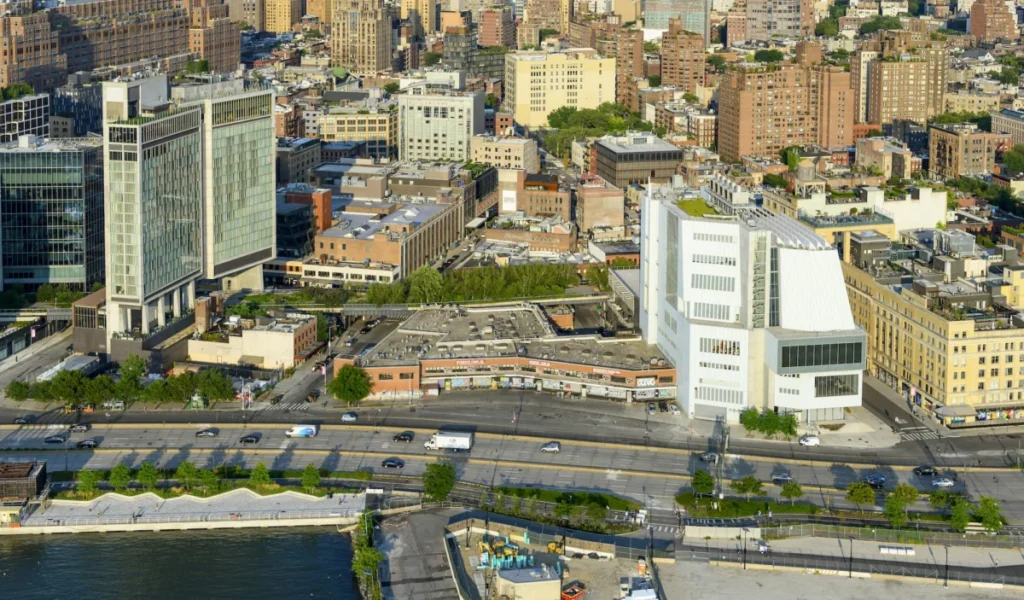
The Spears Building itself is a massive 100,000-square-foot structure, a scale that is increasingly rare and highly coveted in the land-constrained environment of West Chelsea. Located between Tenth and Eleventh Avenues, the property sits on a block that serves as a "who’s who" of the international art market. It shares the street with powerhouse institutions and galleries such as Hauser & Wirth, Matthew Marks Gallery, Sikkema Jenkins & Co., and the Dia Art Foundation.
Despite the looming sale, the building remains a fully operational hub. It currently houses several high-profile tenants, most notably the Miles McEnery Gallery and the Yancey Richardson Gallery. These institutions have anchored the building for decades, contributing to the 22nd Street corridor’s reputation as a destination for serious collectors and art historians.
Chronology: From Industrial Warehouse to Foreclosure Target
The history of the Spears Building mirrors the broader transformation of West Chelsea itself. To understand the significance of the current auction, one must look at the timeline of the building’s evolution and the financial pressures that led to the present day.
The Industrial Roots (Late 19th Century – 1990s)
Originally constructed as a warehouse during Chelsea’s era as a bustling industrial and shipping hub, 525 West 22nd Street featured the high ceilings, robust floor loads, and expansive windows that would later make it ideal for the display of large-scale contemporary art. For much of the 20th century, it served the logistical needs of Manhattan’s West Side.
The Artistic Migration (Late 1990s – Early 2000s)
As the art world migrated from SoHo to Chelsea in search of larger, more affordable spaces, the Spears Building was converted to accommodate galleries and creative offices. During this period, the building established itself as a premier destination. Miles McEnery, for instance, has maintained a presence in the building for nearly twenty years, while Yancey Richardson has been a tenant for fifteen.
The Financial Default (2020 – 2023)
While the specific internal motivations of Chelsea Warehouse Associates remain private, the broader context of the New York commercial real estate market during and after the COVID-19 pandemic saw many owners facing tightening credit conditions and fluctuating interest rates. Last year, U.S. Bank Trust Company moved to foreclose, citing the default on the $14.2 million loan.
The Judgment and Auction Notice (2023 – Present)
The New York State Supreme Court ultimately ruled in favor of the lender, leading to the $14.9 million judgment. With the legal hurdles cleared, the building was scheduled for public auction. The law firm representing the defendants, Cole Schotz, has not yet provided an official statement regarding the default or the strategy for the upcoming sale.
Supporting Data: The Value of West Chelsea Real Estate
The financial stakes of the Spears Building auction are underscored by the astronomical property values in the Chelsea Gallery District. While the judgment sits at approximately $14.9 million, market analysts suggest the building’s intrinsic value—given its size and location—could potentially far exceed the debt owed.
Square Footage and Scale
At 100,000 square feet, the Spears Building is a "heavyweight" asset. In West Chelsea, where boutique developments often focus on smaller footprints, a building of this magnitude offers significant versatility. It can accommodate massive ground-floor gallery spaces, which command the highest rents, as well as upper-floor showrooms or creative tech offices.
The "High Line" Premium
The building’s proximity to the High Line park has historically insulated the area from broader market downturns. Properties on West 22nd Street benefit from high foot traffic and a global reputation. Recent sales of comparable commercial properties in the district have seen price-per-square-foot figures that make the $14.9 million judgment look relatively modest, suggesting that the auction could attract competitive bidding from private equity firms, real estate investment trusts (REITs), and wealthy private collectors.
Tenant Longevity
A key data point for potential investors is the stability of the current tenant roster. Unlike many commercial sectors struggling with high vacancy rates, the Spears Building’s primary tenants are deeply entrenched. The presence of galleries like Miles McEnery and Yancey Richardson—both of whom have expressed a commitment to staying—provides a guaranteed revenue stream that makes the asset highly attractive to "risk-averse" institutional buyers.
Official Responses: Tenants Signal Stability Amidst Change
In the wake of the auction news, the primary concern for the art community has been the fate of the galleries within the building. However, the leaders of these institutions have responded with a unified front of optimism and legal confidence.
Yancey Richardson’s Perspective
Yancey Richardson, whose gallery has become a staple of the building over the last 15 years, was quick to dispel rumors of a potential relocation. In an interview with ARTnews, Richardson emphasized the strength of her current lease agreement.
“We have a really good lease,” Richardson stated. “I love my building and I love my neighbors, and I’ve been an easy tenant for the building. I renewed my lease for another 10 years a couple of years ago.”
Richardson, who recently opened exhibitions featuring Manuel Álvarez Bravo and Tania Franco Klein, added that she anticipates no disruption to her operations. “I don’t have any intention of going anywhere and I don’t think there’s going to be a disruption.”
Miles McEnery’s Outlook
Miles McEnery, who has operated out of the Spears Building for nearly two decades, echoed this sentiment. In a statement provided via email, McEnery described his gallery as being in a position of strength.
“We have been very happy tenants for nearly twenty years and have always fulfilled our financial obligations,” McEnery said. “We have a lease in place and have invested considerably in our spaces over the years. If we find ourselves with a new landlord, we look forward to meeting the new owners and continuing to be good tenants for decades to come.”
McEnery’s focus remains on the upcoming season, characterizing the ownership transition as "business as usual." He noted that the gallery remains "happily focused on the gallery, our artists, and the season ahead."
Implications: The Future of the Chelsea Gallery District
The auction of the Spears Building is more than a simple transfer of a deed; it is a litmus test for the future of the Chelsea art ecosystem. Several implications emerge from this high-stakes sale:
1. The Rise of Institutional Ownership
The foreclosure suggests a shift away from smaller, private ownership groups toward larger institutional players. If a REIT or a major private equity firm acquires the building, the management style may become more corporate. While this can lead to better building maintenance and modernization, it can also lead to more aggressive rent structures once existing leases expire.
2. Lease Protection as a Safeguard
The confidence displayed by Richardson and McEnery highlights the importance of long-term commercial leases in Manhattan. Under New York law, a change in ownership through foreclosure typically does not invalidate existing valid leases. The "attornment" clauses in most commercial agreements ensure that the tenant recognizes the new owner as the landlord, and the landlord honors the existing terms. This provides a crucial buffer of stability for the art world.
3. The "Art Island" Effect
As other parts of Manhattan face commercial vacancies, West Chelsea remains an "island" of high demand. The fact that a building with a $14.9 million debt is heading to auction in this neighborhood suggests that the lender is confident in a full recovery of funds. This reinforces the idea that art-related real estate remains one of the most resilient asset classes in New York City.
4. Potential for Redevelopment
While the current tenants are protected by their leases, a new owner may look at the long-term potential for the 100,000-square-foot site. This could involve converting upper floors into luxury residential units (where zoning permits) or high-end "condo-galleries." However, given the current success and prestige of the existing gallery tenants, any radical change in the building’s use would likely be years, if not decades, away.
As the gavel falls next week, the Spears Building will likely enter a new chapter. For the galleries that call it home, the hope is that the new landlord will value the cultural capital they provide as much as the square footage they occupy. For the rest of the art world, the auction serves as a reminder that even in the most prestigious corners of the industry, the underlying forces of New York real estate are always in motion.