

By Yemi Osinbajo and Alexander Tsado
September 18, 2026
The global narrative surrounding Artificial Intelligence (AI) is currently dominated by a binary focus: a high-stakes, geopolitical contest between the United States and China. This "frontier race"—characterized by massive compute clusters and trillion-parameter models—is undoubtedly significant. However, it obscures a much larger, more transformative reality. The true economic windfall of the AI era will not necessarily be found in the creation of the most advanced Large Language Model (LLM), but in the widespread, practical deployment of intelligence to solve real-world problems. For this, no region is more strategically positioned than Africa.
With the world’s youngest population, a burgeoning digital economy, and a history of leapfrogging traditional infrastructure, Africa stands at a crossroads. The continent is no longer content to be a passive consumer of foreign innovation; it is poised to become a crucible for practical, context-specific AI.
The Historical Context: Escaping the Innovation Chain
For decades, Africa has been relegated to the end of the global innovation value chain. In this paradigm, breakthroughs—whether in pharmaceuticals, green energy, or digital infrastructure—were conceptualized, patented, and commercialized in the Global North. By the time these technologies reached African shores, they were often prohibitively expensive, culturally mismatched, or tethered to restrictive intellectual property regimes that left African nations with zero leverage.
The Pandemic Wake-Up Call
The structural fragility of this model was laid bare during the COVID-19 pandemic. As global supply chains shuttered, African nations found themselves at the back of the queue for life-saving vaccines. The realization was sobering: relying on the charity or commercial prioritization of foreign powers is not a sustainable development strategy.
This history has fostered a deep-seated mandate across the continent: sovereignty in technology is a prerequisite for economic security. AI offers a unique chance to rewrite this script. Unlike traditional industrialization, which required massive capital investment in heavy machinery and energy grids, AI is a "soft" infrastructure. It is built on human ingenuity, data, and access to compute—resources that are increasingly democratized.
Chronology: The Evolution of African Tech Adoption
The path to an AI-driven African economy did not begin in 2026; it is the culmination of a decade-long digital maturation process.
- 2015–2018: The Mobile-First Foundation. The proliferation of mobile money (M-Pesa, Flutterwave, Paystack) created the digital trail necessary for AI training. Financial inclusion became the sandbox for data collection.
- 2019–2021: The Rise of Tech Hubs. Lagos, Nairobi, Cape Town, and Kigali emerged as "Silicon Savannas," attracting record venture capital. The focus shifted from basic connectivity to software-as-a-service (SaaS) solutions tailored to local markets.
- 2022–2024: The Generative AI Inflection. As global AI models became accessible via API, African developers began integrating LLMs into local agricultural and healthcare tools, bypassing the need to build "foundation models" from scratch.
- 2025–2026: The Shift to Practical Deployment. National governments, including Nigeria and Kenya, began establishing dedicated AI task forces, focusing on local language processing and climate-smart agriculture.
Supporting Data: Why the "Practical AI" Thesis Holds
The economic argument for AI in Africa is not based on speculation, but on the continent’s unique structural bottlenecks, which AI is uniquely equipped to resolve.
1. The Productivity Gap in Agriculture
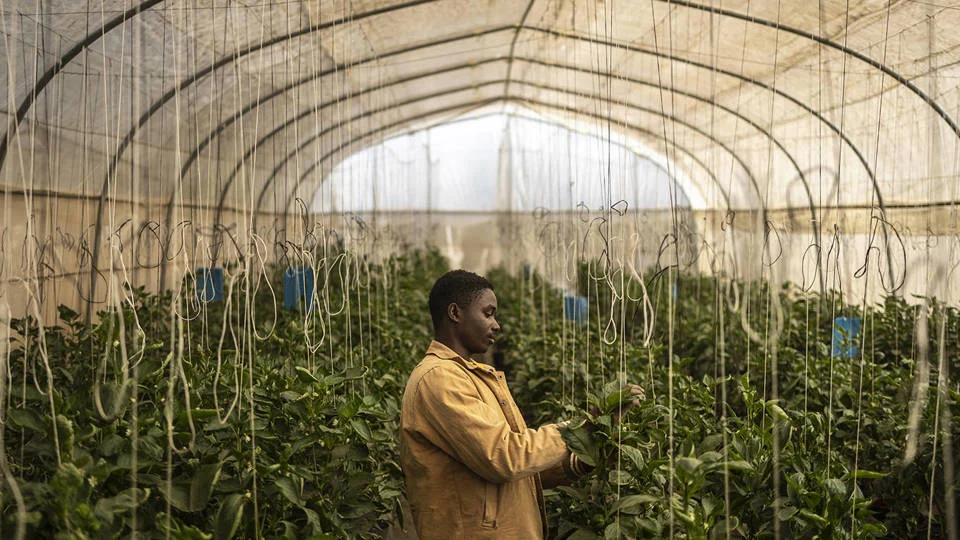
Agriculture accounts for roughly 35% of Africa’s GDP and employs over 60% of its workforce. Yet, yields remain a fraction of those in the West. AI-driven precision agriculture—using satellite imagery and localized weather data to optimize planting cycles and fertilizer use—has the potential to increase agricultural productivity by 20–30% within five years.
2. Demographic Dividends
Africa is home to the world’s youngest and fastest-growing workforce. By 2050, one in four people on Earth will be African. Integrating AI into education (through personalized AI tutors that bridge language gaps) and healthcare (through diagnostic AI that assists overstretched rural clinicians) will be the difference between a demographic dividend and a demographic crisis.
3. Data Localization and Sovereignty
Unlike the West, where data privacy concerns often stall innovation, African nations are building regulatory frameworks that prioritize both protection and development. The emergence of indigenous data sets—representing diverse dialects and local environmental conditions—is creating a new class of "localized AI" that is more accurate and relevant than models trained on Western internet scrapes.
Official Responses and Strategic Shifts
Governments are moving beyond rhetoric. In Abuja and Lagos, policy circles are debating the "AI-First" approach. The Nigerian government, for instance, has signaled a shift toward "regulatory sandboxes," allowing startups to experiment with AI in finance and logistics without the burden of legacy red tape.
"We are not looking to build a competitor to GPT-5," a senior advisor in the Nigerian Ministry of Innovation noted. "We are looking to build the most efficient logistics platform for informal markets, the most accurate diagnostic tool for tropical diseases, and the most effective education system for remote learning. That is the frontier that matters."
Furthermore, regional bodies like the African Union have begun drafting a common AI strategy. The goal is to ensure that AI does not exacerbate the "digital divide" but rather serves as a bridge, ensuring that African data remains an African asset.
The Implications: A Global Shift in AI Value
If the West is obsessed with "Frontier AI"—the quest for AGI (Artificial General Intelligence)—Africa is leading in "Deployment AI." The implications of this are profound:
The "Practical Intelligence" Market
As the global AI market matures, we expect to see a decoupling of AI research from AI application. The research-heavy, compute-intensive work will remain concentrated in hubs like San Francisco and Beijing. However, the application-heavy work—the software that actually runs the world’s logistics, food systems, and healthcare—will increasingly be developed in markets where the problems are most acute.
Countering the "Digital Colonialism" Narrative
By focusing on local ownership, African startups are creating a counter-narrative to digital colonialism. By building systems that rely on African languages (such as Swahili, Yoruba, and Amharic), these companies are ensuring that the digital tools of the future understand the context of the present.
Investment Opportunities
For global investors, the risk-reward ratio is shifting. While the "Frontier Race" in the US is characterized by inflated valuations and massive burn rates, the "Practical AI" sector in Africa offers tangible, measurable ROI. An AI tool that increases crop yields for 10 million smallholder farmers is a business model with a clearer path to profitability than a theoretical model that may or may not reach AGI.
Conclusion: The Road Ahead
The global AI revolution is too important to be left to a handful of companies in the Global North. Africa’s entry into this space is not an attempt to catch up; it is an attempt to leapfrog.
By focusing on the practical, tangible applications of AI—in our schools, our farms, and our clinics—Africa is positioning itself to be the primary beneficiary of the next phase of the digital revolution. The race for the most advanced model is a vanity project. The race for the most impactful intelligence is where the future will be decided.
For the continent, the message is clear: The AI revolution is not happening to us; it is happening through us. As we continue to refine our policies, invest in our youth, and champion the sovereignty of our data, we are not just participating in the global AI economy—we are defining its next, and perhaps most meaningful, chapter.