Introduction: A Hidden Legacy Unearthed
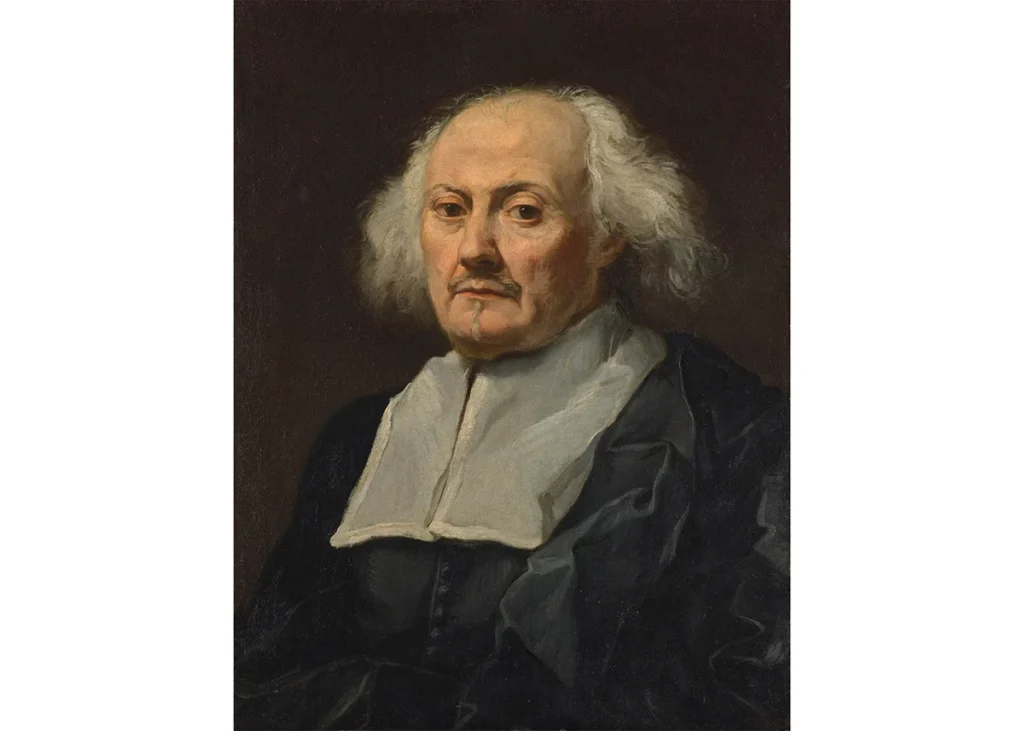
For decades, it gathered dust in the quiet, climate-controlled obscurity of a Viennese storeroom, dismissed by scholars and ignored by the public. Portrait of an Old Man, a somber and haunting depiction of an elderly subject, had long been relegated to the status of a “minor work by an anonymous hand.” Yet, as the art world prepares for the landmark exhibition Bernini—Painter and Sculptor at Vienna’s Kunsthistorisches Museum (KHM) this December 2, this neglected canvas is poised to undergo a dramatic transformation.
It is no longer the work of an unknown hand; it is now recognized as a vital, missing link in the oeuvre of Gian Lorenzo Bernini, the titan of the Italian Baroque. The discovery—and subsequent validation—of this painting serves as a profound reminder that even in the world’s most prestigious institutions, the history of art remains a living, evolving narrative, capable of surprising even the most seasoned experts.
The Titan of the Baroque: Gian Lorenzo Bernini
To understand the significance of this discovery, one must first appreciate the singular stature of Gian Lorenzo Bernini (1598–1680). While history remembers him primarily as the architect and sculptor who essentially “built” Baroque Rome, his artistic output was as expansive as it was influential.
As the official architect of St. Peter’s Basilica, Bernini’s fingerprints are all over the Vatican’s aesthetic identity. From the sweeping embrace of the exterior piazza and its massive colonnades to the intricate bronze ornamentation of the Baldacchino, his vision defined the grandeur of the Catholic Counter-Reformation. His sculptures, meanwhile, possess a vitality that seems to defy the physical properties of marble. His David, a dynamic, mid-action study of tension and resolve, was a deliberate challenge to the static perfection of Michelangelo’s predecessor. His Ecstasy of Saint Theresa, housed in the Santa Maria della Vittoria church, remains perhaps the most famous example of “theatrical sculpture” in existence, utilizing light, shadow, and architectural framing to evoke a deeply visceral, spiritual experience.
However, the shadow cast by these monumental works has often obscured Bernini’s prowess as a painter. While contemporary records suggest he produced hundreds of canvases throughout his prolific life, fewer than 20 authenticated paintings have survived to the modern day. The recovery of Portrait of an Old Man is, therefore, not merely a minor addition to an existing catalog; it is a significant expansion of our understanding of one of history’s most influential artists.
A Century of Uncertainty: The Chronology of an Attribution
The journey of Portrait of an Old Man from a forgotten acquisition to a star attraction is a masterclass in the complexities of provenance. The museum acquired the painting in 1920, following a gift from a local collector who had purchased it two decades prior.
At the turn of the 20th century, the painting was tentatively attributed to Philippe de Champaigne, a noted French Baroque painter and a contemporary of Bernini. This attribution, however, was never definitive. Over the subsequent decades, the painting underwent a series of re-evaluations as stylistic trends in art history shifted. Eventually, the name of the artist was stripped away entirely, and the piece was cataloged as the work of an “anonymous artist.”
By 1989, the work was relegated to the museum’s storage facility. For over 35 years, it remained out of sight, a victim of the museum’s vast collection and the prevailing scholarly consensus that it held little more than historical curiosity. It was only through the dedicated research of Gudrun Swoboda, the lead curator for the upcoming KHM exhibition, that the painting was pulled from the shadows and subjected to the rigorous scrutiny that would ultimately change its status forever.
The Curator’s Eye: Identifying the Master’s Hand
The process of re-attributing an Old Master is rarely a matter of serendipity; it is an act of forensic art history. Gudrun Swoboda’s breakthrough came when she began to look past the surface-level appearance of the painting and analyze the mechanical application of the paint.
The Sculptural Brushstroke
Swoboda’s primary observation was that the unknown artist painted with the sensibilities of a sculptor. The musculature of the subject’s face—the sagging skin around the jowls, the deep furrows of the brow, and the structure of the mouth—was not merely rendered with pigment. Instead, the paint appeared to be “built up” in layers, as if the artist were modeling clay with a thumb or a tool. This technique, she argued, is a hallmark of Bernini’s transition from marble to oil.
Comparative Anatomy
To support her hypothesis, Swoboda turned to documented masterpieces. She drew direct comparisons between the corners of the subject’s mouth in Portrait of an Old Man and the marble Bust of Louis XIV. The uncanny similarity in the handling of the flesh—the way both works capture the underlying tension of muscle beneath skin—provided a strong stylistic link.
Furthermore, Swoboda scrutinized the lighting and the subject’s gaze. By comparing the painting to a self-portrait drawing of Bernini held by the Royal Collection Trust, she identified a shared preoccupation with the “theatrical gaze.” The way the light hits the subject’s face, creating deep, dramatic shadows that emphasize the subject’s inner life, is consistent with the chiaroscuro techniques Bernini employed in his more famous works.
Official Responses and Scholarly Discourse
The attribution of a major work is rarely greeted with immediate, universal consensus. Within the art world, the response to the KHM’s announcement has been one of cautious excitement.
“Attributing a work to an artist of Bernini’s magnitude is a high-stakes endeavor,” says Dr. Elena Rossi, an independent scholar of Baroque art. “The museum is clearly confident, and the technical evidence presented by Swoboda is compelling, particularly regarding the sculptural approach to the paint. However, the art world will wait to see the work in person this December before rendering a final verdict.”
The Kunsthistorisches Museum has embraced the scrutiny. By including the painting in the upcoming exhibition and publishing a dedicated book—authored by Swoboda—detailing the investigation, the institution is inviting the global art community to engage with the evidence. This transparency is intended to foster a healthy, rigorous debate, which the museum believes will only further validate the new attribution.
The Implications of the Discovery
The re-emergence of this painting carries significant implications for the field of art history.
- Re-evaluating the Painter-Sculptor Binary: For too long, the narrative has been that Bernini was a “sculptor who painted.” This discovery suggests a more fluid, integrated practice. It challenges scholars to look for “sculptural” markers in other paintings currently attributed to lesser-known Baroque artists.
- The Hidden Value of Museum Storerooms: The case of Portrait of an Old Man serves as a poignant reminder that museums are more than just exhibition halls; they are repositories of untold stories. The “storage problem” remains a reality for many institutions, but this discovery highlights the necessity of continuous scholarly review of non-exhibited collections.
- The Market and Cultural Value: While the museum has not placed a monetary value on the painting, the shift from “anonymous” to “Bernini” is objectively massive. It elevates the painting from a historical footnote to a centerpiece of European cultural heritage, ensuring it will never again see the inside of a storage crate.
Conclusion: A New Chapter for the Baroque Master
When the doors to the Bernini—Painter and Sculptor exhibition open in December, the star of the show will not be a marble giant brought in from Rome, but a canvas that has been hiding in plain sight for over a century.
Portrait of an Old Man stands as a testament to the enduring mystery of art. It reminds us that our knowledge of the past is never truly complete; it is a tapestry that is constantly being woven, unraveled, and re-stitched. As the public gathers in Vienna to view this newly minted masterpiece, they are witnessing more than just a painting. They are witnessing the reclamation of a legacy, the triumph of curatorial diligence, and the quiet, persistent voice of a genius finally being heard after three centuries of silence.
The exhibition, which will feature 10 additional international loans, will remain on view until April 2027, giving the world ample time to come to terms with the fact that, in the world of Gian Lorenzo Bernini, there is always more to discover.