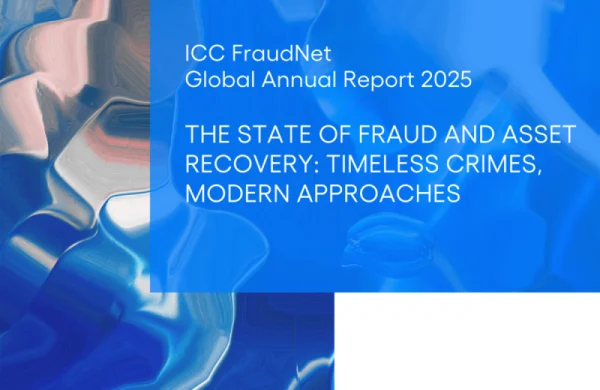
In an era defined by the rapid digitalization of finance and the increasing sophistication of global criminal syndicates, the battle against illicit financial activity has reached a critical inflection point. Today, ICC FraudNet—a premier division of ICC Commercial Crime Services—officially released its highly anticipated 2025 Global Annual Report. Marking the fifth edition of this landmark publication, the report serves as a definitive roadmap for legal practitioners, investigators, and policymakers navigating the complex, borderless landscape of modern financial crime.
Titled “The State of Fraud and Asset Recovery: Timeless Crimes, Modern Approaches,” this year’s compendium arrives at a moment when the intersection of artificial intelligence (AI), regulatory divergence, and cyber-sophistication is fundamentally altering the playing field for asset recovery professionals.
The Evolution of a Global Sentinel
Founded in 2004 under the auspices of the International Chamber of Commerce (ICC), FraudNet was established to provide a centralized, elite network for the world’s most specialized fraud and asset recovery lawyers. Over the past two decades, the organization has grown into a formidable global force, currently boasting 125 members and 8 strategic partners across 81 countries.
The publication of the 2025 Global Annual Report represents the culmination of a decade-long trajectory of thought leadership. While the core mandate of FraudNet—tracing, freezing, and recovering stolen assets—remains consistent, the methodologies employed by its members have undergone a radical transformation. This fifth edition seeks to bridge the gap between "timeless crimes"—the age-old human impulse for embezzlement and corruption—and the "modern approaches" necessitated by the technological age.
Six Pillars of the 2025 Report
According to Nicola Stenhouse, Executive Secretary of ICC FraudNet, the structure of this year’s report is intentionally comprehensive, designed to address the multifaceted nature of contemporary financial malfeasance. The document is organized into six core pillars:
- Perspectives on AI: Assessing the dual-use nature of machine learning in both facilitating and dismantling fraud.
- Enforcement and Regulation: Analyzing how international legal frameworks are struggling to keep pace with decentralized financial systems.
- Asset Recovery Investigations: A deep dive into the integration of criminal, civil, and technological methodologies.
- Cybercrime: Identifying the evolving threats posed by ransomware, deepfakes, and crypto-asset exploitation.
- Tackling Fraud, Corruption, and Money Laundering: Exploring systemic barriers to cross-border judicial cooperation.
- Practical Perspectives: A collection of field-tested strategies and tactical insights for practitioners.
"Each part offers not only thoughtful analysis but also practical tools and strategies to navigate today’s complex landscape," Stenhouse stated during the launch. By compartmentalizing these themes, the report provides a modular approach that allows professionals to address specific challenges, from jurisdictional disputes to the forensic analysis of digital ledgers.
The AI Paradox: A Double-Edged Sword
Perhaps the most significant contribution of the 2025 report is its rigorous examination of Artificial Intelligence. As the report’s editor, Dr. Dominic Thomas-James, highlights, the document moves beyond speculative hype to provide a granular look at how Large Language Models (LLMs) and AI-driven decision-making tools are impacting litigation.
"Tales of caution about AI’s ability as a manipulator, as well as encouragement as to its helpful role in investigations, as well as its competence, or otherwise, are all considered," Dr. Thomas-James explained.
The report meticulously balances the risks—such as the creation of sophisticated phishing scams, AI-generated synthetic identities, and the potential for AI to "hallucinate" evidence in legal filings—with the unprecedented opportunities for investigators. Advanced AI models are now being deployed by FraudNet members to scan millions of lines of financial data, identifying patterns of money laundering that would be invisible to the human eye. The report serves as both a manual for implementation and a cautionary tale for those who rely on these tools without proper human oversight.
Global Collaboration: A Multi-Jurisdictional Effort
The strength of the 2025 report lies in its diverse authorship. Featuring 23 original papers authored by 37 leading experts, the publication represents a truly global synthesis of legal and investigative best practices. The contributors hail from a wide array of jurisdictions, including the United Kingdom, United States, Spain, Hungary, Ghana, Poland, Panama, the Cayman Islands, New Zealand, Guernsey, Japan, the British Virgin Islands, China, Singapore, and South Africa.
This geographic diversity is not merely symbolic; it is a tactical necessity. Financial fraud rarely respects national borders, and asset recovery often requires a complex "daisy chain" of legal actions across multiple continents. By collating insights from both civil and common law jurisdictions, the report provides a unique comparative analysis that helps practitioners anticipate how a freezing order in the British Virgin Islands might be enforced in a Singaporean court, or how evidence gathered in South Africa might be scrutinized in a Japanese tribunal.
Implications for the Future of Justice
The broader implications of the 2025 report suggest a fundamental shift in how the legal community views its duty. The traditional model of reactive, post-incident litigation is increasingly viewed as insufficient. Instead, the report emphasizes the importance of "proactive asset tracing"—the use of intelligence-led investigations to identify vulnerabilities before the fraud occurs, or in the immediate aftermath of an event, before the trail goes cold in the digital ether.
Dr. Thomas-James notes that the objective of the compendium is to move beyond theory. "Ultimately, the papers draw upon collective and individual experiences, best practices, and case studies seen at the cutting edge of the field," he said. "It is hoped that the compendium of papers offers real-world solutions and expert insights to tackle fraud and acquisitive misconduct, while offering support and practicality in terms of the challenges of international asset recovery efforts across different jurisdictions."
Chronology: The Road to the 2025 Edition
- 2004: Establishment of ICC FraudNet under ICC Commercial Crime Services to combat international fraud.
- 2020-2023: Publication of the first four editions of the Global Annual Report, establishing the network as a leading voice in asset recovery scholarship.
- 2024: Extensive data collection, peer review, and drafting phase involving 37 international experts across 15+ countries.
- January 2025: Official launch of the Fifth Edition, focusing on the synthesis of "Timeless Crimes" and "Modern Approaches."
Supporting Data and Strategic Utility
For the legal practitioner, the 2025 report serves as more than a collection of essays; it is a practical handbook. The sections dedicated to "Practical Perspectives" include guidance on navigating the complexities of international cooperation, such as Mutual Legal Assistance Treaties (MLATs) and the nuances of Letter of Request procedures.
Furthermore, the report provides critical analysis on the impact of "AI-decision making" in litigation. As courts begin to adopt their own AI-assisted tools for document review and case management, the potential for algorithmic bias or procedural error increases. The report provides a checklist for lawyers to challenge or validate AI outputs in court, ensuring that the integrity of the judicial process remains intact even as technology accelerates.
Conclusion: A Call to Action
The 2025 Global Annual Report on Fraud and Asset Recovery is not just a publication for lawyers; it is a vital document for any organization or individual concerned with the security of the global financial system. As fraud becomes more decentralized, anonymous, and automated, the response must be equally collaborative and sophisticated.
By bringing together 125 of the world’s leading fraud specialists, ICC FraudNet has once again provided the tools necessary to tip the scales in favor of victims and justice. In a world where the speed of money movement is measured in milliseconds, the ability to trace, freeze, and recover assets is the only line of defense against a growing tide of digital crime.
For those operating at the front lines of financial crime, the 2025 report is an essential resource. It can be accessed and downloaded in full via the official ICC FraudNet website. As the industry looks toward the next five years, this report will undoubtedly stand as the foundational text for the next generation of asset recovery professionals.