In a landscape where fashion marketing often relies on the ephemeral glitz of celebrity endorsement or the sterile efficiency of social media scrolling, Maison Margiela has chosen a more haunting path. The Paris-based house, under the visionary stewardship of John Galliano, has unveiled its Fall 2026 campaign—a two-minute psychological thriller titled Anonymity. Starring actress Rebecca Hall, the project is less a commercial and more an evocative exploration of the tension between public visibility and the human urge to vanish.
For cinephiles and fashion devotees alike, the campaign offers a visceral, disquieting experience that bridges the gap between the runway and the silver screen. Featuring signature Artisanal masks, bleeding screens, and a surrealist visual vocabulary, the campaign serves as a masterclass in atmospheric storytelling.
The Narrative: An Exploration of the Doppelgänger
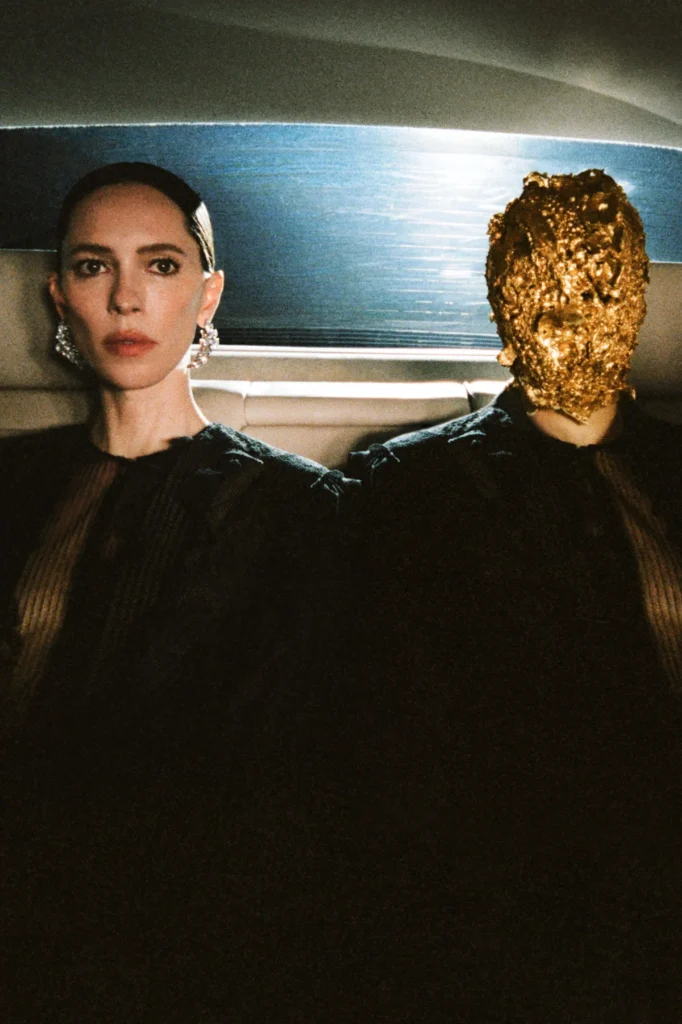
At the heart of Anonymity lies a narrative of confrontation. Rebecca Hall portrays an actress—a meta-commentary on her own professional reality—who is perpetually stalked by a masked doppelgänger. The film utilizes the iconic Margiela masks, first introduced during the brand’s Fall 2026 Artisanal showcase in Shanghai, to obscure the human face, thereby stripping away the individual to reveal a collective, haunting aesthetic.
The visual language of the short film is deliberately unnerving. Scenes of clear, viscous fluid spilling from Hall’s mouth and the appearance of ghostly figures emerging from closets evoke the classic tropes of psychological horror. Yet, these moments are not merely decorative; they serve the brand’s long-standing obsession with the "unheimlich"—the uncanny.
A Chronology of Artistic Influence
The release of Anonymity is the latest in a series of film-centric endeavors by Maison Margiela. To understand the gravity of this campaign, one must look at the brand’s recent historical trajectory:
- 2021: The Folk Horror Tale: Margiela cemented its relationship with the macabre with the release of A Folk Horror Tale, a cinematic showcase for its Artisanal couture collection that leaned heavily into the aesthetics of rural gothic horror.
- April 2026: The Shanghai Show: The brand staged its Fall 2026 Artisanal presentation in Shanghai. Amidst an industrial landscape of stacked shipping containers, the collection—and its now-famous masks—made their debut, setting the stage for the narrative arc of the current campaign.
- Mid-2026: The Arrival: The current campaign, released this Wednesday, serves as the global commercial bridge, coinciding with the arrival of the Fall 2026 collection in flagship stores and across digital retail platforms.
Supporting Data: The Convergence of Film and Fashion
The synthesis of high fashion and horror is not a new concept, but it is one that Maison Margiela executes with surgical precision. By recruiting Rebecca Hall, the brand has selected a collaborator with a deep-seated pedigree in the genre. Known for her sophisticated turns in The Prestige and Vicky Cristina Barcelona, Hall is equally respected for her contributions to modern horror, including the 2011 period thriller The Awakening and the 2020 critically acclaimed psychological nightmare The Night House.
The choice of Hall brings a layer of authenticity to the project. Her performance in Anonymity is not merely that of a model, but of an actor interpreting the script’s underlying satire. The inclusion of the iconic Greta Garbo line, "I want to be alone," delivered with a seductive, biting irony, underscores the film’s self-awareness. It acknowledges the absurdity of the celebrity condition: the simultaneous desire for fame and the crushing burden of being constantly watched.
Official Perspectives: The Philosophy of Disappearing
In an exclusive interview regarding the project, Rebecca Hall articulated why the campaign resonated with her on a personal and professional level.
"I liked that it was bold and original but also referential to cinema," Hall told WWD. "I felt the influences of Argento, de Palma, and Lynch—it felt like it was in dialogue with a lot of iconic cinema that I love."
For Hall, the campaign transcends the typical boundaries of fashion advertising. She noted the inherent conflict between the "figure in the public eye" and the "desire to disappear." This tension, she argues, is the core of the human condition in the digital age. By embodying the "anonymity" of the Margiela mask, she explores the archetype of the public figure who longs for the privacy that the spotlight inherently destroys.
The brand, through this collaboration, continues to prioritize conceptual rigor over commercial expediency. By channeling the spirits of Dario Argento’s saturated color palettes, Brian de Palma’s voyeuristic camera angles, and David Lynch’s surrealist domesticity, Maison Margiela transforms its garments into props within a larger, nightmarish dreamscape.
The Implications for Luxury Branding
What does this campaign signal for the future of luxury fashion? It indicates a shift toward "immersive narrative branding." Consumers are no longer satisfied with static imagery or simple product placement. Instead, they are gravitating toward brands that provide a "universe" to inhabit.
- The Rise of the Narrative Campaign: By treating a collection launch as a film production, Margiela elevates the act of consumption into an act of cultural participation. The viewer is not just looking at a dress; they are looking at an artifact from a psychological thriller.
- The Rejection of Traditional Beauty Standards: The use of masks, distorted figures, and "heebie-jeebie" inducing imagery challenges the industry’s obsession with conventional glamour. Margiela continues to prove that luxury can be uncomfortable, intellectual, and even terrifying.
- The Meta-Commentary on Celebrity: By casting a legitimate actress to play an actress in a film about the desire to disappear, the campaign engages in a critique of the very industry it occupies. It suggests that the most effective way to handle the gaze of the public is to hide in plain sight behind the artistry of the designer.
Conclusion: The Persistence of the Uncanny
As the Fall 2026 collection hits the racks, the impact of Anonymity will likely linger. Maison Margiela has once again proven that its strength lies in its refusal to conform to the standard expectations of a heritage fashion house. By aligning itself with the dark, intellectual tradition of horror cinema, the brand ensures that its clothes are seen as more than just commodities—they are costumes for the characters we play in our own private dramas.
In a world increasingly obsessed with being seen, Maison Margiela’s invitation to "disappear" feels both like a warning and an escape. Whether it is the bleeding television screen or the silent, masked doppelgänger, the campaign serves as a haunting reminder that in the house of Margiela, the most profound statement is often the one made in the shadows.