

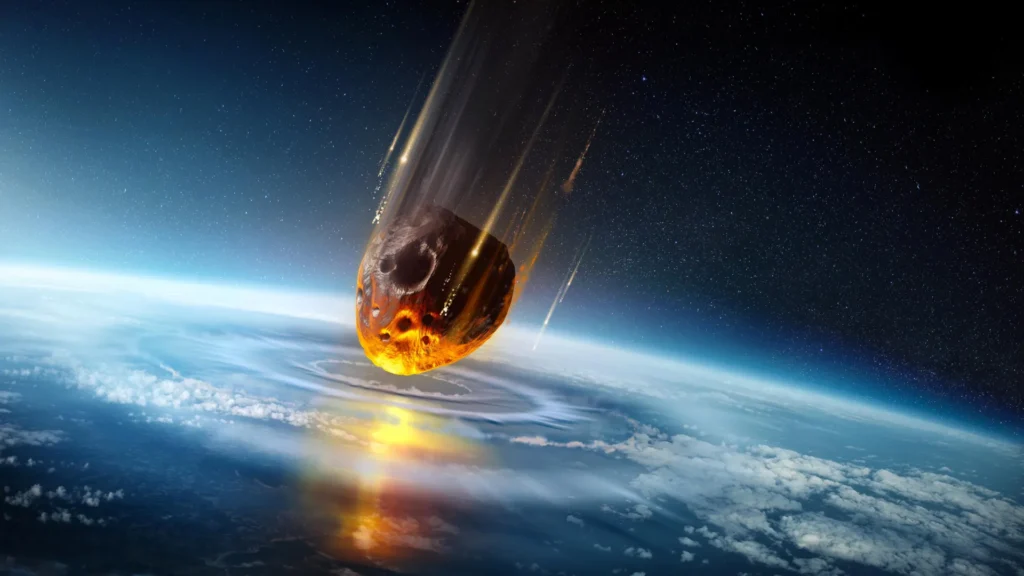
Beneath the quiet, unassuming landscape of Ames, Oklahoma, lies a geological titan—a massive meteor impact structure buried deep beneath layers of sediment. For decades, this crater has served as more than just a geological curiosity; it is a productive hub for the oil and gas industry, a site where the subterranean remnants of a violent cosmic collision have yielded immense economic value.
However, new research from The University of Texas at Austin (UT) has revealed that this crater is hiding a different kind of treasure: a profound error in the timeline of our planet’s history. By deploying advanced geochronological techniques, researchers have determined that the Ames crater is nearly 100 million years younger than previously estimated. This discovery does more than just update a map; it forces a fundamental reassessment of the "Ordovician Meteor Event" and links the Ames impact to one of the most mysterious mass extinctions in Earth’s history.
The Case of the Misdated Crater: A Chronology of Discovery
For years, the scientific community operated under the consensus that the Ames impact structure was a key piece of the "Ordovician Meteor Event," a period roughly 467.5 million years ago. During this time, Earth is believed to have been bombarded by an unusually high frequency of asteroid impacts. Some theorists have even suggested that Earth may have been encircled by a Saturn-like ring of debris during this era, a hypothesis largely supported by the perceived clustering of impact craters across North America that all seemed to date to the same timeframe.
The Ames crater was long considered a pillar of this theory. However, the reliance on its assigned date was based on a flawed foundation: biological evidence rather than physical radiometric dating.
The "Conodont" Trap
Previous researchers dated the impact by examining fossils found within the crater’s debris. Specifically, they looked at the teeth of conodonts—small, eel-like marine organisms that flourished during the Ordovician period. Because these fossils were embedded in the rock, it was assumed the impact must have occurred during the Ordovician.
The UT research team, led by Associate Professor Elizabeth Catlos, suspected this evidence was misleading. As it turns out, the conodont teeth were likely already millions of years old when the asteroid struck. The impact event essentially "recycled" older sediment, churning up ancient fossil-rich rock and mixing it into the crater’s formation, creating a false chronological signature.
The Zircon Revolution
To resolve the discrepancy, the team turned to zircon crystals. Zircon is a mineral prized by geologists because it is incredibly durable and contains uranium, which decays into lead at a known, constant rate. By performing U-Pb (uranium-lead) dating on zircons extracted from granite altered by the impact, the team discovered a "younger signal" that persisted regardless of the testing method used. The results were conclusive: the Ames impact occurred approximately 370 million years ago, placing it firmly in the Late Devonian period—a massive departure from the previous Ordovician estimate.
Supporting Data: The Science of Impact Verification
Establishing a date is one thing; proving that the dated material was actually altered by the intense pressures of a meteor strike is another. The team at UT, in collaboration with NASA, utilized high-resolution imaging techniques to confirm the impact’s signature.
Cathodoluminescence and Electron Backscatter Diffraction
When a meteorite strikes the Earth, the resulting shockwave generates pressures and temperatures so extreme that minerals undergo structural transformation. Zircon crystals subjected to these conditions recrystallize in a distinct, identifiable pattern.
The researchers used cathodoluminescence (which reveals internal crystal structures) and electron backscatter diffraction (which maps the orientation of the crystal lattice) to examine the zircons. The results showed the distinct "shocked" textures characteristic of a high-velocity collision. This provided the "smoking gun" needed to prove that the crystals had recorded the impact event itself, rather than the surrounding geologic background.
The Legacy of Scientific Dedication
This study was a long-term labor of love, initiated by the late Andrew Parisi, a graduate student at the Jackson School of Geosciences who passed away before the project’s conclusion. Parisi’s groundwork—traveling to Oklahoma to secure core samples from the Oklahoma Geological Survey—was fundamental to the study’s success. The paper, published this July in Meteoritics & Planetary Science, also honors the contributions of the late Michael Brookfield, an affiliated researcher whose expertise helped bridge the gap between the field data and the broader geologic context.
Official Responses and Scientific Context
The implications of this study are far-reaching. Dr. Danny Stockli, dean of the Jackson School of Geosciences and a co-author of the study, emphasized the importance of high-precision dating in understanding Earth’s deep past.
"These small crystals allow us to go back in time and learn about the major changes to Earth’s ancient landscapes," Stockli noted. "It would be great to do this for more of the meteor impact sites across the continent so we could get a more accurate timeline for these major events."
The research highlights a critical tension in geology: the debate over what triggers mass extinction events. Are these catastrophes caused by extraterrestrial forces, such as massive asteroid impacts, or are they the result of internal, terrestrial processes like massive volcanic activity?
By shifting the Ames crater from the Ordovician to the Late Devonian, the researchers have effectively removed a "pawn" from one historical board and placed it on another. The new date aligns the Ames impact with the Frasnian-Famennian extinction, a period 372 million years ago that saw the loss of a staggering percentage of marine life.
Implications: A New Piece of the Extinction Puzzle
The discovery that the Ames impact occurred during the Late Devonian adds a provocative new variable to the study of the Frasnian-Famennian mass extinction. While scientists have long debated the causes of this specific extinction—often pointing to fluctuating oxygen levels in the oceans or massive volcanic pulses—the presence of a significant asteroid impact near the same window of time demands a new investigation into whether the impact served as a catalyst or a contributing factor.
Re-evaluating the "Ordovician Meteor Event"
By removing the Ames crater from the Ordovician list, the study weakens the case for the "ring of debris" hypothesis. If the cluster of craters is not as tightly grouped in time as previously thought, the argument for a sustained, planetary-scale bombardment event loses one of its primary anchors. This illustrates the fragility of historical geologic models—a single misdated site can ripple through entire scientific theories.
The Path Forward
The researchers hope this study encourages a "re-dating" movement across North American impact sites. As Professor Catlos stated, establishing precise chronologies is essential to understanding the evolution of life. If we cannot accurately date the disasters that reshaped our planet, we cannot fully understand the forces that allowed for the rise and fall of ancient ecosystems.
The Ames impact structure, once a simple economic resource for oil and gas, has been transformed into a primary site for understanding the interplay between cosmic events and terrestrial history. As the scientific community moves forward, the work of the UT team serves as a reminder that in the study of Earth’s history, the most critical findings often lie in the smallest of details—or in this case, in the tiny, resilient heart of a zircon crystal.
The story of the Ames crater is no longer just a story of Oklahoma’s geology; it is a lesson in the necessity of rigorous, evidence-based revision. As we refine our timeline of the past, we gain a clearer, albeit more complex, understanding of the future of our own planet. The "Ames correction" is a testament to the fact that, even after millions of years, the Earth is still willing to give up its secrets, provided we have the tools—and the patience—to listen.



