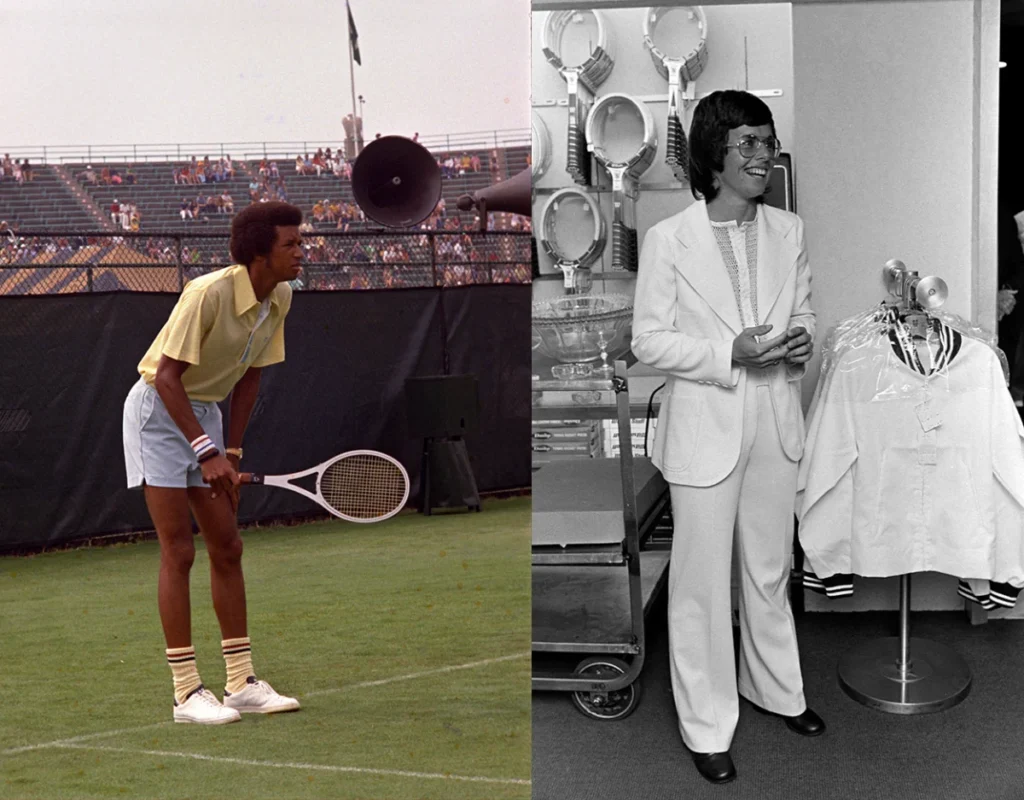
Every major sport possesses its pantheon of legends, but in the world of tennis, the acronym "GOAT"—the Greatest of All Time—carries a weight and precision that few other disciplines can claim. While the term did not fully enter the cultural lexicon until the 1990s, the players destined to define it were already reshaping history decades earlier. During the mid-20th century, tennis transitioned from a country-club pastime to a global media juggernaut, and Women’s Wear Daily (WWD) was there to chronicle every volley, tie-break, and fashion-forward ensemble.
As the U.S. Open once again captures the world’s attention, a look back into the Fairchild Archives reveals a fascinating intersection of elite athleticism and high-fashion branding that continues to influence modern sportswear.
The Evolution of the Tennis Aesthetic
When tennis blossomed into a national obsession during the 1960s, it developed its own sophisticated fashion language. The court became a runway, and the athletes became the era’s most visible style icons. WWD meticulously documented this shift, reporting not just on the games at Wimbledon, the U.S. Open, or the World Championship Tennis circuit, but on the evolving sartorial choices of the spectators and the players themselves.
The sport’s transformation was a byproduct of the cultural shifts of the era. As tennis moved from the exclusive lawns of the elite to the public consciousness, the players became household names. The archives hold rare, exclusive imagery of legends such as Arthur Ashe, Billie Jean King, Evonne Goolagong Cawley, Stan Smith, Björn Borg, John McEnroe, Jimmy Connors, Ivan Lendl, Martina Navratilova, and Chris Evert Lloyd. These were the architects of modern tennis, and their influence extended far beyond the white lines of the court.
Chronology: A Sport in Transition
The period between the 1960s and the early 1980s served as the "Big Bang" for professional tennis.

- The 1960s: The Amateur-to-Pro Shift: This decade marked the beginning of the Open Era. The sport began to professionalize, and with it, the necessity for a polished public image increased. Players like Arthur Ashe became cultural ambassadors, bringing a level of grace and intellectual depth to the game that caught the eye of the fashion press.
- The 1970s: The Rise of the Superstar: The 1970s brought the intense rivalries—Evert vs. Navratilova, Borg vs. Connors—that would define the sport for decades. This was the era of the "rock star" athlete. John McEnroe’s volatile brilliance and Björn Borg’s icy, stoic perfection provided a contrast that captivated global audiences.
- The 1980s: Global Commercialization: By the early 1980s, tennis had become a commercial juggernaut. It was no longer just about winning titles; it was about defining a lifestyle. The transition from pure performance to the integration of branding and personal style reached its zenith during this time.
Supporting Data: The Birth of the Brand Partnership
Perhaps the most significant contribution these athletes made to the broader fashion industry was the birth of the long-term brand collaboration. Long before "swag" was a common term in fashion’s dictionary, tennis stars were turning their names into logos.
Major manufacturers including Head, Adidas, Nike, Fila, and Ellesse recognized that the tennis player was a walking billboard for a high-performance, aspirational lifestyle. These players brought their signatures to every facet of the game: from the technology of the rackets to the aesthetic of the sneakers, wristbands, and warm-up gear.
The head-to-toe branding that we now see as standard in the NBA or Premier League can trace its direct lineage to the tennis courts of the 1970s. The "bragging rights" were earned through grand slam victories, but the market share was won through the specific visual language these players cultivated. When a fan bought a pair of Stan Smith sneakers, they weren’t just buying footwear; they were buying a piece of the composure and excellence that defined the sport’s golden age.
Official Perspectives and Historical Context
Reflecting on this era, industry historians often point to the symbiotic relationship between tennis and the garment industry. As the sport grew, WWD provided an essential bridge between the athletic world and the fashion houses of New York and Paris.
"The Fairchild Archive represents more than just historical photos," says a representative from the archives. "It is a record of how tennis players were the first athletes to truly bridge the gap between performance gear and street style. They were the original influencers."

The influence of these players is perhaps best observed in the longevity of their personal styles. While fashion trends are notoriously ephemeral, the "tennis look"—clean lines, athletic cuts, and a sense of effortless, competitive preparation—has remained a cornerstone of sportswear. Whether it is the classic white polo or the high-performance pleated skirt, the DNA of the 1970s and 80s remains embedded in today’s court-ready apparel.
Implications for Modern Tennis and Fashion
Today, the legacy of these athletes continues to shape the sport. Modern players are no longer just athletes; they are curators of their own brands. We see this in the meticulously crafted partnerships between current stars and luxury fashion houses, a practice that owes a debt of gratitude to the pioneers captured in the WWD archives.
The implication for the modern fan is clear: tennis is a sport where style and substance are inextricably linked. The prestige of the U.S. Open is not merely found in the velocity of a serve or the accuracy of a backhand; it is found in the tradition, the history, and the enduring style that has defined the sport for over half a century.
As we look at the exclusive, early image outtakes from the Fairchild Archives—many of which have been shielded from the public eye for years—we are reminded that the swagger of today’s tennis stars has a long, illustrious pedigree. The names on the court may change, but the demand for excellence and the commitment to an iconic aesthetic remain as potent as they were in the 1970s.
In the final analysis, the "GOAT" conversation in tennis is as much about the visual impact these players left on the world as it is about their trophy cases. They made tennis a spectacle, they made it a brand, and most importantly, they made it a generational obsession that shows no signs of waning. As the next generation of talent steps onto center court, they walk in the footsteps of giants who knew that to be the best, you had to look the part—a lesson that remains the gold standard in the world of professional tennis.