The intersection of fine art and partisan politics has reached a fever pitch within the hallowed halls of American diplomacy. In recent weeks, the presence of Kehinde Wiley’s 2013 painting, Young Artists After Siamesas 1960, at the U.S. Embassy in the Dominican Republic has ignited a firestorm of controversy. The dispute, characterized by conflicting administrative interpretations and public displays of ideological friction, highlights a growing trend in which government-curated art is being weaponized as a proxy for the broader "culture wars" currently gripping the United States.
The Genesis of the Controversy: A Tale of Two Interpretations
The conflict centers on a singular work of art, but the friction arises from how that art is perceived—or, more accurately, how it is framed for political utility. The painting in question, commissioned by the U.S. State Department’s "Art in Embassies" program during the Obama administration, has suddenly become a lightning rod for criticism from the current Trump administration.
The rhetoric escalated recently when Erin Scavino, the director of Art in Embassies, appeared on a podcast hosted by Sean Spicer. During the exchange, Scavino dismissed the piece as "aesthetically terrifying." However, the discourse surrounding the work took a more incendiary turn when an earlier, unearthed radio interview from April surfaced. In that recording, U.S. Ambassador to the Dominican Republic, Leah Campos, offered a more specific, albeit highly controversial, critique.
Speaking in Spanish, Ambassador Campos characterized the work as a "huge painting of a picnic in a park with flowers and some lesbians." Beyond the descriptive critique, Campos explicitly framed the artwork as an unwanted imposition of ideological values. She argued that the Biden administration had attempted to export "that ideology" to the Dominican people—a contention that is factually flawed, given that the painting was commissioned in 2013, long before the Biden presidency.
A Chronology of Cultural Erasure
The removal of the Wiley painting is not an isolated incident; it is part of a broader, methodical shift in the aesthetic priorities of the current administration.
- 2013: The U.S. State Department commissions Young Artists After Siamesas 1960 as part of a cultural initiative to represent the diversity of American contemporary art abroad.
- August 2024: Ambassador Leah Campos posts an announcement on Instagram confirming the removal of the Wiley painting. In its place, the embassy installed an image of the American flag. The post was jarringly underscored by the song "We’re Not Gonna Take It" by the rock band Twisted Sister, signaling a move toward a more defiant, nationalist aesthetic.
- September 2024: The New York Times unearths the April radio interview, revealing the Ambassador’s specific concerns regarding the painting’s subject matter.
- Late September 2024: Following the comments by Erin Scavino, Kehinde Wiley issues a subtle but pointed response via his official e-commerce platform, selling merchandise that adopts the "aesthetically terrifying" label as a badge of honor.
- Ongoing: Simultaneously, the Kennedy Center for the Performing Arts in Washington, D.C., begins the disassembly of Joel Shapiro’s 24-foot-tall sculpture, Blue, a gift to the center in 2019, as part of a wider purge of contemporary art installations.
The Artist’s Rebuttal: Reclaiming the Narrative
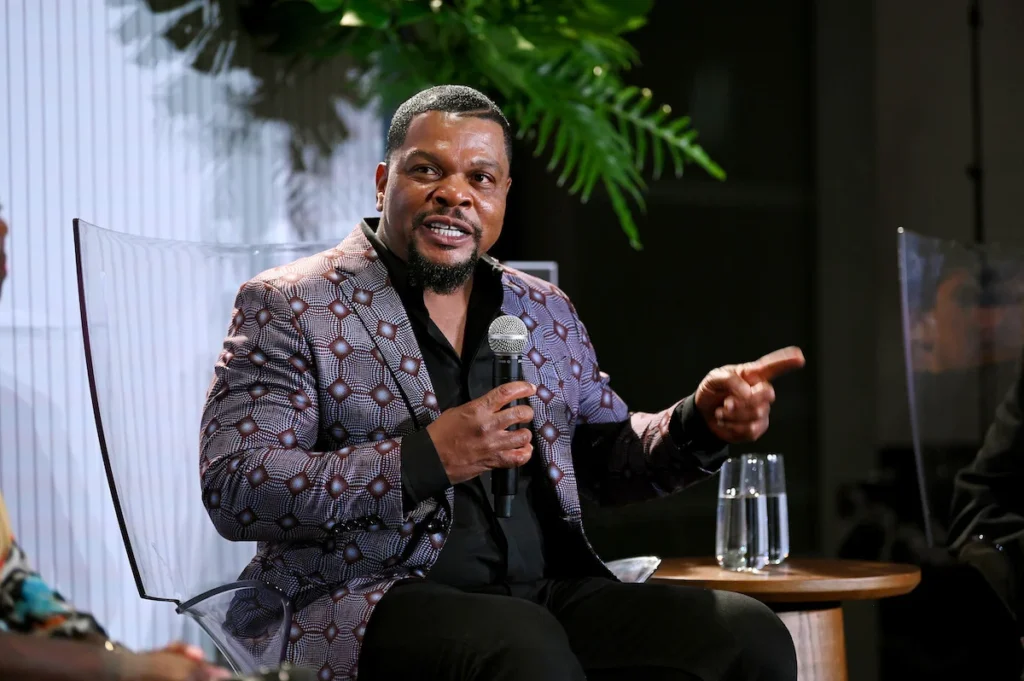
Kehinde Wiley, a celebrated portraitist known for his masterful fusion of Old Master techniques with contemporary subjects, has largely remained above the fray of direct political debate. However, his response to the "aesthetically terrifying" label provided a masterclass in artistic subversion.
By releasing a black T-shirt featuring that exact phrase, Wiley transformed an insult into a commodity, effectively reclaiming the narrative. His accompanying statement—"A response. A reclamation. A reminder that art has never needed permission to be beautiful, provocative, or powerful"—served as a sharp critique of the administration’s attempt to censor his work. This move resonated deeply within the arts community, reinforcing the idea that when a government attempts to silence an artist, it often succeeds only in amplifying their reach and cultural significance.
Beyond the Embassy: The Kennedy Center and Institutional Control
The cultural purge is not limited to overseas embassies. The John F. Kennedy Center for the Performing Arts, a cornerstone of American cultural life, has become a primary battlefield. Following the appointment of an administration-aligned board, the institution has seen a dramatic shift in its artistic stewardship.
The removal of Joel Shapiro’s Blue has been widely reported as a targeted act of elimination. Shapiro’s sculpture, a monumental and abstract work, had stood as a centerpiece of the center’s modern collection. Its removal is widely viewed as a symbolic clearing of the deck to make way for a different, more traditionalist vision of American identity.
Furthermore, the board’s decision in December to inscribe President Trump’s name onto the building’s facade has sparked a significant legal battle. This maneuver has triggered a flurry of lawsuits, with critics arguing that the act violates the spirit and the legal mandates of the center as a public, non-partisan institution. The legal struggle currently playing out in the federal court system serves as a barometer for how deeply the current administration intends to embed its political branding into the nation’s cultural infrastructure.
Implications for Cultural Diplomacy
The "Art in Embassies" program was established with the goal of fostering cross-cultural understanding. By showcasing a variety of American voices—including those of diverse backgrounds, sexualities, and artistic styles—the program aimed to present a nuanced picture of American democracy.
When an ambassador characterizes a work as a "lesbian picnic" or a director calls it "aesthetically terrifying," the core mission of cultural diplomacy is effectively dismantled. Instead of serving as a bridge between nations, the art becomes a weapon used to signal political purity to a domestic base.
The Cost of Partisanship
The implications of these actions are profound:
- Chilling Effect: Artists may become hesitant to work with federal programs, fearing that their legacy and their work will be subjected to the whims of shifting political winds.
- Diminished Soft Power: The United States’ reputation as a beacon of artistic freedom is eroded when embassies prioritize nationalist iconography over the complex, inclusive art that defined the country’s cultural export for decades.
- Institutional Erosion: By filling boards like that of the Kennedy Center with political loyalists, the administration risks long-term damage to the integrity of cultural institutions, which rely on independent oversight to remain relevant and respected.
Conclusion: The Resilience of Provocation
As the dust settles on the removal of Wiley’s painting and the disassembly of the Shapiro sculpture, the fundamental question remains: what is the purpose of art in a democracy? Is it to reflect the specific, narrow ideology of the ruling party, or is it to challenge, provoke, and represent the totality of the national experience?
The current administration’s efforts to curate a "patriotic" aesthetic suggest a desire for a sanitized, monolithic identity. Yet, as Kehinde Wiley’s response indicates, art that is "provocative" and "powerful" cannot be easily erased. Every time a work of art is removed or criticized, it enters a new, more public dialogue. In the long run, the attempts to suppress these works may only serve to cement their importance, ensuring that they remain a part of the American story, regardless of the policies of any single administration.
For now, the legal battles at the Kennedy Center and the ongoing debates in the Dominican Republic serve as a reminder that the war over culture is far from over. It is a struggle that pits the desire for institutional control against the innate, irrepressible nature of artistic expression. As the federal government continues to define what it believes is "beautiful," the artistic community remains steadfast in its belief that true beauty requires no government permit.