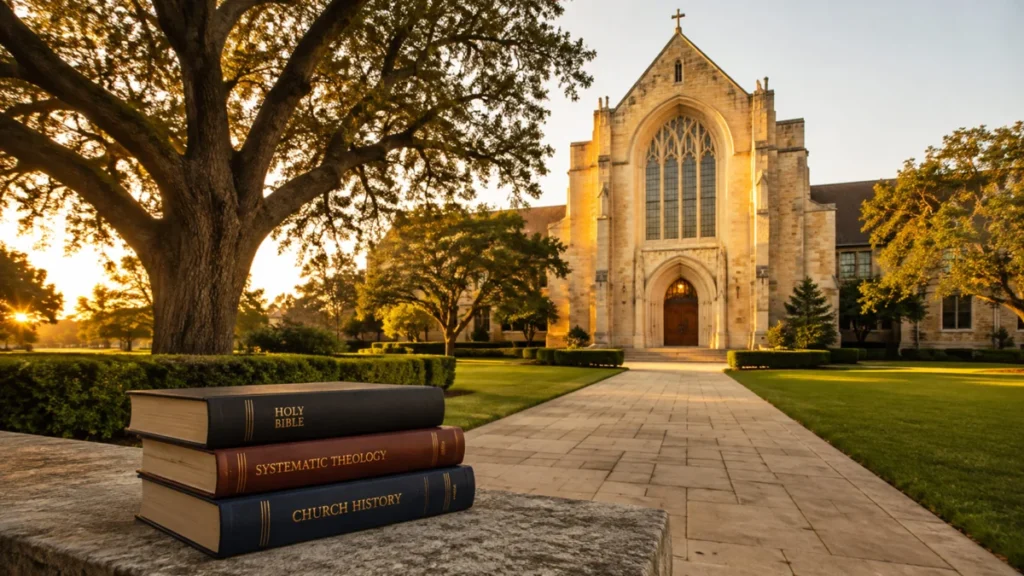
The pursuit of theological education is a profound commitment, representing a convergence of intellectual rigor, spiritual formation, and vocational preparation. In Texas, a state known for its rich tapestry of faith traditions and academic excellence, the options for aspiring theologians and ministry leaders are as diverse as the state itself. From the historic halls of established seminaries to the cutting-edge digital classrooms of the modern era, Texas has cemented its reputation as a premier destination for those seeking to sharpen their understanding of scripture, ethics, and human experience.
This comprehensive guide explores the landscape of seminary education in the Lone Star State, analyzing the institutions that set the standard, the pedagogical shifts shaping the curriculum, and the evolving career trajectories for those who graduate from these rigorous programs.
The Pillars of Theological Education: Key Institutions
The Texas seminary landscape is defined by institutions that balance deep-rooted traditions with contemporary relevance. While dozens of schools offer religious instruction, a select group consistently rises to the top based on accreditation, faculty caliber, and the strength of their alumni networks.
Frontrunners in the Field
- Texas Baptist College: Recognized for its holistic approach, the college emphasizes a "whole-person" development model. By integrating spiritual formation directly into the academic workload, they ensure that students are not merely scholars but mature practitioners.
- George W. Truett Theological Seminary: Affiliated with Baylor University, Truett stands out for its emphasis on "practical ministry." The curriculum is intentionally designed to place students in local churches and clinical settings, bridging the gap between the classroom and the pulpit.
- Lutheran School of Theology at Austin: A beacon for those in the mainline tradition, this institution focuses heavily on the intersection of systematic theology and modern social ethics, providing a rigorous intellectual foundation for clergy and lay leaders alike.
The Criteria for Excellence
When evaluating these institutions, prospective students are encouraged to look beyond prestige. Accreditation is the non-negotiable benchmark; it ensures that the degrees conferred are recognized by academic and ecclesiastical bodies nationwide. Furthermore, faculty accessibility—the ability to engage in mentorship with scholars who are also active in the ministry—remains a defining characteristic of top-tier schools.
Chronology of an Evolving Curriculum
The evolution of seminary education in Texas reflects broader societal changes. Historically, the curriculum was singular in its focus: Greek and Hebrew exegesis, systematic theology, and church history. While these remain the bedrock, the timeline of modern theological study has expanded significantly.
- The Early Era (Mid-20th Century): Focused almost exclusively on the Master of Divinity (MDiv) as the standard for pastoral ordination.
- The Expansion Era (1990s–2010s): Recognizing the need for specialized roles, seminaries began introducing Master of Arts (MA) degrees in niche fields such as Christian Counseling, Worship Arts, and Youth Ministry.
- The Digital Transformation (2020–Present): The COVID-19 pandemic acted as an accelerant for remote learning. Today, the "blended" model—where digital lectures are punctuated by intensive, on-campus residency weeks—has become the gold standard for flexibility without sacrificing community.
Supporting Data: The Value of a Theology Degree
Critics often question the "ROI" of a theology degree in a secularizing economy. However, data from career tracking and alumni surveys suggest that theological training provides a unique, highly transferable skill set.
Beyond the Pulpit: The Multi-Sector Impact
Theology graduates are increasingly finding themselves in roles that require high-level ethical reasoning and complex communication skills.
- Nonprofit Leadership: Graduates often leverage their understanding of organizational management and community service to lead large-scale, mission-driven NGOs.
- Corporate Ethics: As corporations face growing pressure to demonstrate social responsibility, those with a background in moral philosophy and systemic ethics are becoming highly sought after for HR and CSR (Corporate Social Responsibility) departments.
- Clinical Counseling: With the rise of the "integrated health" model, seminaries that offer M.A. degrees in Marriage and Family Therapy (MFT) are seeing near-100% placement rates for graduates in private practice or hospital systems.
Official Responses and Institutional Philosophy
To understand why these programs remain relevant, one must look at the official mission statements and pedagogical philosophies of Texas institutions.
Administrators at leading seminaries frequently highlight the concept of "Adaptive Leadership." In official statements, the leadership at institutions like Truett note that they are not just training "pastors" in the 19th-century sense, but "change agents" equipped to navigate a polarized society. The official pedagogical stance is that a theology degree is a "Mastery of Perspective." By engaging with the "Great Conversation"—the millennia-long debate over morality, justice, and the divine—students develop the critical thinking skills necessary to parse truth from misinformation in the digital age.
Implications of Theological Study in a Modern Context
The implications of earning a theology degree in Texas extend far beyond the individual graduate. We are currently witnessing a shift where religious communities are becoming the primary hubs for addressing societal fractures.
The Ethics of Community Engagement
Seminary-trained leaders are uniquely equipped to address issues such as:
- Urban Poverty: Applying systemic theology to economic policy.
- Mental Health Crises: Providing pastoral care that is clinically informed and spiritually grounded.
- Social Justice Advocacy: Utilizing the ethical frameworks of faith traditions to challenge systemic inequality.
The "long-term payoff" of this education is not merely a higher salary, but a higher capacity for influence. A graduate who can synthesize the complexities of historical texts with the demands of modern social policy is an asset to any organization, regardless of its religious or secular affiliation.
Navigating the Practicalities: Online vs. In-Person
The choice between digital and physical classrooms is a personal one, but it comes with distinct trade-offs.
The Case for In-Person
Nothing replaces the "informal curriculum." The late-night debates in the student lounge, the shared prayers before a difficult exam, and the mentorship that happens over coffee after a lecture are the "soft" benefits of physical attendance. For those entering vocational ministry, these social networks are often the primary pipeline for job placement.
The Case for Online/Blended
For the student currently working a full-time job or raising a family, the online model is an act of stewardship. By allowing students to maintain their current spheres of influence while studying, online programs ensure that their theological education is immediately applied to their daily lives. The trend toward "Blended Learning" is the most significant development in recent years, offering the best of both worlds: digital convenience and occasional, high-impact community immersion.
Financial Stewardship: Planning Your Education
The financial hurdle is often the most daunting aspect of seminary education. However, the investment landscape is more favorable than many realize.
Strategies for Funding
- Institutional Scholarships: Most Texas seminaries have internal endowment funds specifically designed to lower the cost of tuition for students entering the ministry.
- Federal Financial Aid: Many accredited MDiv programs qualify for federal student loans and, in some cases, work-study programs.
- Church Partnership Programs: Many denominations offer matching scholarship programs, where the school matches the funds provided by the student’s home church.
Prospective students are urged to treat the financial aid process as a research project. The difference between "sticker price" and the actual cost of attendance is often vast, and proactive engagement with a school’s financial aid office is often the most important step a student can take.
Conclusion: The Path Ahead
Choosing to pursue a theology degree is a commitment to depth in an age of shallowness. Whether you intend to lead a congregation in a rural Texas town or influence public policy in the urban centers of Dallas or Houston, the academic, spiritual, and professional preparation provided by Texas seminaries offers a robust foundation.
The journey requires discernment, a willingness to be challenged, and a commitment to personal growth. As society continues to grapple with fundamental questions of morality and meaning, the role of the trained theologian has never been more vital. By selecting the right program, engaging with the community, and remaining focused on the integration of faith and practice, students can ensure that their time in seminary is not just an academic achievement, but a transformative milestone that will shape their future for decades to come.
Frequently Asked Questions (FAQ)
What is the difference between an MDiv and an MA in Theology?
The MDiv is typically a 3-year professional degree designed for those seeking ordination or full-time vocational ministry. The MA in Theology is generally a 2-year academic degree, more focused on research and teaching.
How do I verify if a seminary is accredited?
Always check for accreditation from the Association of Theological Schools (ATS), which is the gold standard for North American seminary education, and regional accrediting bodies like SACSCOC.
Can I work while I attend seminary?
Yes. Most Texas seminaries are designed with the working student in mind, offering night, weekend, and online courses. Blended programs are specifically structured to allow for full-time employment alongside part-time or full-time studies.
What kind of mentorship can I expect?
At top Texas institutions, mentorship is built into the program. You will likely be assigned a faculty advisor who guides both your academic progress and your spiritual development, often connecting you with local ministry leaders for internships.