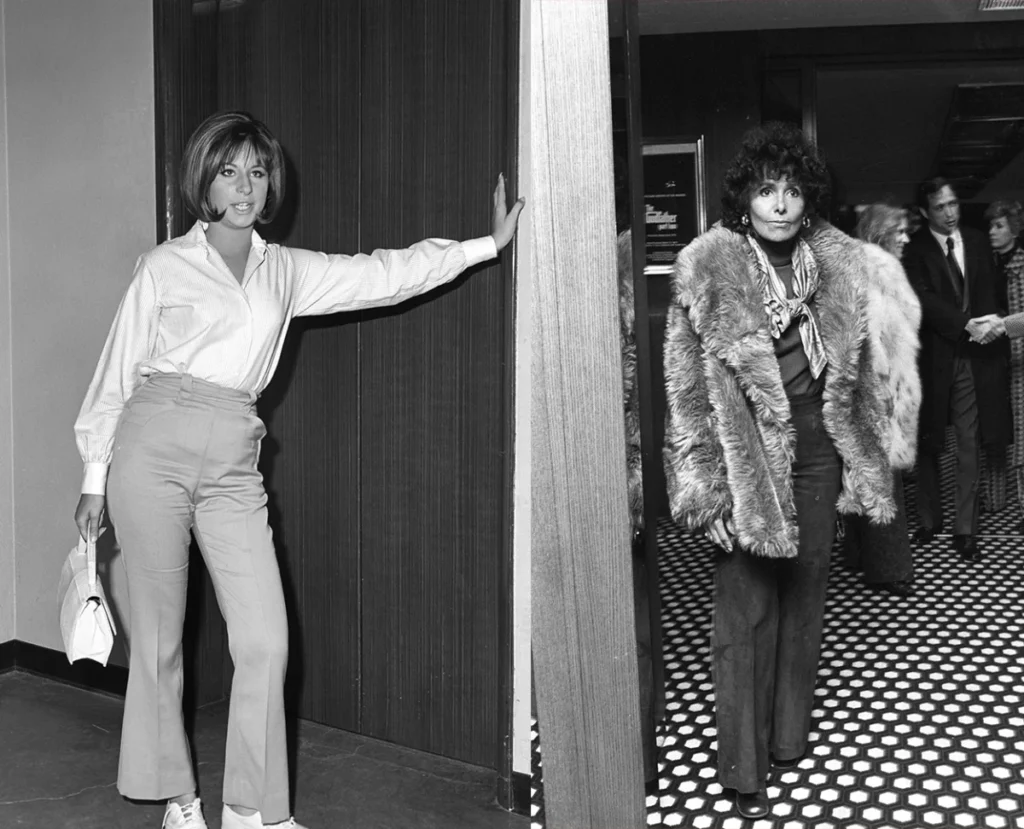
Fashion has always possessed an uncanny ability to manipulate language, repurposing, stripping, and redefining vocabulary to suit the shifting contours of the zeitgeist. Since the mid-20th century, no term has been more central to the industry’s lexicon than the “icon.” It is a word that promises both instant impact and a form of cultural immortality. However, as Women’s Wear Daily (WWD) noted in a seminal 1998 reflection, “icons are mirrors—a bolder reflection of society, though not always a flattering one.” This realization serves as the foundation for understanding that true influence in fashion has never been merely about the clothes; it is about the audacity of the people who wear them.
The Fairchild Era: A Catalyst for Cultural Dialogue
To understand the modern landscape of celebrity and style, one must credit John B. Fairchild. Arriving at the helm of Women’s Wear Daily in the 1960s, Fairchild transformed a staid trade publication into a fearless, aggressive, and often controversial arbiter of taste. Fairchild did not merely report on fashion; he curated a dialogue about the individuals shaping the world. He was never without an opinion, and under his direction, WWD meticulously documented the people, places, and events that gave the fashion world its pulse.
Through the legendary “Eye” pages, Fairchild revolutionized the intersection of high fashion and pop culture. His coverage was not always designed to flatter, but it was perpetually observant, irreverent, and crackling with the electricity of the socialites, designers, and provocateurs he championed. Fairchild once remarked that his publication tracked the people who “make the world of Paris move, the world of New York move, the worlds of Washington, San Francisco, Los Angeles move.”
His vernacular—the distinct way he chose whom to photograph, which designers to crown, and which socialites to call out—was delivered with a candor found nowhere else in journalism. It was Fairchild who famously coined the moniker “Jackie O” for Jacqueline Kennedy, signaling his power to codify the identity of the most scrutinized woman in the world. For Fairchild, the social swans of the era—women of poise, privilege, and impenetrable style—were the ultimate vessels for the term “icon.”
Chronology of Influence: From Chutzpah to Cult Status
While the word “iconic” has become a diluted buzzword in the age of digital media, WWD’s early years relied on more nuanced, descriptive terminology to define greatness. The daily became famous for its “In and Out” lists and its rigorous, often brutal, seasonal collection ratings. It was a time when the press acted as a gatekeeper, not just a mirror.
1969: The Year of the “Chutzpah”
Perhaps the most illustrative example of WWD’s editorial philosophy appeared on April 14, 1969. In a sprawling two-page feature titled, “If They’ve Got It, You Can Be Sure They Will Flaunt It,” the publication introduced its “Chutzpah Ratings.”
Chutzpah, the paper argued, was not merely a personality trait; it was a form of cultural currency. It encompassed unmitigated gall, nerve, and sheer guts. As the article famously stated, “All gall is divided into three parts… except when it comes to chutzpah.”

The article highlighted figures who pushed boundaries—from the underdog spirit of David facing Goliath to the swagger of Joe Namath preparing for a championship game. The “Queen of Chutzpah” was identified as fashion designer Mollie Parnis, lauded for her legendary social maneuvers, such as once talking a head waiter into moving her table closer to the Duchess of Windsor simply so she wouldn’t miss a single “haughty syllable.”
The Immortals
The 1969 list of “chutzpah immortals” serves as a time capsule for the most influential figures of the 20th century. The roster included names that would eventually become synonymous with global culture: Jackie O, Oleg Cassini, Barbra Streisand, John Lennon, Yoko Ono, Lee Radziwill, Truman Capote, Eleanor Lambert, Muhammad Ali, Halston, Estée Lauder, Valentino, and Diana Vreeland.
Supporting Data: The Anatomy of a Trendsetter
The strength of WWD’s approach was its refusal to rely on singular metrics. By placing a financier like Saul P. Steinberg—who attempted a hostile takeover of Chemical Bank—on the same page as a fashion designer, Fairchild was making a profound statement: power and style are inextricably linked.
This multi-dimensional view of influence suggests that what we consider “iconic” is actually a measurement of how much a person’s presence alters the environment around them. When WWD published its rankings, the goal was not to seek validation from the reader, but to dictate the terms of the conversation.
The “Chutzpah Ratings” were more than a novelty; they were a taxonomy of 1960s power dynamics. The subjects were measured not by their commercial sales, but by their ability to command attention. Whether it was the high-fashion socialite or the counter-culture icon, the prerequisite for inclusion was a defiance of the status quo.
Official Responses and Editorial Philosophy
Throughout the decades, the editorial stance of WWD remained consistent: avoid the mundane. In the late 20th century, as the industry began to shift toward a more PR-managed environment, the legacy of the Fairchild era remained a benchmark for authentic critique.
The publication’s tendency to call out the powerful was seen by some as bullying, but by others as a necessary check on an industry that often takes itself too seriously. The “Eye” pages were not merely a gossip column; they were an anthropological study. By highlighting the “nerve” of their subjects, WWD shifted the focus from the garment to the individual’s agency.

Reflecting on these archives today, it becomes clear that the “icons” of yesterday were defined by a lack of access. In 1969, to be seen was to be chosen. Today, the democratization of media has changed the nature of visibility, but the underlying requirement—the “chutzpah” to command the room—remains the hallmark of true influence.
Implications for the Modern Digital Age
What can the digital age learn from the Fairchild archives? We now live in a world where influence is quantified by algorithms, engagement metrics, and follower counts. However, the history of WWD reminds us that true cultural impact is rarely algorithmic.
The “chutzpah” identified in 1969 was not a calculated PR move; it was an innate, often disruptive quality. When we look at the list of those immortalized by WWD, we see a collection of individuals who were not afraid to be polarizing. Truman Capote, Diana Vreeland, and Muhammad Ali did not seek to be palatable; they sought to be defining.
The implications for contemporary fashion are significant. As the industry faces a saturation of “micro-influencers” and temporary viral moments, the WWD archives serve as a reminder that longevity is earned through the friction between a person and their society. Influence is not just about the clothes one wears; it is about the audacity to shape the world around oneself.
As we look back at the “Chutzpah Ratings,” we are reminded that style is an act of defiance. To be an icon is not to be universally liked—it is to be impossible to ignore. Whether it is a designer maneuvering for a better table or a counter-culture figure changing the political landscape, the thread of "chutzpah" connects them all.
In the final analysis, John B. Fairchild and his team were not just reporting on a industry; they were documenting the human appetite for impact. While the tools of the trade have evolved from the printing press to the smartphone, the requirement for greatness remains unchanged: the nerve to exist, the courage to be seen, and the chutzpah to make the world move.