

In the current global economic landscape, the traditional boundaries between financial markets and geopolitical strategy are dissolving. For the modern investor, the ability to read a balance sheet is no longer sufficient; one must also be able to read the shifting currents of international diplomacy, supply-chain restructuring, and technological sovereignty.
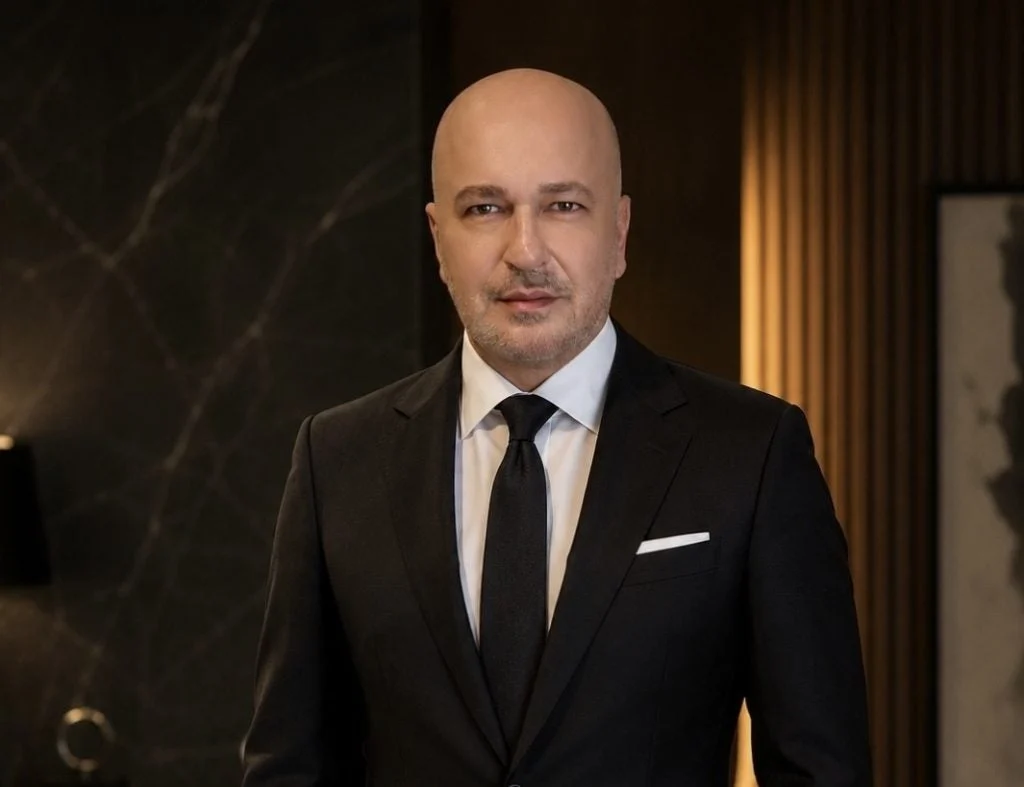
Sertan Ayçiçek, a veteran leader with over 25 years of experience spanning diplomacy, academia, and high-stakes finance, stands at this intersection. Currently serving as the Chairman of the Board of Royal Funds, CEO of IKAR Holdings, and Vice President of the Swiss Academy, Ayçiçek advocates for a shift in how private wealth is deployed. He argues that we have entered an era where "strategic capital"—capital that is as much about influence and resilience as it is about yield—is the primary driver of long-term value creation.
The Intersection of Diplomacy and Finance: Core Facts
The fundamental thesis presented by Ayçiçek is that political decisions are now the leading indicators of economic reality. Historically, investors viewed regulatory changes or trade restrictions as external "noise" that would eventually be digested by the market. Today, those same factors are the catalysts for seismic shifts in asset valuation.
- The Regulatory Pivot: Export restrictions, energy policy, and data infrastructure regulations can reconfigure an entire sector’s competitive landscape overnight.
- The Strategic Shift: Investment themes are moving away from purely consumer-facing digital growth toward "hard" strategic assets: semiconductors, energy, cybersecurity, and advanced manufacturing.
- The Role of Capital: For family offices and UHNW (Ultra-High-Net-Worth) individuals, the goal is shifting from short-term liquidity to the creation of "strategic capability"—building resilient systems that can withstand global volatility.
Chronology: The Evolution of the "Strategic Investor"
To understand where capital is moving, one must look at the recent history of how institutional and private players have adapted to crisis.
Phase 1: The Era of Globalization (Pre-2015)
Capital was largely agnostic to national borders. The primary focus was on efficiency, cost-cutting, and market reach. Investment decisions were driven by financial metrics such as EBITDA, P/E ratios, and growth projections in a relatively stable geopolitical climate.
Phase 2: The Awakening (2016–2021)
Early signs of supply-chain fragility began to emerge. The realization that critical technologies (like semiconductors) were heavily concentrated in specific geographic regions—and thus vulnerable to regional conflict—began to influence institutional portfolio management.
Phase 3: The Era of Strategic Sovereignty (2022–Present)
The current period is marked by a fundamental reassessment of security. Governments are actively subsidizing industries, and private capital is following suit. Investors are now evaluating assets through the lens of "sovereignty": energy security, digital sovereignty, and the resilience of supply chains. This has given rise to the Global Strategic Capital Council, a platform designed to bridge the gap between policy-makers and capital allocators.
Supporting Data: Why Strategy Outperforms
While quantitative financial analysis remains the bedrock of investment, the qualitative factors of "strategic capital" are increasingly providing the "alpha" that traditional models miss.

The Components of Resilience
Data suggests that companies with higher degrees of vertical integration or secure access to critical infrastructure are currently outperforming in periods of market turbulence. Ayçiçek notes that an investment in an AI-driven enterprise today is not just a software bet; it is a complex infrastructure play requiring:
- Energy Access: The massive power requirements of AI data centers.
- Hardware Supply: The availability of high-end semiconductors.
- Governance: A robust framework for data privacy and regulatory compliance.
The "Patient Capital" Advantage
Family offices occupy a unique space in this ecosystem. Unlike institutional funds, which are often beholden to quarterly reporting cycles and rigid redemption schedules, family offices possess the "patient capital" necessary to wait for structural changes to bear fruit. However, Ayçiçek warns that "patient capital" is useless without a "patient process." Discipline in management, governance, and long-term risk assessment is what differentiates long-term success from mere stagnation.
Official Perspective: Insights from Sertan Ayçiçek
In a recent interview, Ayçiçek addressed the shifting paradigms of wealth management and the necessity of human judgment in an AI-enabled world.
On the Misconception of AI
"AI is changing both the companies investors consider and the way investment decisions can be made," Ayçiçek explains. "At the company level, it is transforming productivity, data analysis, and operating models. At the investment level, it can improve the ability to process information. But I do not believe AI eliminates the need for human judgment. In fact, as the amount of available information increases, the ability to determine which information actually matters becomes more valuable."
On Governance as a Competitive Advantage
Ayçiçek emphasizes that capital without governance is merely "acceleration without direction." When private capital enters a business, the objective should not simply be to increase its size, but to build a stronger, more transparent, and more accountable organization. For Royal Funds, governance is not a compliance check—it is an integral part of the investment thesis.
On Switzerland’s Unique Role
"Switzerland provides an interesting environment because of its combination of international finance, institutions, diplomacy, and cross-border business," Ayçiçek states. For his platform, the Swiss ecosystem serves as a nexus for connecting capital, technology, and strategic capability, acting as a neutral ground where global perspectives on economic transformation are synthesized.
Implications: The Future of Private Wealth
As we look toward the next decade, the divide between "financial" and "strategic" will become virtually impossible to bridge.
1. The Redesign of Supply Chains
The global economy is moving away from just-in-time efficiency toward just-in-case resilience. This will require massive capital expenditure in domestic manufacturing, localized energy grids, and redundant logistics networks. Investors who position themselves in these foundational layers will likely capture the most significant value.

2. Governance as a Key Performance Indicator (KPI)
We should expect to see governance metrics becoming as standardized as ESG (Environmental, Social, and Governance) scores. Intellectual honesty, management discipline, and long-term strategic alignment will become the primary "filters" through which capital allocators screen potential deals.
3. The End of "Passive" Investing
The era of broad-market, passive investment may face challenges in a world of fragmented, geopolitically driven markets. The future belongs to the "active strategic investor"—those who understand the interplay between technology, regulation, and human behavior.
4. A New Call for Collaboration
Platforms like the Global Strategic Capital Council reflect a growing realization: capital is fast, but institutions and relationships are slow. To navigate the future, investors must build "relationship infrastructure" that allows them to anticipate regulatory shifts and political developments before they are reflected in the stock price.
Conclusion: Building the Future
The philosophy behind modern investment platforms, as articulated by leaders like Sertan Ayçiçek, is simple yet profound: Capital should not simply follow the future; it should help build it.
As geopolitical and economic systems become more complex, the role of the private investor is evolving from a passive participant into a strategic architect. Whether it is through the deployment of capital into energy infrastructure, the nurturing of AI-integrated manufacturing, or the promotion of rigorous corporate governance, the goal remains the same: creating sustainable, long-term value that is as resilient as it is profitable.
For the private banker and the UHNW client, the mandate is clear. Look beyond the current ticker tape. Identify the structural forces that are reshaping the world, and deploy your capital where it can do more than just grow—where it can secure a position in the new, strategic global order.



