

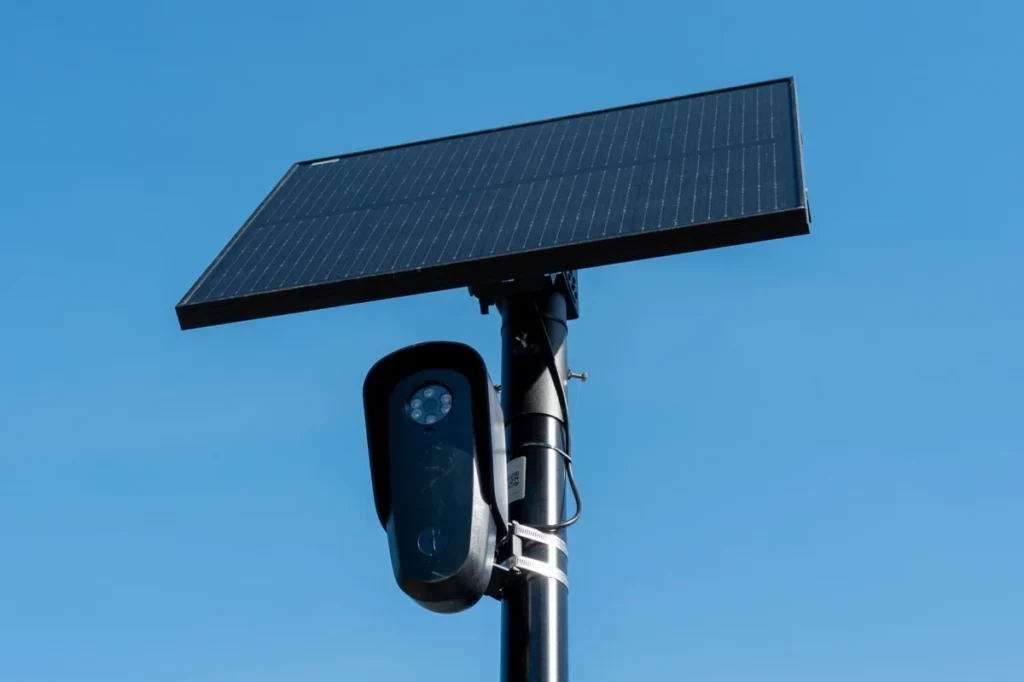
In a landmark legal development that strikes at the heart of modern policing technology, a federal judge in Oklahoma has issued a ruling that could reshape the future of automated surveillance in the United States. Judge Sara Hill ruled this week that a Tulsa sheriff’s deputy violated the Fourth Amendment rights of a motorist by using the Flock Safety database to track her license plate without a warrant.
While the ruling does not immediately set a binding precedent for the entire nation, it marks a significant judicial turning point. It is among the first instances where a federal court has explicitly labeled the use of Flock’s widespread license plate reader (LPR) technology as unconstitutional, raising existential questions about the balance between public safety and the fundamental right to privacy.
The Case: From a California Plate to 91 Pounds of Meth
The case centered on a routine traffic stop that escalated into a significant constitutional debate. According to court documents, a Tulsa County deputy utilized the Flock Safety network to query the travel history of a woman’s vehicle. The deputy admitted he had no specific reason to target the driver, other than the fact that her vehicle bore a California license plate—a detail he found suspicious in the context of Oklahoma drug interdiction.
Using the granular, longitudinal data provided by Flock—which captures and stores the movements of vehicles across vast networks of cameras—the deputy constructed a profile of the woman’s travel history. This data became the cornerstone of the justification used to search her vehicle. The search eventually led to the discovery of 91 pounds of methamphetamine.
However, Judge Hill’s ruling dismantled the legal basis for that discovery. Invoking the “fruit of the poisonous tree” doctrine, the judge ruled that because the initial search of the Flock database was unconstitutional, all evidence subsequently obtained—including the narcotics—must be suppressed.
“The deputy had no apparent reason for the search other than the fact that the vehicle had a California license plate,” Judge Hill wrote in her opinion. Her decision underscores a growing judicial skepticism toward the "dragnet" nature of modern LPR technology.
Chronology of a Growing Surveillance Crisis
The evolution of Flock Safety from a neighborhood security tool to a national law enforcement standard has been meteoric, but it has not been without controversy.
- 2017–2020: Flock Safety gains rapid adoption, marketing itself to Homeowners Associations and local police departments as a tool to solve "property crimes" by capturing license plates in real-time.
- 2021–2023: As the network grows to include tens of thousands of cameras, privacy advocates begin to sound the alarm, noting that the data is being aggregated into a searchable, national repository accessible to law enforcement agencies with minimal oversight.
- 2024: Public backlash intensifies. Reports surface of law enforcement officers using the system for personal reasons, including the stalking of ex-partners and other citizens.
- 2025–2026: States like Florida and Texas move to restrict or ban the technology, citing the lack of constitutional guardrails.
- October 2026: The introduction of the "Block Flock Act" by Senator Bernie Sanders marks the first federal legislative attempt to ban the technology’s use by federal agencies.
- Late 2026: The Tulsa federal ruling provides the first judicial backbone to the privacy movement, signaling that the courts may finally be catching up to the technology.
The "Constitutionally Problematic" Nature of Passive Tracking
Judge Hill’s opinion went beyond the specific facts of the Tulsa case to offer a broader critique of the technology itself. She explicitly rejected the notion that because these cameras are in public places, they are beyond the reach of the Fourth Amendment.
"This is a type of indiscriminate mass surveillance," Hill wrote. "It is not targeted on a single individual, as in Carpenter v. United States." In the Carpenter case, the Supreme Court ruled that the government generally needs a warrant to access historical cell-site location information. Hill argued that Flock represents an even more pervasive threat: a tool that captures the movements of every vehicle that passes a camera, regardless of suspicion, and holds that data for police to exploit at their convenience.
The judge warned that tracking becomes "constitutionally problematic" when law enforcement can passively catalog a citizen’s whereabouts over an extended period. By aggregating these "data points," the police can effectively reconstruct a person’s life, habits, and associations—a level of intrusion that the Fourth Amendment was specifically designed to prevent.
Official Responses and the Industry Defense
The ruling has sent shockwaves through the tech and law enforcement sectors. Flock Safety, which has long marketed itself as a bridge between community safety and technology, finds itself in a defensive posture.
CEO Garretty Langley has spent the latter half of 2026 attempting to navigate a PR and legal minefield. Following reports of officers abusing the system to stalk women, Langley issued a public apology and has frequently called for a "compromise" between privacy advocates and law enforcement. However, critics argue that the technology’s architecture—designed for mass, indiscriminate data collection—is inherently incompatible with the privacy protections required by the Constitution.
The company’s financial stability has also been called into question. As more jurisdictions move to cancel contracts, reports have surfaced indicating that Flock is attempting to reduce its overhead, including offering voluntary employee buyouts to shrink its workforce.
On the legislative front, the "Block Flock Act" introduced by Senator Bernie Sanders represents a significant escalation. The bill seeks to prohibit federal agencies from using automated license plate readers, arguing that the federal government has no business engaging in the mass tracking of domestic travelers. If passed, the act would serve as a massive blow to the company’s federal government contracts and would set a standard that many states would likely follow.
Implications for the Future of Policing
The implications of this ruling extend far beyond the state of Oklahoma. For law enforcement agencies, the ruling creates a "warrant-first" requirement. If other courts follow Judge Hill’s logic, police will no longer be able to use Flock’s historical data as a "fishing expedition" to build reasonable suspicion. Instead, they would be required to show probable cause and obtain a warrant before querying the database for a specific vehicle’s travel history.
This creates a significant administrative burden for police departments. The speed and ease with which Flock data could be queried was its primary selling point. If that speed is curtailed by the requirement of judicial oversight, the utility of the system for day-to-day policing may diminish significantly.
Furthermore, the ruling serves as a catalyst for state legislatures. With Florida and Texas already leading the charge in restricting the use of LPR technology, Judge Hill’s decision provides legal justification for lawmakers in other states to draft stricter privacy legislation.
The Constitutional Crossroads
The central tension remains the definition of "expectation of privacy." Proponents of Flock argue that because license plates are displayed on the exterior of a vehicle in public view, there is no reasonable expectation of privacy regarding their location. However, the judiciary is increasingly leaning toward the "mosaic theory"—the idea that while a single photograph of a car in public is not a search, the aggregation of thousands of such photographs over weeks or months reveals a comprehensive picture of a person’s life that does require a warrant.
As the legal landscape shifts, the industry faces a reckoning. The "indiscriminate" nature of the technology, once its greatest strength, is now its greatest legal liability. Whether through judicial suppression of evidence or legislative bans, the era of unbridled, warrantless surveillance through automated license plate readers appears to be drawing to a close.
The Tulsa ruling is not the final word, but it is the first major crack in the foundation of the modern surveillance state. As the courts continue to wrestle with the intersection of Fourth Amendment protections and artificial intelligence-driven data collection, one thing remains clear: the law is finally starting to treat digital tracking with the same level of scrutiny as physical intrusion. The coming months will likely see a flurry of motions to suppress evidence in similar cases across the country, turning every traffic stop involving Flock data into a potential constitutional battleground.



