

For decades, geologists have operated under the assumption that the Earth’s early history was a static, largely isolated affair. While the modern world is defined by the restless motion of tectonic plates—a grand, global conveyor belt that recycles surface materials into the deep mantle—the Hadean and Archean eons were long thought to be too hot, too molten, and too chaotic for such sophisticated plumbing.
However, a groundbreaking study published in Nature Communications has shattered this paradigm. An international team of researchers, led by Dr. Eric Vandenburg of the University of Adelaide, has discovered that water was influencing the Earth’s interior as early as 3.1 billion years ago. This discovery suggests that our planet was not merely a cooling ball of magma in its infancy, but a dynamic, self-recycling system far earlier than previously imagined.
The Pilbara Craton: A Geological Time Capsule
To understand the Earth as it existed during the Paleoarchean era, scientists must look to the few remaining "cratons"—the oldest, most stable cores of continents that have escaped the ravages of billions of years of tectonic recycling. Among these, Western Australia’s Pilbara Craton is a crown jewel. It serves as a geological time capsule, preserving rocks that have remained largely unchanged since the dawn of the planet.
"These rocks formed more than three billion years ago, when Earth was a very different place," explains Dr. Vandenburg. By examining the chemical signatures locked within these ancient volcanic formations, the team was able to reconstruct a narrative of geological activity that predates the modern era of plate tectonics by hundreds of millions of years. The findings reveal that the Pilbara rocks share a striking chemical kinship with the volcanic arcs found along today’s Pacific "Ring of Fire," suggesting that the mechanism for creating them—the introduction of water into the mantle—was already functioning in the deep past.
Chronology of a Young World: From Chaos to Convection
The history of the Earth is typically divided into stages, but the transition from a "stagnant lid" planet to a tectonically active one has been a subject of intense debate.
The Stagnant Lid Hypothesis
In the very early stages of Earth’s formation, the crust was thought to be a single, thick, rigid shell. Because the planet’s internal heat was significantly higher than it is today, the mantle was likely too buoyant and the crust too ductile for the traditional subduction seen in modern geology. In this model, surface water would have been trapped in the oceans, unable to penetrate the thick, hot crust.
The Dripduction Breakthrough
The research team has proposed a bridge between these two states: a process they have termed "dripduction." This mechanism provides the missing link in our understanding of how the young Earth operated.
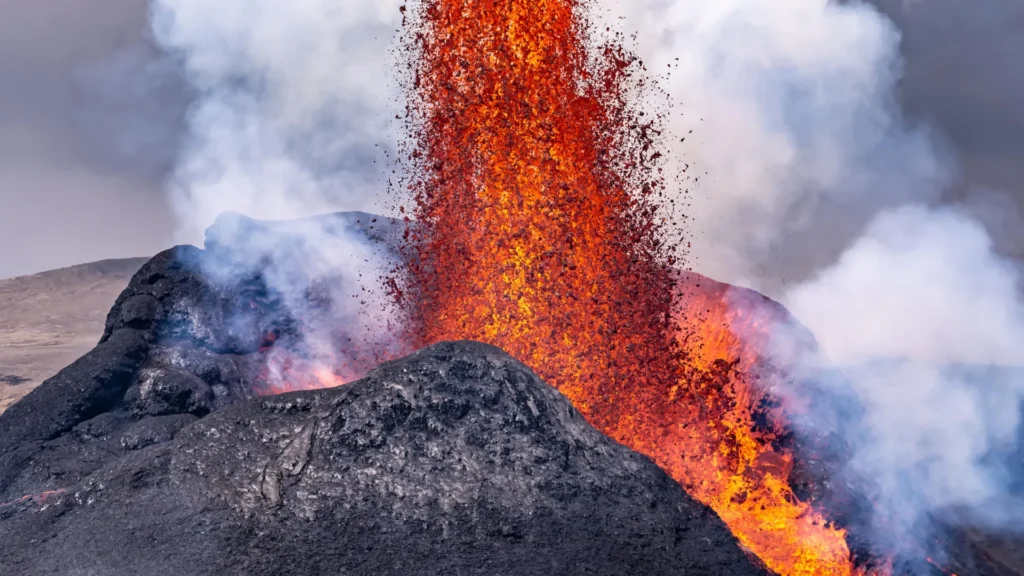
As the dense, cooler, water-saturated outer crust became heavy, it did not slide neatly under another plate as it does today. Instead, it sagged, forming a dense "drip" that pulled away from the surface and plummeted into the hotter, more plastic mantle below. As these crustal drips descended, the extreme pressure and heat forced the trapped water out of the mineral structures. This released water lowered the melting point of the surrounding mantle rock, triggering the creation of magma. This magma then surged upward, erupting in volcanoes that helped build the early continental crust.
Supporting Data: The Chemical Fingerprints of Ancient Water
The evidence for this process is not merely speculative; it is written in the isotopic and trace element chemistry of the Pilbara rocks. The researchers utilized sophisticated mass spectrometry to analyze the ratio of specific elements that are highly sensitive to the presence of water.
In modern volcanic systems, the "fingerprint" of subduction is unmistakable: specific trace elements are enriched because they are transported by water into the mantle, where they later manifest in erupted magmas. When Dr. Vandenburg’s team compared these signatures to the 3.1-billion-year-old rocks from the Pilbara, the match was undeniable.
The data indicates that the rocks were formed through the melting of a mantle wedge that had been "metasomatized"—chemically altered—by fluids derived from the surface. This proves that surface-derived water had successfully traveled deep into the planet’s interior, providing the volatile ingredients necessary for volcanic activity long before the globe-spanning tectonic grid we recognize today had stabilized.
Official Responses and Scientific Significance
The study, which represents a massive collaborative effort between institutions including Monash University, the Geological Survey of Western Australia, Curtin University, the Australian National University, Cardiff University, and the GEOMAR Helmholtz Center for Ocean Research, has sent ripples through the geological community.
"What surprised us was finding evidence that large amounts of water had already made their way deep into the Earth’s interior and influenced the formation of volcanic rocks," says Dr. Vandenburg.
For the scientific community, the implications are profound. If water was circulating into the mantle 3.1 billion years ago, it suggests that the chemical recycling necessary for life-sustaining processes was established much earlier than the "Great Oxidation Event" or the rise of complex multicellular life. By transporting minerals, carbon, and water, this early "dripduction" may have helped regulate the planet’s surface temperature and chemistry, creating the stable conditions required for the emergence of the first biological precursors.
Implications for Earth’s Evolution and Beyond
The discovery forces a complete re-evaluation of the "stagnant lid" model of early Earth. Rather than being a static, inactive sphere, the early Earth was a surprisingly dynamic laboratory of geochemistry.
Understanding Continent Formation
The growth of continents is inextricably linked to the volcanic activity fueled by the recycling of water. By confirming that this process began billions of years earlier than previously thought, the study provides a new timeline for how the Earth’s landmasses grew and stabilized. This has significant implications for understanding the planet’s long-term habitability.
A Template for Exoplanet Studies
This research also extends to the search for life elsewhere in the universe. Astronomers often focus their search for "Earth-like" planets on those that show signs of plate tectonics. However, if the Earth was able to recycle water and maintain volcanic activity via mechanisms like "dripduction" before the advent of full-scale plate tectonics, then other rocky planets may be doing the same. We may need to expand our definition of what a "geologically active" and "habitable" planet looks like.
Conclusion: A More Dynamic Heritage
As we look back at the Earth of 3.1 billion years ago, we see a world that is not a stranger, but an ancestor. It was a planet of heavy, plunging crustal drips and massive volcanic eruptions, driven by the very same water that today fills our oceans and sustains our biology.
The findings of Dr. Vandenburg and his colleagues remind us that the Earth is not merely a collection of layers, but a living, breathing system. The recycling of its surface into its depths is the heartbeat of our planet, and it has been beating for far longer than we ever dared to believe. As we continue to decode the chemistry of the Pilbara Craton, we are not just learning about the rocks of the past; we are uncovering the fundamental processes that made the Earth a home for life.



