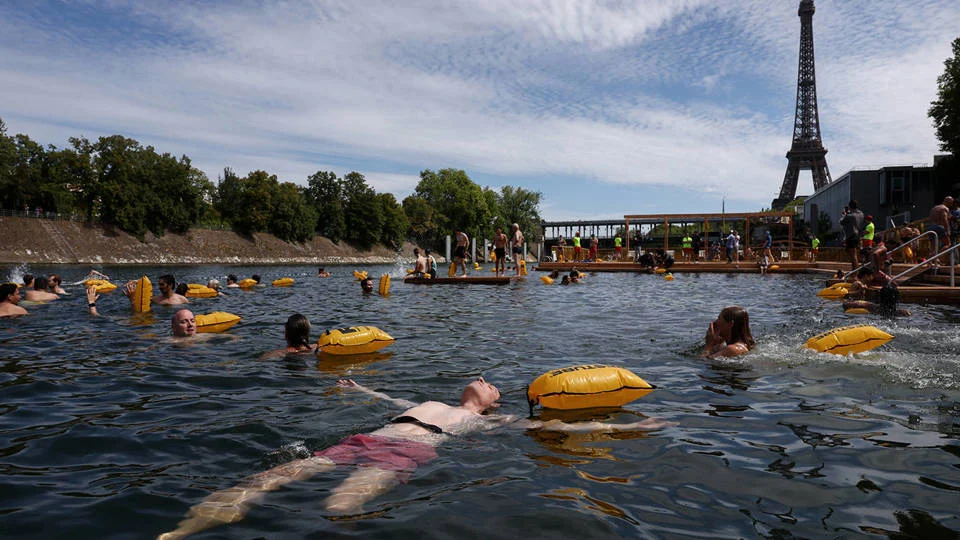
For many Londoners, the blistering heatwaves of recent summers have served as a stark reminder of the city’s growing disconnection from its most vital natural resource: water. While urban centers like Copenhagen, Paris, and Basel have successfully reintegrated their rivers and harbors into the fabric of daily public life, London’s waterways remain largely inaccessible or polluted.
Mayor Sadiq Khan has now signaled a paradigm shift. With the launch of the Clean Rivers and Waterways Plan, the Mayor has set a bold, time-bound objective: by 2035, every Londoner should have access to a safe, swimmable body of water within a 15-minute journey of their home. This is not merely an environmental policy; it is a fundamental reimagining of urban infrastructure, requiring the mobilization of disparate ministries, private sector innovation, and a total restructuring of how the city values its "blue spaces."
The Genesis of the Mission: Beyond Traditional Policy
The transition from a "program" to a "mission" is the defining challenge of Khan’s strategy. Historically, public works have been siloed—the environment ministry manages pollution, the local council manages parks, and the education ministry manages physical activity.
To achieve a 15-minute accessibility target, these silos must be dismantled. A mission-oriented approach dictates that the goal—a swimmable city—is the north star, and all departmental budget lines and regulatory authorities must align to serve that singular outcome. It is a departure from the fragmented management of the past, where 48 separate projects were often managed by 48 separate owners, resulting in inefficiency and lack of accountability.
Chronology of the Urban Swim Movement
- 1990s: Copenhagen begins extensive modernization of its sewage and treatment infrastructure, laying the groundwork for future harbor bathing.
- 2002: The Islands Brygge harbor bath opens in Copenhagen, proving that industrial waterways can be transformed into recreational assets.
- 2023–2024: Paris completes a massive €1.4 billion cleanup of the Seine, enabling public, lifeguarded swimming for the first time since 1923.
- July 2024: Mayor Sadiq Khan launches the Clean Rivers and Waterways Plan in London, committing £1.8 billion to be spent by 2030 across strategic water sites.
- 2024: Rotterdam, Utrecht, and Amsterdam sign the Swimmable Cities Charter, cementing a European consensus on urban water accessibility.
- 2035 (Target): The deadline for ensuring every Londoner lives within 15 minutes of a swimmable site.
The Socio-Economic Imperative: Swimming as a Civil Right
The push for swimmable rivers is not just about leisure; it is a matter of profound social equity. Current data from the Active Lives survey, conducted by Sport England, reveals a troubling disparity in water literacy and access.
Only 39% of children from lower-income households can swim 25 meters unaided, compared to 82% of children from affluent families. Geographic deprivation compounds this: children in the most deprived areas are significantly less likely to attain basic swimming proficiency than their counterparts in wealthier boroughs. Furthermore, the Black Swimming Association has highlighted that 96% of Black adults in England do not swim regularly, a figure that underscores deep-seated barriers to entry.
By treating swimming as a public utility—much like parks or libraries—the Mayor’s plan aims to neutralize the "postal code lottery." When a child is priced out of water access, it is a failure of social policy. When the water itself is unsafe to enter, it is a failure of environmental and industrial regulation.
Five Pillars of Delivery: How to Make a Mission Succeed
To turn a vision into a reality, the plan requires a structural overhaul. Experts, including those at University College London, suggest that five specific elements are essential to the mission’s success.
1. Unified Governance
Governance must move beyond advisory forums that merely share information. A cross-ministerial board with direct authority over budget alignment and decision-making sequencing is required. Ownership of the outcome is the key; someone must be held responsible if a river segment fails to meet safety standards by the target date.
2. Outcomes-Oriented Procurement
Public purchasing power is the most underutilized tool in a government’s arsenal. By shifting from cost-savings-based contracts to outcomes-oriented procurement, London can incentivize companies to prioritize public value. This means contracts for water treatment or bank maintenance should be judged on their contribution to the "swimmable" goal, not merely on the lowest bid.
3. Sustainable Finance
The reliance on small, fragmented, and short-term grants is a recipe for failure. The implementation of green-blue bonds—similar to the climate-resilience bonds issued by the European Bank for Reconstruction and Development—would provide the stable, long-term capital necessary for large-scale infrastructure projects, freeing up local councils to focus on execution rather than grant applications.
4. Regulatory Conditionalities
Public support and discharge permits issued to water companies must come with strict, non-negotiable conditions. Following the findings of the Jon Cunliffe review, which highlighted the sector’s chronic underinvestment, the state must mandate that any public or semi-public funding be tied to measurable pollution reduction, reinvestment in infrastructure, and the creation of local apprenticeships.
5. Co-Creation with Communities
True success requires local buy-in. Drawing inspiration from Mexico City’s model of building public pools and sports facilities in neglected boroughs, London must ensure that the communities most affected by water quality are involved in the design and long-term stewardship of these spaces. Consultation should happen at the inception, not after the blueprint is finalized.
Global Lessons and the Economics of Water
The Global Commission on the Economics of Water has warned that failing to manage water sustainably could cost high-income nations up to 8% of their GDP by 2050. The Commission argues that water should be treated as a "common good" rather than a local commodity.
Cities are currently leading this charge, outpacing national governments in their agility. Through the Swimmable Cities Charter, a global alliance of 255 organizations spanning 121 cities is sharing practical knowledge—from how Basel keeps the Rhine clean to how Paris manages the complex bureaucracy of urban river swimming. These "knowledge exchanges" are becoming the new standard for urban resilience, proving that cities can act as laboratories for global solutions.
The Implications: A Visible Form of Resilience
Climate resilience is often abstract—a matter of carbon targets and invisible infrastructure upgrades. A swimmable river, however, is tangible. It is a form of resilience that citizens can see, feel, and defend.
If London succeeds in reaching its 2035 target, the implications will be transformative. It would represent a total refurbishment of the city’s catchments and the creation of a new, skilled workforce dedicated to water quality and maintenance. More importantly, it would settle a long-standing question about who the city’s rivers and ponds belong to. By reclaiming these spaces, London would not only be adapting to a warming climate but also reclaiming its identity as a city that puts the health, safety, and joy of its citizens at the center of its planning.
The mission is ambitious, and the hurdles—from entrenched industrial pollution to fragmented bureaucracy—are significant. Yet, as other global cities have proven, the barrier is rarely a lack of technology; it is a lack of political will to treat the environment as a shared, public asset. London now has the opportunity to lead by example, proving that a major global metropolis can indeed be a swimmable one.