For nearly a decade, the interior design landscape has been dominated by a sterile, hyper-minimalist aesthetic. Influenced by the "clean girl" aesthetic and the rise of Scandinavian simplicity, American living rooms became exercises in restraint. The result? Countless homes now feature bare white walls, sparse furnishings, and flat, nondescript roller shades that offer utility but strip rooms of their soul.
As we look toward 2027, the design pendulum is swinging back. Industry leaders, including trend-forecasting experts at Blinds To Go, are noting a shift away from the "waiting room" aesthetic. The goal is no longer to eliminate clutter, but to replace it with deliberate texture, depth, and architectural interest. At the center of this movement is the humble window—specifically, the return of custom window blinds as a tool for manipulating light and shadow.
The Architectural Case Against Flat Shades
Minimalism, in its most extreme form, failed because it ignored the fundamental relationship between architecture and light. A single sheet of fabric—the standard roller shade—acts as a barrier, not an instrument. It offers one binary choice: up or down, light or dark.
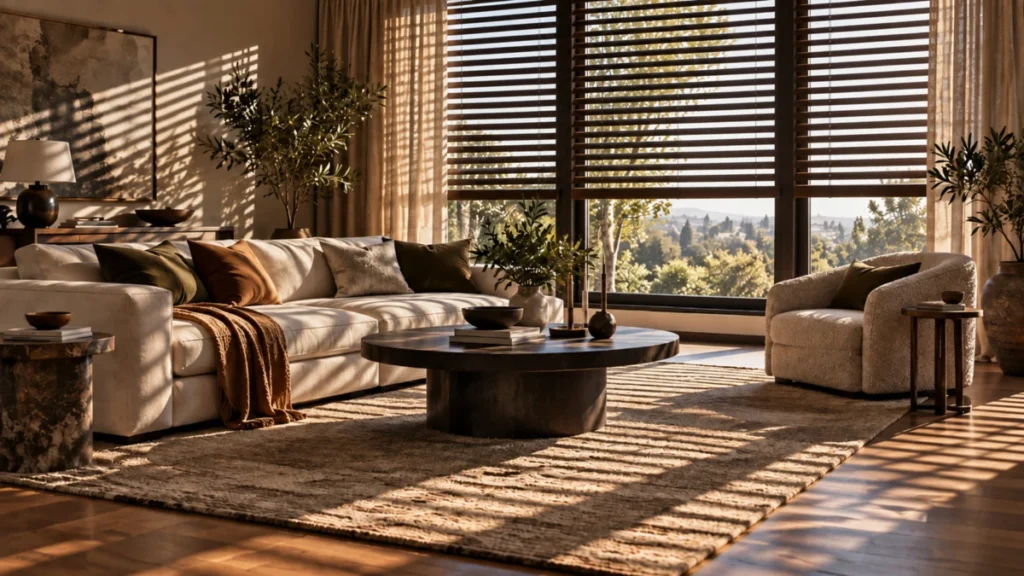
By contrast, custom wood blinds represent a dynamic lighting system. When tilted, they act as a prism for the sun. At 9:00 a.m., they might cast sharp, dramatic stripes across a hardwood floor; by 3:00 p.m., as the sun shifts, those shadows elongate and soften, crawling up the legs of furniture and across textured rugs. This constant flux transforms a static room into a living environment that evolves alongside the day.
Chronology of a Trend: From Sterile to Sculptural
The movement toward "softened minimalism" did not happen overnight. To understand why blinds are making a definitive comeback, we must look at the progression of residential design:
- 2015–2019 (The Era of the Flat Plane): The peak of minimalism. Roller shades and "invisible" hardware became the gold standard. The objective was to make windows disappear to prioritize the view outside.
- 2020–2023 (The Nesting Phase): The pandemic forced a reckoning. As people spent 24/7 in their homes, the "waiting room" feel became oppressive. Homeowners began seeking warmth, leading to the rise of heavy textiles and "clutter-core."
- 2024–2026 (The Hybridization): Designers began experimenting with layers. The realization set in that while heavy curtains provide drama, they lack the precise light-control capabilities of slats.
- 2027 and Beyond (The Era of Sculptural Light): The current consensus among top-tier decorators is that the window should be a structural focal point. Blinds are now being marketed not just as privacy tools, but as "shadow architects."
The Science of Depth: Why Structure Matters
Why do professional designers insist on blinds over flat fabrics? It comes down to perceived depth. A roller shade is a two-dimensional plane. It sits flush against the glass, offering no relief.
Blinds, however, are a stack of individual elements. Even when fully open, the presence of the slats creates a frame that adds physical thickness to the window casing. When closed, each slat casts a micro-shadow onto the one below it. This creates a visual "rhythm" that the human eye naturally gravitates toward. It turns the window from a transparent hole in the wall into a solid, considered piece of interior architecture.
Design Protocol: The Art of Relating, Not Matching
One of the most common mistakes in residential renovation is the "matching trap." With the proliferation of luxury vinyl planks (LVP) and high-end laminate flooring, homeowners often attempt to color-match their window treatments to their floors.
Design experts warn against this for a specific reason: Material Contrast.
"When you place a wood-look vinyl floor next to a real wood blind, the floor is immediately revealed as an imitation," says interior consultant Sarah Jenkins. "The human eye is incredibly good at spotting the repeating grain patterns in printed flooring. If you put a real wood blind next to it, the disparity in quality becomes glaring."
Instead, the 2027 design philosophy encourages "relating" the surfaces:
- The Undertone Rule: Identify the temperature of the floor. If the flooring is a cool-toned white oak, look for blinds with a soft, neutral, or slightly cooler grey-wash finish. If the floors are rich, deep espresso, look for warmth in the blinds—honey tones or natural bamboo.
- Value Separation: Never aim for an exact match. If you have dark floors, opt for a lighter slat color to provide visual lift. Conversely, light floors look sophisticated when anchored by a deeper, contrasting window frame.
- The "Safety Net": When in doubt, go white or painted. A crisp white slat acts as a neutral bridge that allows the floor’s grain and the wall’s texture to interact without competing for attention.
The Dual-Layer Strategy: Blinds Meets Drapery
The most sophisticated windows in 2027 won’t rely on a single solution. The industry is moving toward a "structural-plus-soft" layering approach.
Blinds handle the heavy lifting: glare reduction, privacy, and the daily "shadow show." Drapery, meanwhile, provides the finishing touch. By hanging linen or cotton panels wide and high—extending well beyond the window frame—homeowners can hide the mechanical hardware of the blinds while adding a sense of height and softness.
This contrast between the rigid, precise geometry of the wood slats and the fluid, organic movement of the curtains is the hallmark of modern, high-end interior design. It provides a level of versatility that a standalone roller shade simply cannot match.
Addressing the "Blackout" Myth
One of the most significant points of contention in the window treatment industry is the marketing of "blackout blinds." Consumers are often promised that if they choose a high-quality blind, they will achieve total darkness.
The reality is that slat blinds cannot be true blackout products. Even with the most precise manufacturing, light will inevitably leak:
- Route Holes: The punch-outs for the lift cords are small but persistent light sources.
- Slat Overlap: No matter how tight the tolerance, there is a microscopic gap between slats.
- Side-Mount Gaps: The necessary clearance for the blind to move within the window frame allows light to creep in along the edges.
While cloth tapes and cordless systems can significantly reduce this leakage, they cannot eliminate it. For those who require absolute darkness for sleep, the industry recommendation is clear: use a layered approach. Install a blackout roller shade behind the decorative wood blinds, or opt for lined, heavy-weight drapery. The blinds are for the architecture of the room; the blackout shade is for the function of sleep.
Knowing When to Skip: The "Light-Test"
Not every room is a candidate for wood blinds. A professional assessment should always start with the direction of the light.
- North-Facing Windows: These rooms receive soft, indirect light. Because there is no direct sunlight, there is no "shadow play." In these cases, the texture of the blinds might feel heavy or unnecessary. Woven wood shades or textured fabric Roman shades are often more appropriate.
- High-Traffic, Oversized Openings: A two-story floor-to-ceiling window is not the place for standard wood blinds. The weight of the materials creates mechanical strain, and the "stack" (the amount of space the blinds take up when pulled up) can be significant, obstructing the view.
- Moisture-Heavy Zones: Real wood is a natural, porous material. In a steamy bathroom, wood will inevitably warp. In these environments, high-quality faux wood or composite blinds are the only viable choice.
Conclusion: The Return of Character
The minimalist experiment taught us that clutter is distracting, but the 2027 evolution is teaching us that "blankness" is equally detrimental to our well-being. By reintroducing depth, shadow, and mechanical movement to our windows, we transform our living spaces from passive containers into active, engaging environments.
Whether through the rhythmic stripes of a morning sun-filter or the structured elegance of a perfectly fitted slat, blinds offer a return to craftsmanship. It is time to stop trying to make the window disappear and start letting it do what it was meant to do: filter the light and define the room.