

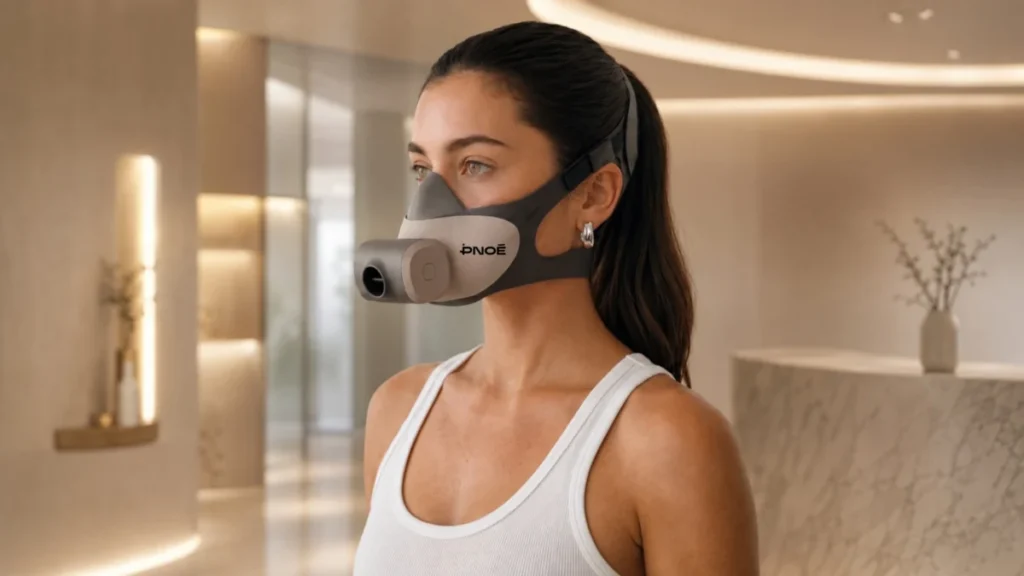
At first glance, the newest hardware from Massachusetts-based health-tech firm PNOÉ looks like a prop from a high-budget dystopian film. The device, a sleek, silicone-based mask that straps securely around the head, bears a striking resemblance to the mask worn by the comic-book villain Bane. However, beneath its intimidating aesthetic lies a benign and potentially revolutionary purpose: the democratization of clinical-grade metabolic testing.
On October 1, PNOÉ will launch the "PNOÉ 2.0," a self-administered version of its existing metabolic assessment tool. By allowing users to conduct their own testing in gyms, wellness centers, or potentially even pharmacies, the company aims to move complex health diagnostics out of the sterile, restricted environments of sports science labs and into the hands of the general public.
Main Facts: The Intersection of Breath and Biology
Metabolic testing—the process of analyzing the gases in a person’s breath to gauge how their body produces energy—has existed for over a century. Traditionally, it has served as the "gold standard" for measuring VO2 max, the maximum amount of oxygen the body can utilize during intense physical exertion. While VO2 max is widely recognized as a critical indicator of cardiorespiratory fitness and a primary predictor of longevity, the barrier to entry has historically been high.
Until now, obtaining these metrics required bulky, expensive metabolic carts found only in elite sports labs, hospitals, or specialized executive wellness clinics. PNOÉ’s breakthrough lies in shrinking this clinical technology into a portable, user-friendly package. The PNOÉ 2.0 captures 23 distinct biomarkers, including resting metabolic rate (the number of calories burned at rest) and metabolic flexibility (the body’s ability to efficiently switch between burning fat and carbohydrates).
Unlike blood tests, which provide a snapshot of chemical markers, PNOÉ’s data offers a functional look at how the body actually performs. It translates raw gas exchange data into actionable advice regarding nutrition, training intensity, and recovery strategies. As CEO Apostolos Atsalakis notes, the goal is simple: "We made it accessible to everyone."
Chronology: From Cambridge Labs to Global Scale
The journey of PNOÉ began in the hallowed halls of the University of Cambridge, where Atsalakis was completing his PhD in sensing technologies. During this period, the nascent wearable industry was just beginning to capture the public imagination. Atsalakis became fascinated by the untapped potential of breath as a diagnostic window into human health.
Joined by his childhood friend, Panos Papadiamantis—who now serves as the company’s Chief Product Officer—Atsalakis set out to build a solution that could bridge the gap between consumer wearables and clinical hardware.
Key Milestones:
- 2014: The company is founded, rooted in early research into gas-sensing hardware.
- 2019: PNOÉ enters the Y Combinator winter cohort, a move that helped formalize their business model just as the "longevity" market began to gain mainstream traction.
- 2020–2023: The company expands its footprint, securing partnerships with high-profile clients like Equinox, the NBA, and Four Seasons hotels.
- 2024: PNOÉ reaches profitability, reporting 100% year-over-year growth and preparing for the launch of the self-serve PNOÉ 2.0.
- Future Outlook: The company plans to raise a Series B funding round within the next six to 12 months to accelerate global distribution.
Supporting Data: Validating the "Business in a Box"
PNOÉ operates on a B2B model, providing gyms, medical spas, and athletic training facilities with what Atsalakis calls a "business in a box." For a monthly subscription fee ranging from $400 to over $1,000, clients receive the hardware, the proprietary software platform, comprehensive staff training, and marketing support.
The company’s growth is fueled by a $22 million capital influx from investors including the venture firm 50 Years and Google Maps co-founder Lars Rasmussen. Currently, 85% of PNOÉ’s business is concentrated in the United States, which the founders identify as the most mature market for longevity-focused health services.
The Competitive Landscape:
- High-End Labs: Rely on traditional, non-portable metabolic carts.
- Mid-Tier (PNOÉ): Offers clinical-grade, portable testing with automated software analysis.
- Consumer Wearables: Apple, Garmin, and Whoop offer VO2 max estimates based on heart-rate variability and other proxies.
- Niche Competitors: Devices like Lumen analyze breath for metabolic state but offer different depth and utility compared to PNOÉ’s multi-biomarker analysis.
By positioning itself between the high-cost clinical setting and the approximation-heavy smartwatch, PNOÉ occupies a unique, "goldilocks" space in the fitness industry.
Official Responses: Navigating the Regulatory Tightrope
Despite the clinical sophistication of the PNOÉ 2.0, the company is careful to manage expectations regarding medical diagnosis. The device is not currently FDA-cleared, and PNOÉ maintains a strict stance: it is a wellness tool, not a diagnostic medical device.
"We do not provide medical recommendations," says Atsalakis. "It’s like a body composition device, like a scale. A doctor cannot prescribe medication based on our results."
This regulatory prudence is intentional. While researchers have long investigated the possibility of identifying disease biomarkers—such as those linked to cancer—in human breath, PNOÉ is currently focused on the wellness and performance applications. Atsalakis acknowledges that while the company possesses a growing trove of data that could eventually flag health issues, full diagnostic capabilities are likely years away due to the significant regulatory hurdles involved in clinical validation.
Furthermore, the design of the PNOÉ 2.0 addresses modern hygiene concerns. By separating the electronics from the silicone masks and straps, the company allows for a shared-hardware model where each user maintains their own inexpensive, personal interface. This modularity was the result of extensive collaboration with the Milan-based Design Group Italia, which underwent countless iterations to ensure the device was as reliable in a self-serve environment as it was in a clinical one.
Implications: The Future of Preventive Health
The broader implication of PNOÉ’s trajectory is the potential shift in how individuals perceive their own longevity. As the "longevity economy" grows, consumers are becoming increasingly dissatisfied with the vague data provided by entry-level trackers. There is a hunger for objective, biological feedback that informs behavior rather than simply recording it.
Shaping the Wellness Industry
By integrating its software with the services already offered by a gym or spa, PNOÉ allows businesses to move beyond generic training plans. A trainer can look at a client’s metabolic flexibility score and, for the first time, prescribe a diet and exercise regimen based on hard data rather than anecdotal trends.
"VO2 max is the strongest predictor of human longevity," Atsalakis maintains. By turning this measurement from an elite privilege into a commoditized service, PNOÉ is effectively creating a "scorecard" for the wellness industry.
The Road Ahead
As the company moves toward its Series B funding, the focus will be on expanding its reach in Europe, Latin America, and Asia. The challenge remains the same as it was in the Cambridge lab: proving that the nuances of the breath can accurately inform the complexities of human health.
If PNOÉ succeeds in its mission, the "Bane-like" mask may soon become as common in the average fitness center as the treadmill or the dumbbell. While the company is not yet diagnosing disease, the sheer volume of data it collects suggests a future where our breath might be the primary key to unlocking a deeper, more personalized understanding of our own biological potential. In the race to live longer and healthier, PNOÉ is betting that the most important information is already right under our noses.



