
By Dario Durigan and Carlos Cuerpo
September 14, 2026
For decades, the global political discourse has been dominated by a persistent, almost "zombie-like" narrative: the notion that fiscal prudence and economic stewardship are the exclusive domains of conservative governance, while progressive administrations are inherently prone to fiscal mismanagement. This trope has long suggested that left-of-center governments are incapable of balancing budgets without sacrificing economic vitality.
However, recent evidence emerging from the Atlantic axis of Brazil and Spain suggests that this traditional dichotomy is not only outdated but fundamentally flawed. By integrating fiscal responsibility with robust growth strategies and proactive social development, progressive governments in both nations have improved the lives of millions, effectively challenging the hoary belief that right-wing orthodoxy is the only path to economic stability.
Challenging the Orthodox Consensus
The belief that conservative governments are superior economic managers is a cornerstone of neoliberal rhetoric, often ignoring the long-term sustainability of growth. In practice, this ideology has frequently prioritized short-term austerity over structural investment, leading to stagnant wages, increased income inequality, and the erosion of the social safety net.
In contrast, the progressive model currently being refined in Brasília and Madrid posits that social development is not a luxury to be funded by growth, but a prerequisite for it. By investing in human capital, infrastructure, and the green transition, these nations are fostering a more resilient economic foundation that can withstand global shocks—a direct refutation of the austerity-first doctrine.
Chronology of Economic Transformation
The recent economic trajectories of Brazil and Spain reveal a shared commitment to breaking away from the cycle of boom-and-bust austerity.
The Brazilian Pivot (2023–2026)
Following the transition of power in early 2023, the Brazilian administration focused on stabilizing the fiscal framework while simultaneously re-introducing social welfare programs like Bolsa Família. By 2024, the government successfully navigated a delicate balance: controlling inflation through monetary coordination while stimulating domestic consumption. The 2025–2026 period saw a marked increase in industrial investment, particularly in renewable energy, positioning Brazil as a key player in the global energy transition.
The Spanish Resurgence (2020–2026)
Spain’s journey began with a concerted effort to modernize its labor market following the post-pandemic recovery. By implementing structural reforms that reduced precarious employment and increased the minimum wage, the government fueled a consumption-led recovery. Despite the geopolitical instability impacting Europe, Spain’s economy outperformed many of its neighbors, driven by the strategic deployment of European Union recovery funds and a focus on high-value-added sectors.
Supporting Data: Beyond the Rhetoric
The success of these progressive policies is not merely anecdotal; it is reflected in key macroeconomic indicators that challenge the conservative narrative.
1. Employment and Wage Growth
In Spain, the reform of the labor market has led to record-high levels of permanent contract employment. By shifting the incentive structure away from temporary labor, the government has fostered greater productivity and employee loyalty. Similarly, Brazil has seen a steady decline in unemployment rates coupled with real wage growth, reversing the stagnation of the previous administration.
2. Fiscal Sustainability and Debt Management
Critics often argue that social spending leads to uncontrollable debt. Yet, both Brazil and Spain have demonstrated that fiscal discipline can coexist with social investment. In Spain, the debt-to-GDP ratio has trended downward as a result of robust GDP growth and tax base broadening. Brazil has introduced a new fiscal framework designed to ensure long-term predictability while maintaining the budgetary flexibility required to address extreme poverty and infrastructure deficits.
3. Investment in the Green Economy
The "green premium" has become a central tenet of both nations’ strategies. Brazil’s "Ecological Transformation Plan" is creating thousands of jobs in the bio-economy and carbon-neutral sectors. Spain, meanwhile, has leveraged its geographical advantages to become a leader in green hydrogen and solar energy production, effectively decoupling economic growth from carbon emissions.
Official Responses and Political Implications
The divergence from traditional neoliberal scripts has not gone unnoticed by international institutions. Initially skeptical of the fiscal trajectory in both countries, organizations such as the International Monetary Fund (IMF) and the OECD have gradually adjusted their outlooks, acknowledging that the focus on "growth-friendly" social spending has yielded positive dividends.
"The model is simple but effective," notes an analyst familiar with the cooperation between the two ministries. "It treats the state as a partner in development rather than a spectator. By de-risking private investment through public guarantees and regulatory stability, these governments are proving that you don’t have to choose between a strong economy and a fair society."
However, opposition parties in both nations continue to argue that these gains are transitory and rely too heavily on state intervention. They warn of potential inflationary pressures and the dangers of high public spending. Yet, the data suggests that these progressive administrations have managed to anchor inflation expectations, even while scaling up essential social services.
The Global Implications: A New Model for the 21st Century
The success of the Brazilian-Spanish cooperation serves as a blueprint for other nations grappling with similar challenges: rising inequality, the existential threat of climate change, and the need for fiscal legitimacy.
Why this model matters:
- Reframing Fiscal Responsibility: It demonstrates that fiscal health is best achieved through a growing, inclusive economy, rather than through the systematic dismantling of public services.
- Addressing Inequality as a Drag on Growth: By narrowing the wealth gap, these nations are expanding the middle class, which in turn acts as a stabilizer for the national economy.
- Strategic Statecraft: Both governments have shown that the state can successfully guide industrial policy without falling into the traps of protectionism or market distortion.
As we look toward the latter half of the decade, the "progressive alternative" is no longer a theoretical exercise. It is a demonstrable reality. The persistence of the "zombie idea" that only conservatives can manage an economy is fading, replaced by the evidence of a modern, evidence-based approach to governance.
Conclusion: A Blueprint for the Future
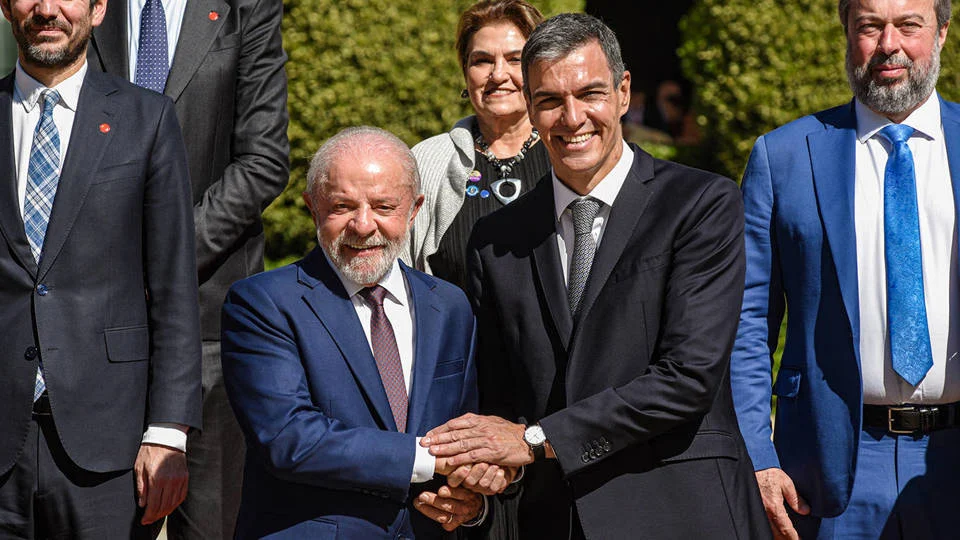
The collaboration between Brazil and Spain is not just a diplomatic success; it is an ideological milestone. It proves that the "third way" between unchecked market volatility and rigid state control is not only possible but necessary in an era of global instability.
By prioritizing the stability of the social contract alongside the stability of the balance sheet, these two nations are demonstrating that progressive policies are not just morally sound—they are economically superior. As other governments around the world face the task of revitalizing their economies in the wake of systemic shocks, the lessons from Brasília and Madrid will become increasingly difficult to ignore. The "zombie" narrative of the past has met its match in the robust, inclusive, and forward-looking economic reality of the present.
The path forward is clear: a modern economy requires a modern social policy, and the success of Brazil and Spain shows us exactly how to build it.