Introduction: The Invisible War at Sea
The global economy is built on the silent, rhythmic movement of thousands of merchant vessels traversing the world’s oceans. From consumer electronics and grain to crude oil and raw industrial materials, approximately 90% of global trade is transported by sea. However, beneath the surface of this maritime commerce lies a persistent and evolving threat: piracy and armed robbery. Standing as the primary sentry against these maritime predators is the International Maritime Bureau’s (IMB) Piracy Reporting Centre (PRC). Since its inception in 1991, the PRC has functioned as the global industry’s "nerve center," providing 24-hour surveillance, rapid response coordination, and critical intelligence to safeguard seafarers and the vital lifelines of the global economy.
The Genesis and Evolution of the IMB PRC
A Response to Chaos
In the early 1990s, the maritime industry faced a rising tide of piracy that threatened to destabilize shipping lanes, particularly in the Southeast Asian corridor. Recognizing the lack of a centralized, independent reporting mechanism, the International Chamber of Commerce (ICC) established the IMB Piracy Reporting Centre. The mandate was simple yet monumental: to act as a single point of contact for ships under duress, circumventing bureaucratic delays and providing an immediate bridge between vessels at sea and regional law enforcement agencies.
Three Decades of Vigilance
Over the past 33 years, the PRC has transitioned from a basic reporting desk to a sophisticated information hub. By implementing a 24-hour, 365-day operational cycle, the Centre ensures that a ship captain facing an imminent boarding in the Gulf of Guinea or the Sulu-Celebes Seas has a direct line of communication to experts who understand the nuances of maritime law and tactical emergency response.
Chronology of Operations: How the Centre Functions
The efficiency of the PRC is predicated on a structured, multi-phase operational protocol that has been refined over three decades.
Phase 1: Real-time Alerting
When a shipmaster reports a suspicious approach or a confirmed attack, the PRC immediately broadcasts warnings to all vessels in the vicinity via satellite communications and high-frequency radio. This "early warning" system has proven to be the most effective deterrent against boarding, allowing crews to initiate hard-lockdown procedures, increase speed, and alter courses before the pirates can bridge the gap.
Phase 2: Inter-Agency Liaison
The PRC does not operate in a vacuum. It acts as a conduit for information to local, regional, and international authorities. By channeling intelligence directly to naval task forces, coast guards, and local police, the Centre ensures that response assets are deployed to the exact location of the threat. This coordination is crucial in territorial waters where jurisdiction can be ambiguous, and international cooperation is required to authorize the deployment of security assets.
Phase 3: Data Aggregation and Analysis
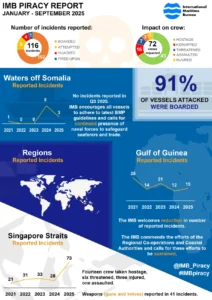
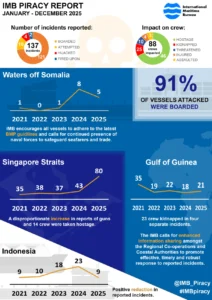
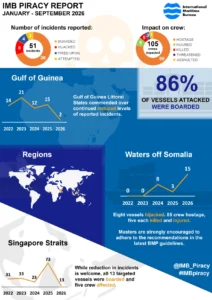
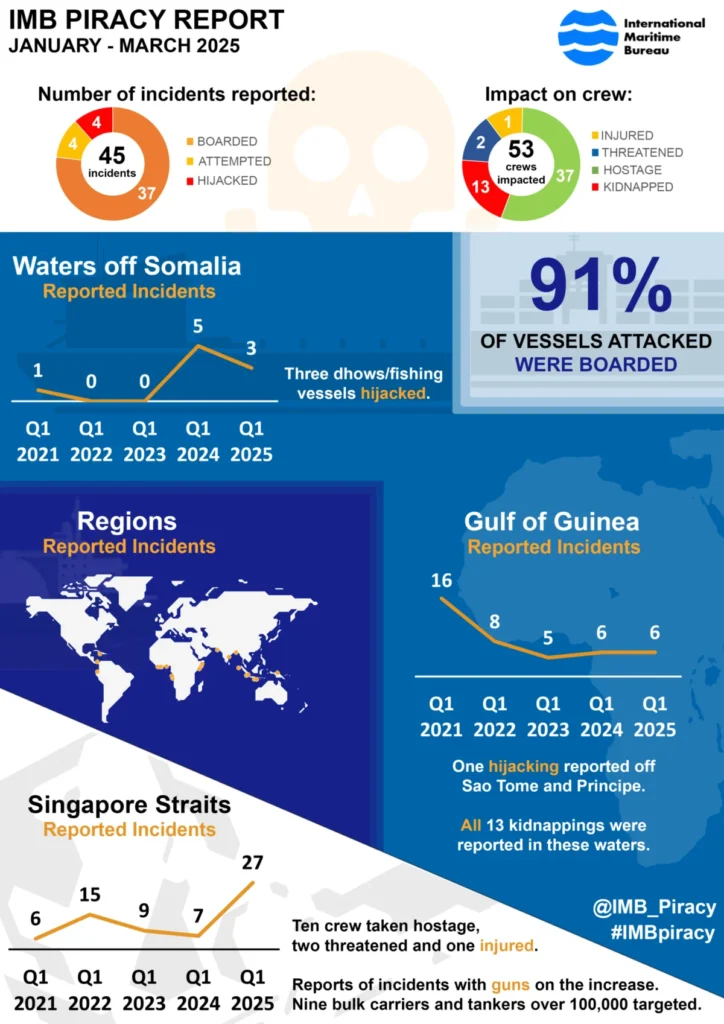
Every incident—whether a successful boarding, a foiled attempt, or a suspicious sighting—is meticulously recorded. This data forms the bedrock of the annual Piracy and Armed Robbery Against Ships report. By tracking patterns, the PRC can identify "hotspots," analyze the weaponry used, and understand the tactics of criminal syndicates, providing the shipping industry with actionable intelligence to harden their vessels.
Supporting Data: The Anatomy of Modern Piracy
The data gathered by the IMB provides a sobering look at the reality of modern maritime crime. While the nature of piracy has evolved from the high-seas hijacking of the Somali pirate era to the more opportunistic "armed robbery" model seen in coastal waters today, the threat remains systemic.
The Shift in Tactics
Recent years have shown a marked shift toward low-level armed robbery. Pirates often target vessels at anchor or while underway in narrow straits, using small, fast-moving skiffs to board under the cover of darkness. The IMB’s data indicates that the vast majority of these incidents occur while the ship is in territorial waters, emphasizing the need for robust coastal state surveillance.
The Cost of Silence
The IMB maintains that the greatest challenge to maritime safety is the "under-reporting" of incidents. When a master or a shipping company chooses not to report an attempted boarding due to concerns over insurance premiums or operational delays, they inadvertently create a "blind spot." Without accurate reporting, authorities cannot allocate the necessary patrol vessels to high-risk areas. The PRC’s data consistently demonstrates that regions with high reporting rates see a faster, more effective response from regional authorities.
Official Responses and Industry Implications
The effectiveness of the IMB PRC has garnered widespread support from the International Maritime Organization (IMO) and major shipping associations globally.
The Strategic Importance of Reporting
Michael Howlett, Director of the ICC International Maritime Bureau, has frequently emphasized that the reporting process is the most powerful tool in the arsenal of a ship’s crew. "By reporting every incident, we build a comprehensive picture of the threat environment," Howlett states. "This intelligence is not just for our archives; it is shared with the shipping community to warn them of shifting risks, and with governments to hold them accountable for the security of their coastal waters."
Economic and Humanitarian Impacts
The implications of unchecked piracy are far-reaching:
- Humanitarian: Seafarers are the primary victims, facing physical violence, psychological trauma, and, in worst-case scenarios, kidnapping for ransom.
- Economic: Piracy inflates the cost of goods. Higher insurance premiums, the cost of private maritime security contractors, and the diversion of ships to avoid high-risk zones all add to the final price tag for the consumer.
- Supply Chain Resilience: A single pirate attack can trigger a "bottleneck" in global supply chains, leading to delays that ripple across international markets.
The Path Forward: Technology and Collaboration
As piracy tactics evolve to incorporate better technology—such as night-vision equipment, high-speed GPS, and sophisticated communication jamming—the IMB PRC is also evolving. The future of maritime security lies in the integration of satellite tracking (AIS) with ground-based reporting.
Hardening the Fleet
The IMB continues to urge shipping companies to adhere to the Best Management Practices (BMP), a set of guidelines designed to help ships protect themselves. This includes everything from the use of razor wire and water cannons to the implementation of a "Citadel"—a secure, fortified room where the crew can retreat if the ship is boarded.
The Call to Action for Shipmasters
The call to report is not just a bureaucratic request; it is a moral imperative. By providing the PRC with detailed, timely information, shipmasters ensure that their peers are warned and that the international community is pressured to maintain security in volatile waters. The IMB PRC remains the primary advocate for the safety of these seafarers, acting as the eyes and ears of the global merchant fleet.
Conclusion: A Global Necessity
In an increasingly interconnected world, the security of the sea is the security of the global economy. The IMB Piracy Reporting Centre serves as a critical buffer between the order of international commerce and the chaos of maritime criminality. As the industry looks to the future, the work of the PRC will remain indispensable.
For shipowners, masters, and stakeholders, the message from the IMB is clear: vigilance and communication are the most effective weapons against the threat of piracy. By supporting the reporting mechanism, the global maritime community ensures that the high seas remain a space for trade and transit rather than a domain for lawlessness.
For further information or to contribute to the global effort in securing our oceans, stakeholders are encouraged to engage with the IMB directly.
- Request the 2024 Piracy and Armed Robbery Against Ships Report: Click Here
- Contact Information:
- Michael Howlett, Director, ICC International Maritime Bureau
- Tel: +44 207 423 6960
- Email: [email protected]
The IMB Piracy Reporting Centre continues to serve as a beacon of safety for those who work on the front lines of global trade. Its legacy is one of proactive defense, and its future is defined by a commitment to ensuring that every vessel arrives safely at its destination.