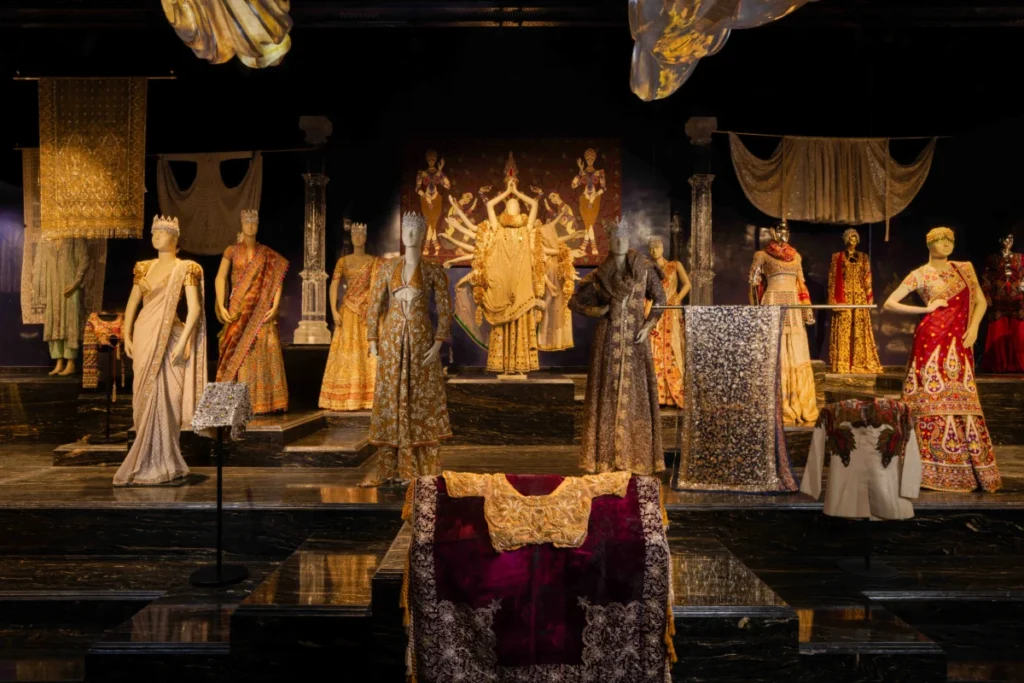
MUMBAI, India — For forty years, the design duo of Abu Jani and Sandeep Khosla has defined the zenith of Indian luxury, carving out a visual identity synonymous with chikankari, zardozi, and an unabashed embrace of maximalist glamour. This September, the iconic pair is set to transcend the boundaries of retail, celebrating their four-decade anniversary with the unveiling of "Mubarak Baug"—a 20,000-square-foot architectural marvel located within the historic Framjee Cawasjee Institute in South Mumbai.
More than just a flagship store, Mubarak Baug—a name inspired by Sandeep Khosla’s childhood home—is intended as a living museum, an educative sanctuary, and a masterclass in heritage preservation. It represents a monumental shift in how high-fashion houses interact with their audience, moving beyond the transactional to provide an immersive, atmospheric narrative of a brand that has dressed generations of India’s most influential families, from the Bachchans to the Ambanis.

The Vision: A Cathedral of Craft
The conceptualization of Mubarak Baug was a four-year undertaking, involving rigorous collaboration with heritage conservationists and master artisans across India. As Sandeep Khosla described it during a preview of the space, the store is "a dream, a tribute, 20,000 square feet of gilded grandeur."
The design, executed by A Wonder Room—the designers’ own interior decor vertical—seeks to bridge the gap between Mumbai’s colonial architectural legacy and the avant-garde future of Indian fashion. The entry sequence is deliberately grandiose. Visitors are welcomed by an open driveway, a rare luxury in the dense urban landscape of South Mumbai, before passing through towering doors into a world that is, in Khosla’s words, "unashamedly maximalist."

Inside, the space is structured as a series of thematic zones. Mannequins mounted on tall stilts dominate the floor, creating a sense of ethereal movement, while linear gold poles—reminiscent of bamboo but gilded with a Midas-like touch—draw the eye upward. The "floating city" installation, crafted from brass in Uttar Pradesh, serves as the heart of the ground floor, symbolizing the designers’ aspiration to create a realm of "fantasy and freedom" within the city limits.
A Chronology of Iconic Elegance
To understand the significance of Mubarak Baug, one must look back at the trajectory of the Abu Jani and Sandeep Khosla (AJSK) label.

- The Genesis (1986): The duo began their journey with a shared vision of elevating traditional Indian textile techniques to a global couture standard. Their early focus on chikankari (intricate shadow work embroidery) set them apart in a market that had yet to recognize the luxury potential of such labor-intensive craft.
- The Bollywood Ascent (1990s): By the mid-90s, the label had become the go-to for India’s cinematic royalty. Their costumes for legendary films, most notably the opulence seen in Devdas, cemented their reputation for dramatic, historically resonant fashion.
- The Corporate Patronage (2000s–2010s): As the Indian economy grew, so did the brand’s influence. The duo became the custodians of style for major corporate dynasties, notably the Ambanis, crafting ensembles for weddings, festivals, and global galas that required a blend of traditional reverence and modern edge.
- The Modern Era (2020–Present): With the shift toward sustainability, AJSK began integrating upcycled materials and circular design into their high-fashion output, leading to the creation of the sculptural installations now featured at Mubarak Baug.
Supporting Data: The Architecture of Art
The scale of the project is, as Khosla repeatedly emphasizes, "ginormous." Transforming a heritage site into a functional retail environment required not just aesthetic vision but extensive logistical engineering.
- Spatial Dimensions: 20,000 square feet of floor space.
- Design Elements: Custom-made brass installations, extensive use of mirror-work, and gold-relief skyline silhouettes of Mumbai.
- Sustainability Metrics: The store features sculptural wall panels created by Ritu and Surya Singh of Wolf Jaipur, utilizing fabric offcuts and embroidery remnants from the AJSK atelier.
- Curation: The "museum area" on the upper level will undergo a rotational exhibit cycle every six months, showcasing archival pieces worn by iconic figures, including Isha Ambani and Madhuri Dixit.
The store acts as a visual library for clients. Rather than just viewing finished garments, patrons can browse framed textile samples and embroidery swatches, turning the shopping experience into an educational process about the history of the materials they are purchasing.

Official Perspectives: The Philosophy of the Founders
For Abu Jani and Sandeep Khosla, the store is the culmination of a lifelong dialogue between them. "It’s all to do with the alignment, different pieces put together," Khosla explained during a walkthrough. The duo’s dynamic remains the engine of the brand. While Abu Jani notes that the store is "a dream come true," Khosla is quick to credit the vast network of Indian artisans who brought the vision to life.
"We love India; our inspiration has always been India, and we are collectors at all times," Khosla remarked. The decision to invest in a heritage building—a process that required a year of bureaucratic approvals—underscores their commitment to the city of Mumbai. The store serves as an ode to the city’s architectural past while acting as a beacon for its creative future.

The designers are particularly proud of the "vault-like" jewelry area and the dedicated museum space. By putting archival pieces on display alongside their latest ready-to-wear collections, they are asserting that their fashion is not merely clothing, but a form of cultural artifact.
Implications for the Indian Luxury Market
The launch of Mubarak Baug carries significant implications for the landscape of Indian luxury retail.

- Redefining the Flagship: In an era of digital commerce, the physical store is being repositioned as a destination. By integrating a museum, an art gallery, and a historical archive, AJSK is forcing other luxury brands to reconsider the "shopping experience."
- Heritage Preservation: By operating out of a heritage site, the duo is setting a precedent for high-end brands to engage in the adaptive reuse of historical architecture, rather than opting for modern malls.
- The Sustainability Pivot: The inclusion of art made from waste materials serves as a high-profile statement on circularity. It challenges the stigma that luxury fashion is inherently wasteful, proving that remnants can be transformed into high-value sculptural art.
- The Elevation of Craft: By showcasing the labor-intensive nature of their work—from the "floating city" brass installation to the framed embroidery samples—the brand is justifying the high price point of couture through transparency and education.
As the doors to Mubarak Baug prepare to open, the message is clear: Abu Jani and Sandeep Khosla are not just celebrating forty years of past success; they are staking their claim on the next four decades. They have created a space where the past is preserved, the present is celebrated, and the future of Indian fashion is allowed to float in a sea of gold, brass, and boundless imagination.
"Everything is about dimension, everything is about depth," Khosla said, looking out over the sprawling, meticulously curated floor. "When you stand here, you see beyond, beyond, beyond."

For those who visit Mubarak Baug, the experience will likely be just that—a journey beyond the superficial, into the very heart of what it means to craft an Indian legacy.