

Between 2.5 and 2 billion years ago, Earth underwent a metamorphosis of planetary proportions. As oxygen began its slow, volatile accumulation in the atmosphere—a period now known as the Great Oxidation Event—the chemical architecture of the surface shifted irrevocably. This atmospheric transition acted as the primary catalyst for the eventual rise of complex life, paving the way for the multicellular organisms that would emerge half a billion years later.
For decades, geologists have scrutinized the chemical "fingerprints" left behind during this era, particularly an unusual carbon-isotope signature discovered in ancient marine sediments. This signature, famously observed in the Zaonega Formation of Russia and the Francevillian Basin of Gabon, has long been interpreted as proof of a massive, planet-wide disruption of the carbon cycle. However, a groundbreaking study led by researchers at the California Institute of Technology (Caltech) is now challenging this consensus, suggesting that one of the most famous "global" events in Earth’s history may have been nothing more than a local, albeit dramatic, geological anomaly.
The Shunga-Francevillian Event: A Global Consensus Under Scrutiny
The "Shunga-Francevillian event" has served as a cornerstone of Precambrian geology. When microbial life thrived in the ancient oceans, vast amounts of organic material were buried beneath the seafloor. This burial process trapped carbon in rocks and created a distinct isotopic signature—a ratio of heavier to lighter carbon atoms—that serves as a historical record of the era’s environmental conditions.
For years, the scientific community treated this specific signature as a smoking gun for a global imbalance in the carbon cycle, theoretically triggered by the massive influx of oxygen. Yet, Nivedita Thiagarajan, a senior scientific researcher at Caltech and the lead author of the recent study published in the journal Geology, suggests that we may have been misreading the evidence.
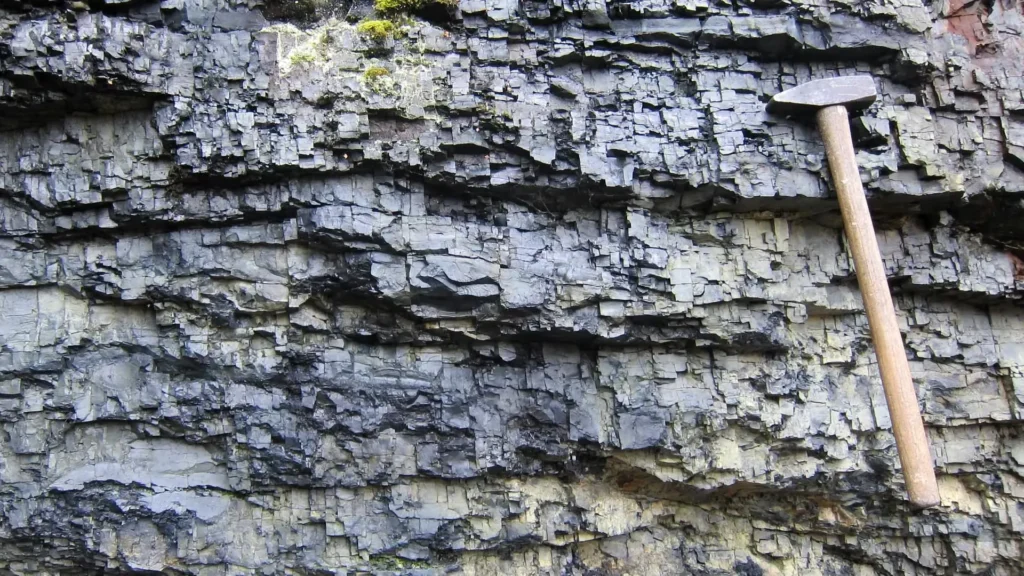
"One major debate centers on an unusual carbon-isotope signal that has often been interpreted as evidence of a worldwide environmental change," Thiagarajan explains. "We studied gases trapped in microscopic pockets within rocks from the Zaonega Formation in Karelia, Russia—one of the world’s oldest known fossil oil fields—and found that the carbon-isotope signal at this key site can be explained by local phenomena that occurred in a several-hundred-square-kilometer sedimentary basin rather than across the entire globe."
Chronology: Reading the Deep-Time Archive
To understand the scope of the study, one must look at the methodology employed by the researchers. The team, working in the lab of John Eiler, the Robert P. Sharp Professor of Geology and Geochemistry at Caltech, utilized drill cores—long, solid cylinders of rock extracted from deep beneath the surface. These cores are essentially the "growth rings" of the planet, preserving the chemical history of the Proterozoic Eon.
The research process evolved significantly during a sabbatical visit by Aivo Lepland, a researcher at the Geological Survey of Norway (NGU). Lepland brought with him a collection of isotope measurements from gases trapped in the Zaonega rocks that had remained largely enigmatic. Simultaneously, Thiagarajan and Eiler were developing a new framework for understanding the formation of natural gases based on isotope ratios. When these two datasets converged, a different narrative began to take shape.
The team reconstructed the sequence of events at the Zaonega Formation as follows:
- Sedimentation: Nearly 2 billion years ago, the region was a thriving marine sedimentary basin, teeming with microbial life.
- Magmatic Intrusion: A massive sheet of magma forced its way through the sedimentary layers, acting as a subterranean furnace.
- Thermogenic Generation: The intense heat from the magma warmed the organic-rich sediments, converting buried crude oil and kerogen into hydrocarbons, including methane and propane.
- Biological Recycling: These gases migrated upward, reaching the seafloor where methane-consuming microbes thrived, effectively "recycling" the carbon and creating the unique, light-isotope signature observed today.
Supporting Data: The Thermal Gradient Evidence
The strength of the Caltech-led study lies in its focus on physical evidence—specifically the gases sealed inside microscopic fluid inclusions within samples rich in pyrobitumen. Pyrobitumen is an insoluble organic carbon residue formed when oil is subjected to extreme heat deep underground.
The researchers identified a distinct thermal gradient that confirms the "local heat" theory. They discovered temperatures reaching approximately 350 degrees Celsius in the immediate vicinity of the magma intrusion, which then tapered off to roughly 72 degrees Celsius at an ancient seafloor asphalt spill located about 300 meters above the intrusion point.
"This chain of geological and biological processes can account for the unusual carbon-isotope signal recorded at the Zaonega Formation," says Thiagarajan. "It was interesting to see that some of the same signatures that we observe in modern oil and gas basins are also there and preserved in 2-billion-year-old samples."
By proving that a local magmatic event could produce the very signature previously attributed to a global climate shift, the researchers have successfully provided a more parsimonious explanation for the data.
Official Perspectives and Scientific Implications
The implications of this study are profound, as the Zaonega Formation serves as a primary "reference site" for the Shunga-Francevillian event. If the signal in Russia was the result of a localized magmatic intrusion rather than a planetary crisis, the entire interpretation of the carbon cycle during the Proterozoic Eon may require a rigorous reassessment.
"Earth, in a way, went crazy during that time interval when oxygen appeared in the atmosphere," says Aivo Lepland. "What we are trying to assess are the causes and consequences of Earth oxygenation. This information is archived in the rocks, so, in order to study what happened, you have to study rocks."
The scientific community is already preparing for the next phase of this inquiry. While the study provides a compelling alternative to the "global event" hypothesis for the Russian site, the question remains: does this explanation also apply to the similar isotopic signals found in Gabon?
The Future of the Investigation: Testing the Gabon Hypothesis
The next step in this scientific detective story is a comparative analysis between the Russian and Gabonese sites. Researchers are currently utilizing samples from the GOE-DEEP project, an international initiative funded by the International Continental Scientific Drilling Program.
In the summer of 2025, Aivo Lepland spent four months in Gabon, coordinating an intensive drilling campaign to recover pristine rock samples. These cores, which arrived at the NGU in February, are currently being processed by an international team representing 18 different countries. The goal is to determine if the geological and biological "local" processes that shaped the Zaonega Formation were mirrored in Africa.
"Now we can really put things together by doing a similar type of study on the Gabonese rocks to compare the two sites," Lepland notes. "This is how science moves forward."
The study, titled "Paleoproterozoic thermogenic hydrocarbon generation, Zaonega Formation, Russia," marks a significant shift in how geologists approach the history of the early Earth. By challenging the long-held assumption of a global carbon-cycle disruption, the team has underscored the necessity of distinguishing between local geological events and true, planet-wide transformations. As the international team begins its analysis of the new Gabonese cores, the scientific community waits with anticipation to see if the "global" event of 2 billion years ago will be rewritten as a series of fascinating, yet isolated, subterranean interactions.



