
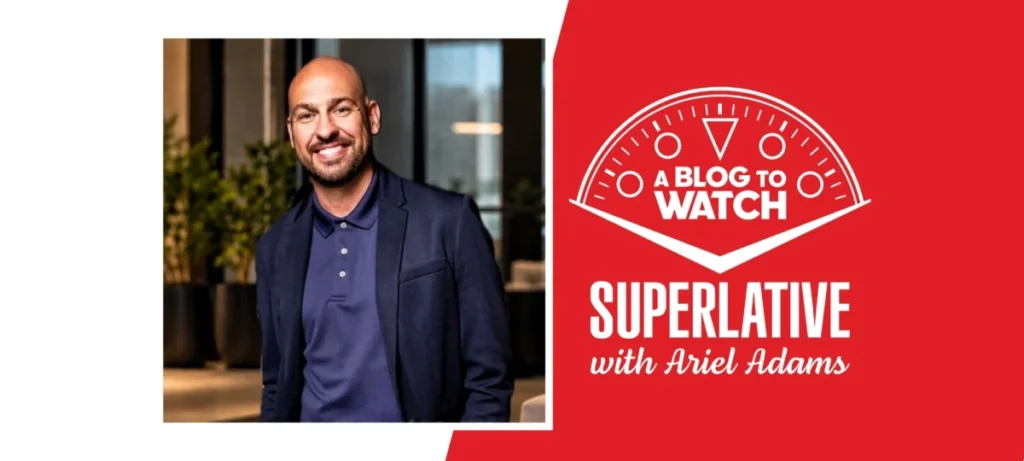
In an era defined by an unprecedented explosion of micro-brands, digital marketplaces, and the blurring of lines between editorial content and affiliate marketing, the modern watch enthusiast is faced with a paradox of choice. While the accessibility of information has never been higher, the reliability of that information has become increasingly fragmented. Addressing this complexity is the central theme of the latest episode of the SUPERLATIVE podcast, hosted by aBlogtoWatch founder Ariel Adams, who sat down with Thomas J. Sandrin, the visionary founder of WatchDNA.
Their conversation offers a deep dive into the evolving mechanics of the watch industry, tracing the path from legacy corporate experience to the grassroots educational tools currently shaping how consumers interact with timepieces.
The Genesis of an Expert: A Chronology of Experience
To understand the impetus behind WatchDNA, one must first look at the professional trajectory of Thomas J. Sandrin. His career serves as a bridge between the traditional, high-level corporate world of Swiss watchmaking and the agile, tech-forward world of modern consumer advocacy.
The Swatch Group Era
Sandrin’s foundation was built over more than a decade within the Swatch Group, most notably during his tenure at Hamilton. This period was critical for his professional development, as it provided an "insider’s view" of how a heritage brand manages its identity, supply chain, and global retail strategy. Working within one of the industry’s largest conglomerates allowed Sandrin to witness firsthand the challenges of maintaining brand integrity while scaling production to meet global demand.
The Academic Pivot
Recognizing that the industry was undergoing a fundamental shift—driven by digital transformation and a change in consumer purchasing habits—Sandrin transitioned into academia. By earning his MBA, he sought to marry his deep-seated horological expertise with rigorous business theory. This educational pursuit provided the strategic framework for what would eventually become his entrepreneurial ventures.
Launching the Ecosystem
Post-MBA, Sandrin did not return to a singular brand. Instead, he founded Northern Watch Services and, subsequently, WatchDNA. These entities represent a departure from traditional brand management, focusing instead on the "middle ground"—the space between the manufacturer and the collector. By positioning himself as an objective facilitator, Sandrin has sought to professionalize the way consumers navigate the daunting influx of new watch releases.
The Philosophy of WatchDNA: Education vs. Transaction
At the heart of the conversation between Adams and Sandrin is a fundamental question: How do we educate consumers without compromising objectivity?
The "No-Sell" Mandate
WatchDNA was built on a specific, non-negotiable premise: it is an educational platform, not a storefront. In a market where "influencer marketing" often leads to undisclosed sponsorships and biased reviews, WatchDNA aims to serve as a neutral arbiter of truth. Sandrin emphasizes that the goal is to provide enthusiasts with the historical context and technical specifications necessary to make an informed purchase, rather than pushing a specific product to generate a commission.
Defining Brand Identity
Sandrin argues that in a crowded market, a watch brand’s "DNA" is its most valuable asset. During the SUPERLATIVE interview, he explores the difference between brands that have a cohesive narrative and those that merely assemble parts. For Sandrin, a watch is not just an object of utility or status; it is a repository of heritage and design intent. Helping consumers identify this "DNA" is the core service his platform provides.
Supporting Data: The Modern Consumer’s Dilemma
The watch industry has seen a massive surge in the number of brands entering the market. With the ease of modern manufacturing and the reach of crowdfunding platforms, the barrier to entry for watchmaking has plummeted.
The Paradox of Choice
According to industry analysts, the number of active watch brands on the market has increased by nearly 300% over the last decade. While this has democratized watch ownership, it has created a "noise" problem. Consumers often struggle to differentiate between a high-quality boutique brand and a "white-label" manufacturer selling rebranded generic components.

The Role of Third-Party Validation
Data from current consumer surveys suggests that watch buyers are increasingly skeptical of direct brand marketing. Over 65% of respondents in recent market studies indicated that they prioritize third-party reviews and independent educational resources over official brand press releases. This shift in sentiment is precisely why platforms like WatchDNA have gained traction; they satisfy the need for peer-validated, expert-led information that feels detached from the bottom line of the manufacturer.
Official Perspectives: The Role of Retailers and Social Media
A significant portion of the SUPERLATIVE episode is dedicated to the changing nature of the retail experience. Despite the rise of e-commerce, Sandrin and Adams agree that the physical retail space remains an indispensable component of the watch industry.
The Power of the Physical
"There is no substitute for putting a watch on the wrist," Sandrin notes. The interaction between the weight of the steel, the ergonomics of the case, and the legibility of the dial is something that no high-resolution render can replicate. Independent retailers are often the guardians of this experience. They provide the "human touch"—a relationship-based interaction that provides a level of trust that a digital shopping cart simply cannot replicate.
Social Media: A Double-Edged Sword
While social media has made watches more "visible" than ever, it has also warped the perception of expertise. Sandrin discusses the rise of the "curated expert," where aesthetic appeal on platforms like Instagram often masquerades as deep technical knowledge. The challenge for the consumer, he suggests, is to differentiate between those who simply enjoy the look of a watch and those who understand the horological engineering that goes into it.
Implications for the Future of Horology
What does the rise of platforms like WatchDNA mean for the broader industry? As the market continues to expand, we can identify three clear implications for the coming years:
1. The Rise of the "Informed Collector"
We are moving away from an era of impulse buying driven by hype and toward a more research-driven culture. Collectors are becoming increasingly interested in the "why" behind a watch, focusing on the history of the movement, the integrity of the design language, and the sustainability of the brand.
2. The Professionalization of Information
The industry is likely to see a clearer distinction between "lifestyle" watch coverage and "technical" horological education. As platforms like WatchDNA mature, they set a higher standard for the industry. Brands that lack a coherent narrative or rely on aggressive, misleading marketing will find it harder to retain their customer base.
3. Strengthening the Retail-Consumer Link
Technology, specifically the tools being developed by WatchDNA, will likely serve to enhance—not replace—the retail experience. By using digital platforms to pre-qualify a consumer’s interest and provide them with deep historical knowledge, retailers can focus on providing a high-quality in-person experience that turns a transaction into a long-term relationship.
Conclusion: A Call for Transparency
The conversation between Ariel Adams and Thomas J. Sandrin is more than just a podcast episode; it is a diagnostic report on the state of the watch world. As the industry faces the challenges of oversaturation and the inevitable shift in how consumers access information, voices like Sandrin’s become essential.
By advocating for transparency, education, and the preservation of brand identity, WatchDNA is providing the tools necessary to ensure that the watch industry remains a space where passion and intellect can coexist. For the collector, the message is clear: the more you understand about the DNA of the brands you support, the more rewarding your horological journey will be.
For those interested in diving deeper into this philosophy, the full interview is available via the SUPERLATIVE podcast, and further insights can be found on the WatchDNA website, which serves as a testament to the idea that in the world of watches, knowledge is the ultimate complication.