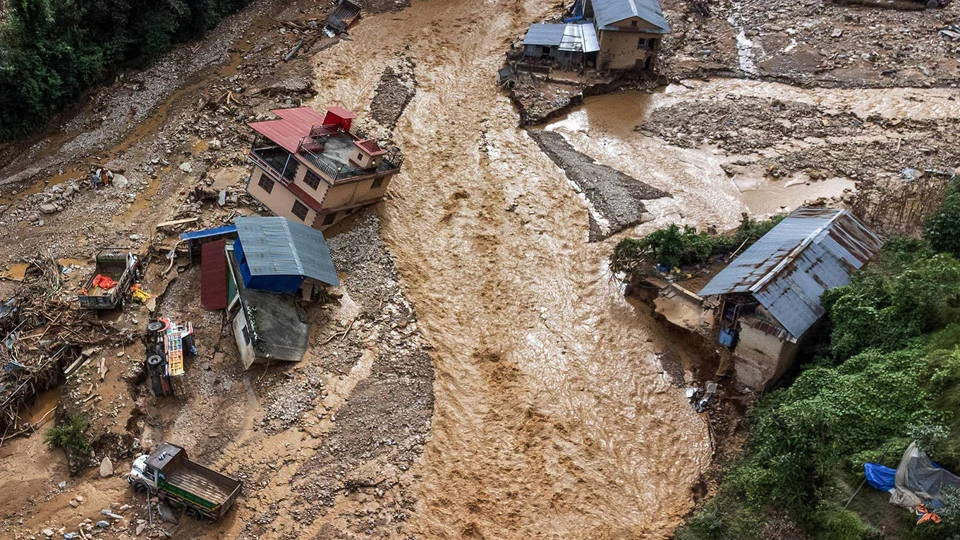
SINGAPORE — The catastrophic flooding that recently swept through Nepal and Tibet has served as a grim, high-definition reminder of the devastating human and economic toll exacted by a rapidly changing climate. While the immediate, heart-wrenching priority remains the preservation of life and the urgent support of displaced communities, the disaster has exposed a deeper, structural vulnerability: the alarming speed with which physical environmental hazards can metastasize into paralyzing macroeconomic shocks.
For policymakers across Asia, the message is clear. The era of reactive disaster management is coming to an end. To survive the climate-driven volatility of the 21st century, nations must transition toward prearranged disaster-risk financing—a strategy that treats economic resilience not as an afterthought, but as a core pillar of national security and fiscal planning.
The Anatomy of a Climate-Induced Macroeconomic Crisis
The current crisis, characterized by extreme rainfall and widespread inundation, cannot be viewed in isolation. While the scientific community remains cautious about attributing individual weather events solely to El Niño or climate change, the convergence of environmental pressures is undeniable. The World Meteorological Organization has warned that a strengthening El Niño, expected to persist through the end of the year, will likely trigger major shifts in global rainfall and temperature patterns. In Southeast Asia, this typically portends a cycle of droughts, wildfires, and hazardous haze, creating a volatile environment for both agriculture and industry.
The economic "chain reaction" following such events is predictable yet often neglected in national budgets. When extreme weather hits, the impact is immediate: crops are destroyed, logistics networks are severed, and critical infrastructure—from bridges to power grids—suffers damage.
For nations already grappling with narrow fiscal margins, this initiates a dangerous sequence. Lower agricultural production inevitably leads to supply-driven inflation, eroding household purchasing power. Governments, under immense social pressure, are then forced to intervene by subsidizing food prices or facilitating costly emergency imports. Simultaneously, central banks find themselves trapped between a rock and a hard place, forced to manage the contradictory pressures of supply-side inflation and plummeting domestic demand.
Chronology of a Growing Threat: From Shock to Aftershock
The trajectory of a disaster-induced economic slump generally follows a three-stage progression:
- The Immediate Shock (Days 0–30): The primary focus is on humanitarian relief. However, this is also when the "fiscal aftershock" begins to form. If infrastructure—ports, roads, and irrigation systems—cannot be repaired or replaced with near-immediate speed, temporary disruptions begin to calcify into permanent drags on productive capacity.
- The Fiscal Squeeze (Months 1–6): Governments often face a cruel choice: divert spending from long-term development projects, such as education or healthcare, or borrow at short notice under unfavorable terms. In the worst cases, the lack of a prearranged financial cushion forces a reliance on external, often delayed, assistance.
- The Long-Term Slump (Year 1+): A post-disaster financing gap frequently transforms into a long-lasting economic stagnation. Without liquidity, the "recovery" is delayed, creating uncertainty that stifles private investment and damages investor confidence.
Staggering Costs: The Data Behind the Devastation
The scale of the financial risk is, by any measure, staggering. According to the United Nations Office for Disaster Risk Reduction (UNDRR), direct disaster losses averaged between $180 billion and $200 billion annually between 2001 and 2020. However, this figure is merely the tip of the iceberg. When accounting for indirect, cascading, and ecosystem-wide effects—the "ripple" consequences that disrupt supply chains and lower long-term GDP—the total annual cost balloons to more than $2.3 trillion.
These figures illustrate that the cost of inaction is significantly higher than the cost of preparedness. Yet, for many cash-strapped nations, the transition to proactive financing is hampered by the lack of institutional frameworks. This is where regional cooperation has begun to bridge the gap.
Official Responses: The ASEAN+3 Roadmap
Recognizing the existential nature of this threat, the ASEAN+3 bloc—comprising the ten Southeast Asian member states, along with China, Japan, and South Korea—has moved to institutionalize resilience. In May of this year, finance ministers and central bank governors endorsed the 2026–2028 roadmap for the Disaster Risk Financing Initiative.
This framework is designed to move member countries beyond ad-hoc crisis management. It provides a blueprint for developing national disaster-risk financing strategies, encouraging the expanded use of sophisticated financial instruments such as catastrophe bonds, index-based insurance, and contingent credit lines.
A tangible example of this framework in action occurred on September 4, when the Southeast Asia Disaster Risk Insurance Facility (SEADRIF) released $2.28 million to Laos and the World Food Programme. This payout was triggered automatically when official data confirmed that over 260,000 people had been affected by heavy flooding. By removing the need for lengthy negotiations, this "parametric" insurance ensures that liquidity hits the ground when it is needed most—the crucial first days of a crisis.
Strategic Implications: Building the Macroeconomic Firewall
The strategic shift required is to match specific financial instruments to the nature of the risk. A tiered approach is the most efficient:
- Budget Reserves: Best suited for frequent, high-probability, but relatively low-cost losses.
- Contingent Credit: Reserved for medium-sized shocks that exceed local budget capacity.
- Insurance and Catastrophe Bonds: Deployed for rare but catastrophic events that could otherwise bankrupt a national treasury.
By converting uncertain, "wildcard" liabilities into measurable, manageable risks, governments can stabilize their fiscal outlooks. When recovery costs are prearranged, the need for abrupt tax hikes or the slashing of vital public investment is significantly reduced. This predictability is a vital signal to international financial markets, reducing uncertainty regarding public debt and inflation.
The implications extend far beyond the public sector. Businesses and financial markets, which thrive on stability, benefit from greater clarity regarding post-disaster credit conditions and the status of infrastructure recovery. In a region as closely integrated as ASEAN+3, where supply chains cross borders with fluid frequency, the economic recovery of one nation is effectively a public good for its neighbors.
Conclusion: Redefining Resilience in a Warming World
The economics of climate change has fundamentally reframed the purpose of disaster-risk finance. It is no longer a peripheral insurance policy designed merely to pay claims; it has become a critical policy lever for protecting fiscal space and ensuring medium-term stability.
For decades, the ASEAN+3 region has meticulously built a regional financial safety net to defend against currency and financial crises. As the climate becomes increasingly volatile, the region must apply that same rigor to the environmental front. We must prevent natural disasters from devolving into systemic humanitarian, fiscal, and financial crises.
True resilience in the 21st century is not just about building stronger levees or planting more trees—though these remain vital. It is about building a macroeconomic firewall. By preparing the financial architecture today, governments can ensure they have the resources to restart their economies, preserve their development trajectories, and contain the spillover effects of a warming world. The next crisis is not a matter of "if," but "when." For the policymakers of Asia, the time to finalize these defenses is now.