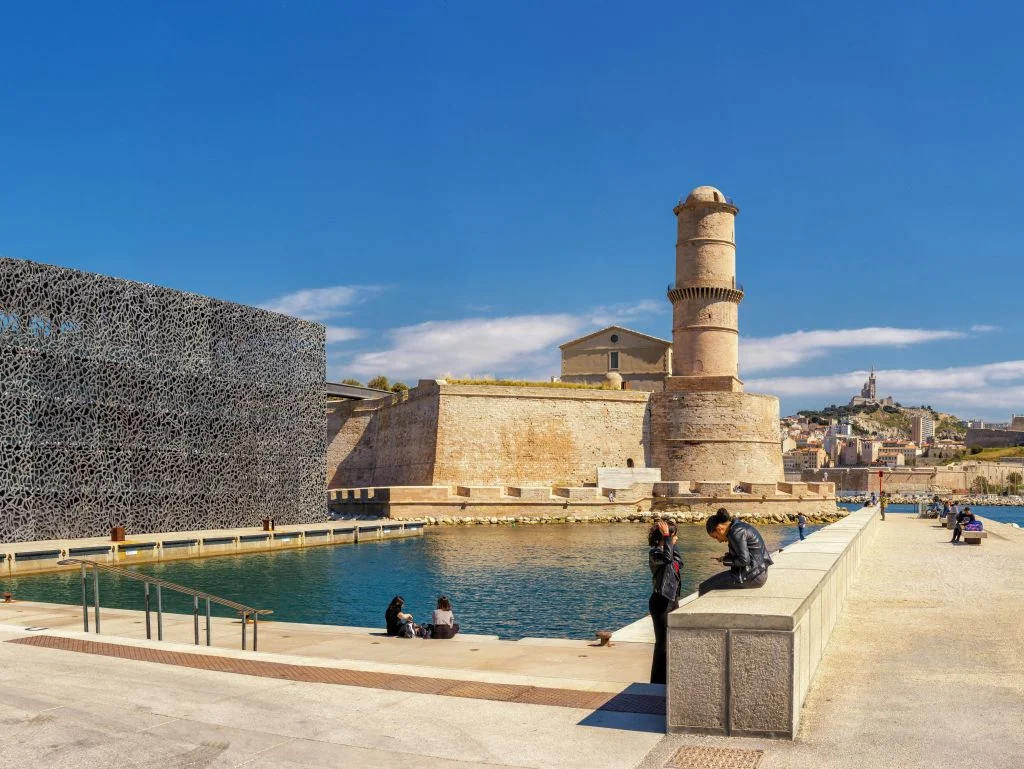
The prestigious Musée des civilisations de l’Europe et de la Méditerranée (MuCEM) in Marseille—a jewel of contemporary architecture and a cornerstone of French cultural heritage—is currently embroiled in a scandal of unprecedented proportions. A damning investigative report by the French government’s General Inspectorate of Cultural Affairs (IGAC) has leveled serious allegations of sexual and moral harassment, systemic favoritism, and financial misconduct against the museum’s suspended president, Pierre-Olivier Costa, and its managing director, Véronique Haché.
The findings, first brought to light by Le Monde, describe an institution steered by a management team described as both "untouchable" and "incompetent," warning that the integrity of one of the nation’s most vital cultural institutions is now "at risk."
The Core Allegations: A Culture of Misconduct
The IGAC report paints a picture of a toxic workplace environment characterized by professional malpractice and deeply personal boundary-crossing. The inspectors identified a litany of ethical breaches, including:
- Sexual and Moral Harassment: The report details multiple accounts of "remarks of a sexual, sexist, or degrading nature," alongside unwanted physical and verbal intrusions into the private lives of staff members.
- Systemic Favoritism: Auditors uncovered widespread irregularities regarding hiring practices and salary policies, suggesting that personal connections frequently bypassed meritocratic standards.
- Financial Irregularities: The management is accused of breaching public procurement regulations. Specifically, the report cites instances where contracts were awarded to favored individuals and firms at inflated costs, often exceeding budgetary constraints.
- Institutional Disloyalty: The report characterizes the leadership as failing in their duty to the supervising authority—the French Ministry of Culture—by operating with a lack of transparency and a disregard for public accountability.
Among the specific financial grievances, investigators pointed to questionable contracts granted to Bastien Baudoin of the consultancy firm Tyrex Conseil and the company Ludoparc, which was contracted for the construction of a children’s playground. These expenditures, the report concludes, carry a high risk of being categorized as conflicts of interest or criminal offenses.
Chronology of a Disintegrating Leadership
The downfall of the MuCEM’s leadership was not an overnight occurrence. The following timeline illustrates the gradual erosion of trust and the eventual intervention by state authorities:
- 2022: Pierre-Olivier Costa, a former advisor to President Emmanuel Macron and former chief of staff to First Lady Brigitte Macron, is appointed as the president of the MuCEM.
- June 2024: Tensions reach a breaking point as 79 MuCEM staff members sign an open letter, decrying a "toxic workplace" and citing "rising pressure and threats" from senior management.
- August 8, 2025: An incident occurs involving a former staffer who later files a formal complaint alleging explicit sexual propositions from Costa.
- June 2026: Following a preliminary internal review by the IGAC, both Costa and managing director Véronique Haché are suspended for four months. The suspension sends shockwaves through the French cultural and political establishment, given Costa’s high-profile connections.
- August 2026: The full details of the IGAC investigation are published, revealing the depth of the alleged misconduct and prompting the Marseille public prosecutor to expand an ongoing criminal investigation.
Voices from the Frontlines: Allegations of Harassment
The IGAC report relies on testimony from former employees who describe a pattern of behavior that was both predatory and relentless. One former staff member alleged that Costa made explicit sexual propositions to him during the summer of 2025. This testimony is corroborated by other employees who reported witnessing the president’s "inappropriate behavior" toward the same individual.
A second former employee provided a harrowing account, claiming that Costa made sexual propositions—specifically mentioning oral sex—on numerous occasions. "It happened a thousand times," the individual stated, noting that they had to resort to humor and deflection to push back against the unwanted advances.
These allegations are set against the backdrop of the broader workplace culture, where management allegedly fostered an atmosphere of intimidation. The report explicitly mentions that the inner circle surrounding the president failed in their fundamental role as a safeguard for the staff, instead allowing the "toxic" management style to persist unchecked.
Official Responses and the Defense
In the face of these grave allegations, Pierre-Olivier Costa has maintained his innocence. Speaking to government investigators, he flatly denied the claims of sexual misconduct, stating, "I don’t speak to people in that manner."
In earlier comments provided to Le Monde in April 2026, Costa expressed a desire for "transparency" and asserted that he had "full confidence" in the judicial process currently being conducted by the Marseille prosecutor. "These are extremely serious accusations, and I dispute them," he said.
Despite his outward stance of cooperation, the IGAC report is scathing in its assessment of his leadership. The investigators recommended the immediate launch of formal disciplinary proceedings against both Costa and Haché, signaling that the government no longer views their positions as tenable.
The Wider Implications: A Crisis of Public Trust
The MuCEM scandal is not merely an HR issue; it is a crisis of confidence in how France manages its most precious cultural institutions. The fact that an individual with such close ties to the Élysée Palace could be at the center of such an investigation raises uncomfortable questions about political appointments and the oversight of public bodies.
The Erosion of Professional Standards
The report’s description of a management team that is "untouchable" suggests a systemic failure. When leadership operates under the assumption that they are beyond the reach of institutional policy, the entire organizational culture suffers. For a museum like the MuCEM, which is intended to serve as a beacon of European and Mediterranean dialogue, such behavior is a betrayal of its founding mission.
The Financial Integrity of Public Museums
The allegations concerning the awarding of contracts are particularly concerning for the Ministry of Culture. Public museums rely on a high degree of trust to manage taxpayer funds and donor contributions. The revelation that the MuCEM’s budget was potentially mismanaged to favor private consultants—often at inflated prices—threatens the institution’s long-term financial stability and its ability to secure future funding.
The Future of the MuCEM
As the Marseille public prosecutor continues the criminal investigation, the museum finds itself at a crossroads. The IGAC report serves as both a diagnosis of a failing administration and a roadmap for necessary reform. To restore its reputation, the Ministry of Culture will likely need to conduct a wholesale review of the museum’s governance structures.
The path forward will be difficult. Restoring morale among the staff—many of whom have been vocal about the toxic conditions they endured—will require a complete overhaul of the leadership culture. Moreover, the museum must prove to the public that it can operate with the transparency and integrity that its status as a national institution demands.
Conclusion
The "MuCEM Affair" has cast a long, dark shadow over one of France’s most celebrated cultural landmarks. As the legal proceedings unfold, the focus will remain on whether justice can be served for the victims of the alleged harassment and whether the institution can be salvaged from the wreckage of its current leadership.
For now, the report from the General Inspectorate of Cultural Affairs remains the definitive record of a period of turmoil, providing a stark reminder that even the most prestigious institutions are not immune to the consequences of unchecked power and the failure of ethical leadership. The eyes of the French public, and indeed the international art community, are now fixed on Marseille, awaiting a resolution that restores dignity to the institution and accountability to those who were entrusted with its care.