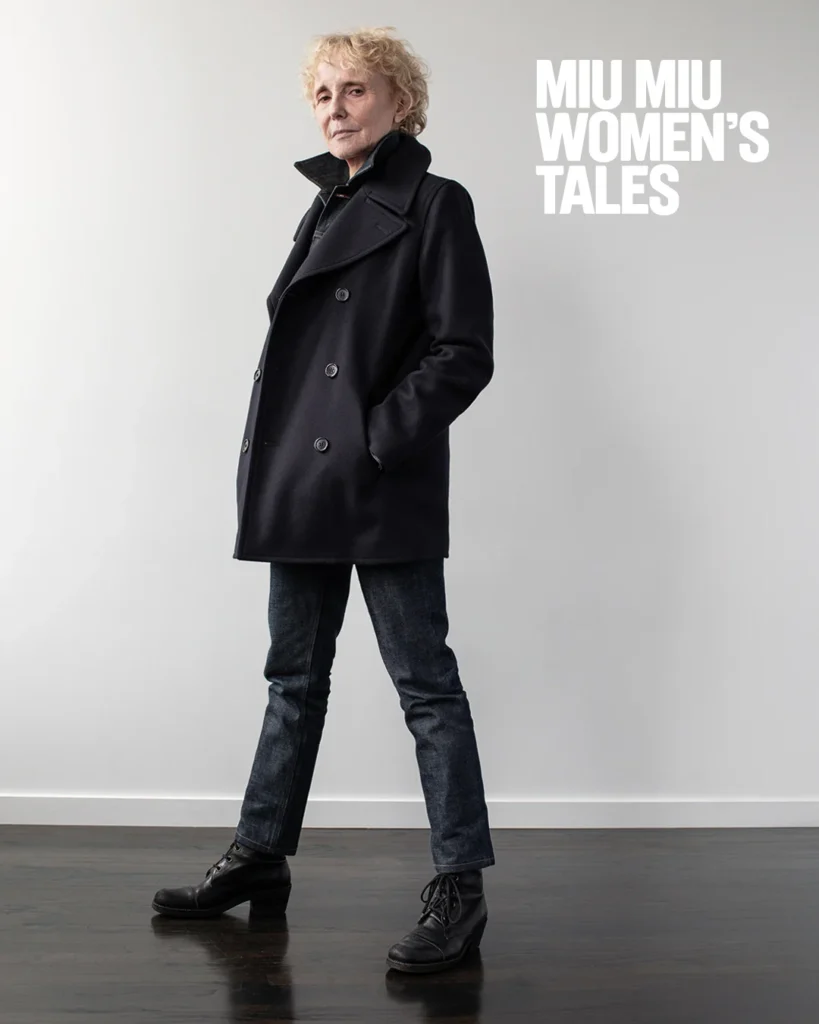
The intersection of high fashion and auteur cinema has long been a hallmark of Miuccia Prada’s creative vision. This September, that synthesis reaches a new zenith as the legendary French filmmaker Claire Denis takes the helm for the 32nd installment of the Miu Miu Women’s Tales film series. Titled “Avec Kim,” the short film is set to make its highly anticipated world premiere on September 5, during the prestigious Venice Film Festival, marking another milestone in the brand’s enduring commitment to supporting female voices in global cinema.
The Venice Premiere and the Legacy of ‘Women’s Tales’
The screening of “Avec Kim” will serve as a centerpiece of Miu Miu’s presence at the Venice Film Festival, following an encore presentation of the series’ 31st episode, “Discipline,” directed by the acclaimed Mona Fastvold. First unveiled in New York this past February, “Discipline” set a high bar for the series’ latest creative cycle, and industry insiders expect Denis’s contribution to offer a characteristically profound, sensory-heavy exploration of the human condition.
For Claire Denis, the invitation to contribute to the Women’s Tales project is a natural extension of a career built on rejecting conventional narrative structures. “Making films for me is to get rid of explanation,” the director noted in a recent statement. “It is a journey into the impossible.” This philosophy, which prioritizes atmosphere, rhythm, and the visceral nature of the image over linear storytelling, has made Denis one of the most respected figures in world cinema.
A Chronology of Visionary Storytelling
To understand the weight of Claire Denis’s appointment, one must look at the trajectory of both her own storied career and the platform Miu Miu has cultivated over the past decade.
Born in Paris in 1946, Denis spent her formative years in colonial French Africa—a landscape of memory and displacement that would eventually inform her most iconic works. Her breakthrough came in 1988 with the debut feature “Chocolat,” a nuanced, semi-autobiographical meditation on race, desire, and the remnants of the colonial gaze in Cameroon. The film’s success catapulted her to international prominence, earning a nomination for the Palme d’Or at the Cannes Film Festival and establishing her as a master of the "sensual style."
Throughout the 1990s and 2000s, Denis refined her aesthetic, moving toward a more abstract, dialogue-sparse mode of filmmaking. “Beau Travail” (1999), a loose adaptation of Herman Melville’s Billy Budd set in the French Foreign Legion, is widely considered one of the greatest films of the late 20th century, celebrated for its hypnotic choreography and emotional restraint. Subsequent works like “35 Shots of Rum” (2008) solidified her reputation as a poet of domestic intimacy.
In the modern era, Denis has remained at the vanguard, seamlessly pivoting into genre-bending works. Her 2018 English-language sci-fi odyssey, “High Life,” starring Robert Pattinson and Juliette Binoche, challenged audiences with its grim, atmospheric vision of deep space. Her 2022 output was particularly prolific; she delivered both “Both Sides of the Blade,” a sharp, claustrophobic look at a crumbling romance, and “Stars at Noon,” which secured the Grand Prix at Cannes, proving her relevance remains undiminished. Her most recent feature, “The Fence,” released in 2023, continues her career-long preoccupation with the margins of society and the friction of human connection.
Supporting Data: The Miu Miu Women’s Tales Ecosystem
Since its inception in 2011, Miu Miu Women’s Tales has evolved from a boutique marketing initiative into a vital institution within the film industry. The project acts as a bridge between the art of fashion design and the craft of filmmaking, granting directors total creative freedom to explore their unique visions through the lens of the Miu Miu brand identity.
The roster of directors who have contributed to the series reads like a masterclass in modern cinema. It includes luminaries such as Agnès Varda, Alice Rohrwacher, Joanna Hogg, and Miranda July, as well as multidisciplinary talents like Chloë Sevigny, Dakota Fanning, and Zoe Cassavetes. By providing a platform for these directors, Miuccia Prada has effectively curated a "hall of fame" of female cinematic voices, ensuring that their work reaches audiences far beyond the traditional arthouse circuit.
In 2023, the brand sought to formalize this commitment by establishing the Miu Miu Women’s Tales Committee. This high-powered advisory group is designed to identify emerging talent, facilitate mentorship, and ensure the long-term sustainability of the series. The committee includes:
- Miuccia Prada: The creative force behind the initiative.
- Verde Visconti: Prada Group’s talent relations and special projects director, instrumental in the series’ logistical expansion.
- Ava DuVernay: The visionary director of “Selma,” who herself contributed to the series and brings an expert eye for social impact and storytelling diversity.
- Catherine Martin: The Academy Award-winning costume and production designer, whose work on films like “Moulin Rouge!” and “Elvis” brings a unique perspective on the intersection of aesthetic world-building and narrative.
- Maggie Gyllenhaal: The acclaimed actress and filmmaker, whose directorial debut “The Lost Daughter” marked her as a formidable new voice in psychological drama.
Official Responses and Creative Philosophy
The partnership between a fashion house and a director of Denis’s caliber is rarely just a commercial venture; it is an ideological alignment. Miuccia Prada has consistently championed the idea that fashion is a form of cultural expression, not merely a commodity. By inviting directors like Denis, the brand invites a dialogue about what it means to be a woman in the 21st century—a theme that sits at the heart of Denis’s own filmography.
Denis’s own statements regarding the Women’s Tales project suggest a desire to push the boundaries of what a "commissioned" film can be. By avoiding the typical traps of brand advertising, she intends to deliver a work that stands as a piece of pure cinema. "The impossible," as she describes her creative process, refers to the challenge of capturing ephemeral human truths that defy simple articulation—a mission that aligns perfectly with the avant-garde spirit of the Women’s Tales project.
Implications for the Future of Fashion-Film Collaborations
The significance of this collaboration cannot be overstated. As the line between luxury branding and cinematic patronage continues to blur, the Miu Miu Women’s Tales series stands as the gold standard for how corporations can support the arts without compromising the integrity of the artist.
The inclusion of Claire Denis serves as a validation of the series’ prestige. For younger, emerging directors, the fact that a filmmaker of Denis’s stature is participating sends a clear signal that this platform is a legitimate space for serious artistic endeavor. It elevates the brand, certainly, but more importantly, it provides a crucial lifeline for experimental, female-led cinema in an era where mid-budget and short-form auteur projects are increasingly difficult to fund.
As the industry prepares for the Venice premiere, the anticipation for “Avec Kim” is palpable. It promises to be more than just a promotional short; it will be an opportunity to witness a master at work, distilling her complex, sensory-rich worldview into a brief, potent experience. In the landscape of contemporary culture, where everything is often "explained" and categorized, Claire Denis remains one of the few artists committed to the mystery of the image. Through her collaboration with Miu Miu, that commitment is set to reach a global stage, proving once again that when fashion embraces cinema with sincerity, the results can be truly transformative.