By Dani James | Retail Dive | August 14, 2026
In an ambitious effort to cement its position as the premier destination for creative expression, arts and crafts giant Michaels has officially expanded its “next-gen” store model to a third location in Rogers, Arkansas. This rollout, following successful debuts in Easton, Ohio, and Irving, Texas, signals a broader, strategic transformation for the retailer. As physical retail increasingly pivots toward "experiential" environments, Michaels is betting heavily on a format that prioritizes community, convenience, and personalization to combat the convenience-first dominance of e-commerce.
The new concept store is not merely a cosmetic refresh; it is a fundamental reconfiguration of the customer journey. By integrating new department layouts, specialized service hubs, and data-driven engagement tools, Michaels is attempting to transition from a traditional big-box retailer into a holistic “creative hub.”
Main Facts: Redefining the Creative Footprint
The Rogers, Arkansas location serves as the latest laboratory for Michaels’ vision of the future. The store features a completely overhauled floor plan designed to prioritize inspiration over sheer inventory volume. Key pillars of this transformation include:
- The Michaels Knit & Sew Shop: Occupying a prominent position at the front of the store, this section is a direct result of Michaels’ 2025 acquisition of Joann’s intellectual property. By curating these specialized goods, Michaels is positioning itself to capture the market share left behind by shifts in the fabric and yarn retail landscape.
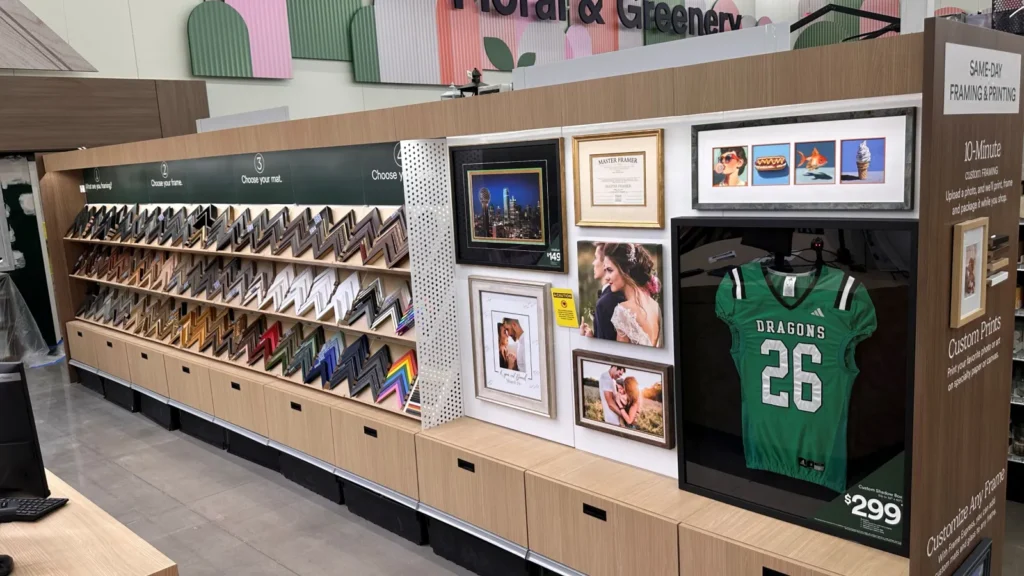
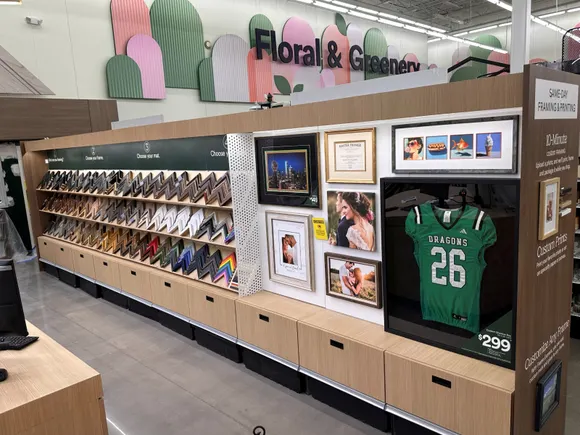
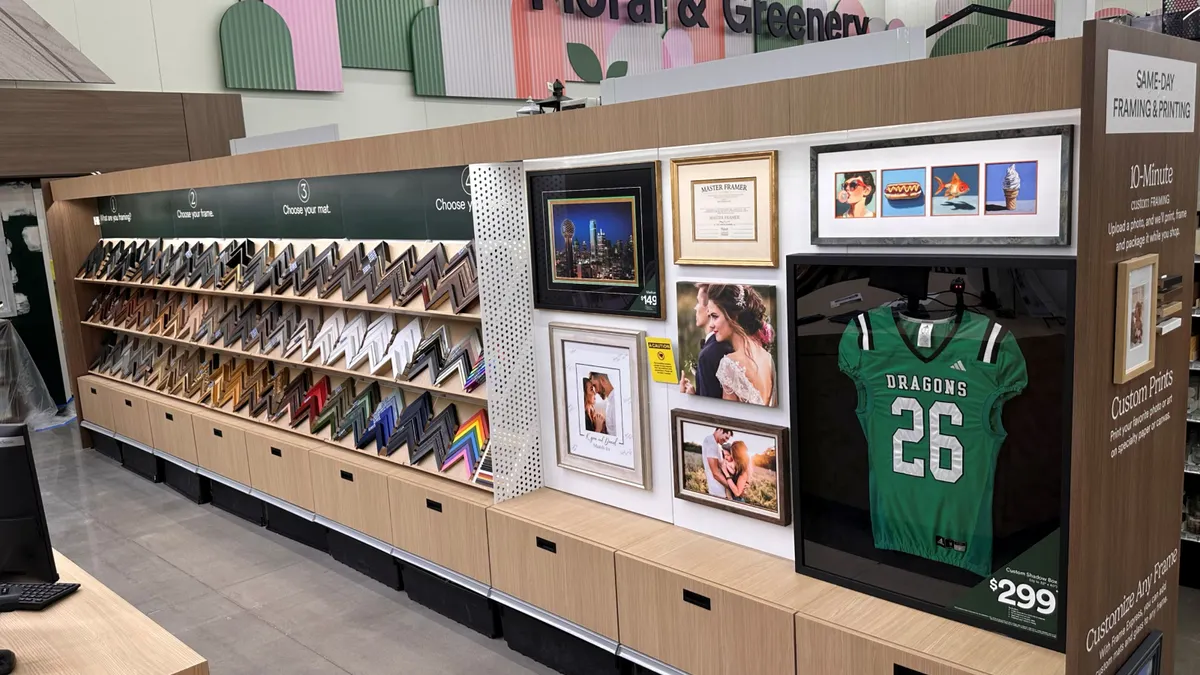
- Enhanced Personalization Services: The retailer has significantly expanded its custom framing and personalization suite. Customers can now access on-site embroidery, precision engraving, and made-to-order sticker customization, turning the store into a production studio for personalized gifts and decor.
- The Welcome Center & Rewards Integration: Upon entering, customers are greeted by a dedicated Welcome Center. Furthermore, to incentivize loyalty, the store features a dedicated, expedited self-checkout queue exclusive to Michaels Rewards members, streamlining the purchasing process for the brand’s most frequent shoppers.
- The Pinterest Trend Bar: Recognizing the power of digital inspiration in driving physical sales, the new stores feature a “Pinterest Trend Bar.” This interactive space showcases products currently trending on social media, allowing shoppers to physically interact with materials they’ve seen online.
Chronology of Transformation
The journey toward this new store model has been a calculated, multi-year progression for the arts and crafts retailer.
2025: The Strategic Pivot
The foundation for the current store model was laid in 2025, a year of aggressive consolidation for Michaels. Following the bankruptcy of industry peers like Party City, Michaels moved to capture market share by launching a dedicated party shop space. This move allowed the company to establish itself as a primary provider of balloon and party decor. Simultaneously, the company successfully integrated the intellectual property acquired from Joann, leading to the inaugural launch of the Michaels Knit & Sew shops.
Early 2026: Testing the Concept
Michaels launched its first two "next-gen" pilot stores in Easton, Ohio, and Irving, Texas. These locations served as the primary test beds for the unified florals and greenery department, as well as the initial integration of the Welcome Center. By analyzing traffic flow and conversion rates in these two distinct markets, Michaels executives refined the layout before approving the expansion into Rogers, Arkansas.
August 2026: The Arkansas Expansion
The opening in Rogers serves as the third iteration of the concept, incorporating refinements based on data gathered from the initial two locations. The company has explicitly stated that this store will serve as a testing ground for elements intended to be rolled out across the entire national fleet.

Supporting Data: Why "Experiential" Retail Matters
Michaels’ shift comes at a time when the retail industry is grappling with the “death of the mall” narrative and the rise of digital-only competition. However, market research suggests that for high-involvement categories—like crafting, sewing, and home decor—the tactile nature of the store remains an asset.
Data from the retail sector indicates that while online browsing has increased, conversion for complex DIY projects remains higher in physical settings where experts can assist customers. The inclusion of the Welcome Center and the expanded framing services directly addresses this "expert gap." By providing staff who can navigate the complexities of custom embroidery or framing, Michaels creates a barrier to entry that online retailers—who rely on photos and descriptions—struggle to clear.
Furthermore, the integration of a Rewards-exclusive checkout lane is a data-driven strategy aimed at increasing the lifetime value of the customer. By rewarding frequent shoppers with faster throughput, Michaels is gamifying the in-store experience, encouraging membership sign-ups and higher frequency visits.
Official Responses: A Vision for Community and Connection
In an official statement regarding the expansion, David Boone, CEO of Michaels, emphasized that the new store format is an answer to the evolving needs of the modern consumer.

"Our new stores represent an exciting milestone within Michaels’ broader transformation to redefine the customer journey and become a true destination for creativity and celebration," Boone stated. "The new format reflects our customers’ desire for more inspiration and hands-on, analog experiences, while providing a space for the local community to connect, create, and celebrate."
Boone’s focus on "analog experiences" is particularly telling. In an increasingly digital world, Michaels is leaning into the idea that consumers find therapeutic value in the physical creation of art. By positioning the store as a "destination," the company aims to move away from being a "transactional" retailer to an "inspirational" one.
Implications: The Road Ahead for Michaels
The rollout of the Rogers location is only the beginning of a larger, long-term strategy. According to company releases, Michaels plans to open additional concept stores throughout the remainder of 2026.
1. Scaling the Pilot
The most significant implication is the eventual "trickle-down" effect. While only three stores currently feature the full next-gen experience, the retailer intends to identify the most successful components—such as the Pinterest Trend Bar or the streamlined checkout—and integrate them into the standard Michaels store experience across the country.
2. Competitive Positioning
Michaels is effectively positioning itself to absorb the customers who previously relied on specialized retailers that have recently struggled with insolvency. By becoming a "one-stop-shop" for party supplies, sewing, knitting, and custom decor, Michaels is creating a defensive moat around its business. If successful, this will make it increasingly difficult for niche competitors to regain market share.
3. The Future of the "Store Associate"
The role of the store associate is also shifting. With self-checkout lanes taking over the transactional burden, the employees at the Welcome Center and in the framing/embroidery departments are freed up to act as consultants rather than cashiers. This shift toward a "service-first" model could redefine the standard of customer service in the craft retail industry.
4. Risks and Challenges
Despite the optimism, the strategy is not without risks. Transforming a fleet of large-format stores is capital-intensive. Michaels must balance the high cost of these renovations against the potential for increased foot traffic. Furthermore, the reliance on social media trends (like the Pinterest Trend Bar) requires the supply chain to be agile enough to pivot inventory rapidly as viral trends change—a significant logistical challenge for any large retailer.
Conclusion
As Michaels continues its expansion, the industry will be watching closely. By blending the efficiency of modern retail technology with the tactile, communal nature of traditional crafting, the company is attempting to prove that physical stores still hold a vital place in the consumer psyche. Whether this model can be successfully scaled to its hundreds of other locations remains the billion-dollar question for Michaels as it moves through the second half of 2026. For now, the Rogers location stands as a prototype of a new, more human-centric era for the brand.