

By Adekeye Adebajo
September 24, 2026
As world leaders descend upon New York for the annual United Nations General Assembly, the mood is markedly different from the optimism that once characterized the post-Cold War era. The global landscape is currently defined by a grim statistic: the world is experiencing the highest number of armed conflicts since 1946. According to the Peace Research Institute Oslo (PRIO), there are currently 65 ongoing conflicts across 35 countries. Even more harrowing is the data regarding human cost, with battle-related deaths since 2021 surpassing the total count of the previous two decades combined.
Amidst this volatility, the United Nations—the world’s primary instrument for collective security—finds itself in a state of paralysis. A recent report by UN Secretary-General António Guterres underscores a sobering reality: the organization is being systematically hollowed out, lacking the political capital and diplomatic levers necessary to stem the tide of violence. Central to this decline is the Trump administration’s sustained skepticism and frequent antagonism toward the UN, which has effectively neutered the Security Council’s ability to act as an arbiter of peace.
The Anatomy of a Global Crisis: Main Facts
The current crisis is not merely a surge in traditional warfare; it is a fundamental shift in how conflicts are waged and how international law is bypassed. The 65 active conflicts are characterized by an increasing reliance on "grey-zone" tactics—operations that remain below the threshold of declared war but cause significant civilian harm.
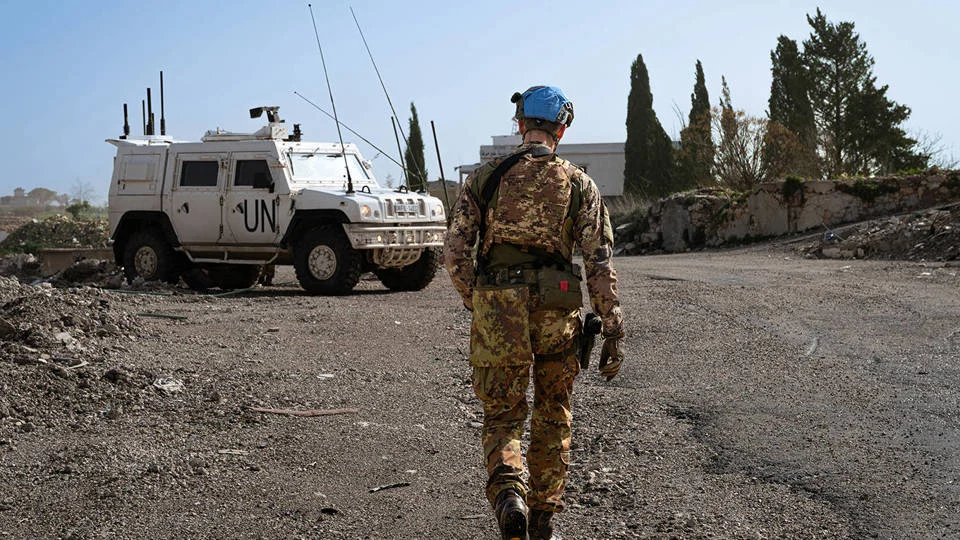
The primary friction point remains the geopolitical stalemate in the UN Security Council. With the U.S. distancing itself from multilateral commitments and other permanent members prioritizing national interests over collective security, the "veto-lock" has become the norm rather than the exception. Consequently, UN peacekeeping missions—historically the organization’s most visible tool—are increasingly underfunded, under-equipped, and denied the robust mandates required to protect civilians in environments where state authority has collapsed.
Chronology: The Erosion of Multilateralism
To understand how the international order reached this precipice, one must trace the timeline of the UN’s recent decline:
- 2017–2020 (The Initial Realignment): The first Trump administration signaled a shift toward "America First" unilateralism, beginning a pattern of withdrawing from UN-affiliated bodies and questioning the financial utility of peacekeeping missions.
- 2021 (The Post-Pandemic Surge): As the world emerged from COVID-19, long-simmering regional tensions erupted. The conflict data began to show a spike in intensity, marking the beginning of the current decade-long trend in battle-related deaths.
- 2023–2024 (Technological Escalation): The proliferation of AI-driven cyber tools and autonomous weapons systems (AWS) fundamentally altered the battlefield. These technologies made "surgical" strikes more common but also increased the unpredictability of civilian casualties.
- 2025–2026 (The Institutional Crisis): Under continued pressure from the U.S. administration, the UN Secretariat’s influence waned. Secretary-General Guterres’ recent reports have shifted from calls for action to pleas for survival, highlighting the organization’s inability to deploy forces without the explicit, and increasingly withheld, consent of the major powers.
Supporting Data: The Cost of Inaction
The numbers provided by PRIO and the UN’s own monitoring agencies paint a picture of an organization struggling to match its resources to its mission.
- Conflict Intensity: In 2026, 35 countries are actively involved in conflict. The transition from localized civil wars to proxy conflicts involving regional powers has made UN mediation efforts exponentially more difficult.
- The Technological Gap: Peacekeepers are currently operating in environments where they are technologically outmatched. The rise of AI-driven drones means that UN patrols are often the targets of sophisticated, low-cost weaponry that traditional peacekeeping mandates are not equipped to defend against.
- Budgetary Constraints: While the UN’s peacekeeping budget has faced scrutiny, the core issue is not just the total dollar amount, but the strategic direction of those funds. Member states are increasingly earmarking funds for short-term humanitarian relief rather than the long-term political mediation required to prevent future conflict.
Official Responses and Diplomatic Friction
The diplomatic fallout of this crisis is visible in the corridors of the General Assembly. In his latest report, Secretary-General Guterres did not mince words, noting that the UN is "operating with one hand tied behind its back." The report argues that without a renewed commitment from the United States—the UN’s largest financial contributor—and a reformed approach to the Security Council veto, the UN risks becoming a "relic of a bygone age."
Conversely, the Trump administration has maintained its stance that the UN is an inefficient bureaucracy that requires a "fundamental rethink." White House spokespersons have argued that the U.S. is not abandoning international cooperation but is instead demanding that other nations take greater responsibility for their own regional security. This "burden-sharing" rhetoric, however, has been interpreted by many UN diplomats as a thinly veiled excuse for the U.S. to abdicate its role as a global stabilizer, leaving a vacuum that is increasingly being filled by non-state actors and opportunistic regional powers.
Implications: A World Without a Referee
The implications of a weakened UN are profound and reach far beyond the diplomatic chambers of New York:
1. The Proliferation of "Zero-Sum" Diplomacy
Without a credible international arbiter, regional powers are reverting to zero-sum dynamics. Security is now viewed through a lens of military buildup rather than diplomatic alignment. This increases the risk of regional conflicts spilling over into global crises.
2. The Normalization of Autonomous Warfare
As the UN fails to set clear global norms for AI and autonomous weapons, we are entering an era of "unregulated lethality." When the primary global body for human rights cannot regulate the tools of war, the responsibility falls to private tech corporations and rogue states, neither of which are accountable to the international public.
3. The Collapse of Humanitarian Space
Peacekeeping missions have historically provided the security necessary for humanitarian organizations to operate. As these missions are curtailed, humanitarian corridors are closing. The result is a looming famine and displacement crisis that will likely affect tens of millions of people over the next decade.
4. The Erosion of Global Norms
The most significant long-term consequence is the death of the "Rules-Based International Order." If the UN cannot prevent blatant violations of sovereignty and international humanitarian law, then the principles established in 1945 will lose their legitimacy. We are witnessing a transition from a world governed by laws to one governed by the "law of the jungle."
Conclusion: The Path Forward
The path forward for the United Nations is narrow and fraught with political peril. To regain its relevance, the organization must undergo a radical transformation. This includes:
- Reforming the Security Council: Creating a mechanism to limit the use of the veto in cases of mass atrocities.
- Updating Peacekeeping Mandates: Integrating cybersecurity and AI-defense capabilities into mission requirements.
- Direct Engagement: A renewed diplomatic push to reconcile the Trump administration’s nationalistic foreign policy with the necessity of global stability.
As we stand in 2026, the question is not whether the UN will disappear, but whether it will remain a relevant force for peace or fade into irrelevance. The current state of armed conflict suggests that the world needs a strong, effective, and neutral arbiter more than ever. Whether the political will exists to build such an institution remains the defining challenge of our time. The world is watching, and the clock is ticking.



