
London, UK – While gemmologists frequently encounter imitations of precious stones, few materials are as ubiquitous and historically significant in this regard as artificial glass paste. Often dismissed as a mere cheap substitute, glass in jewellery boasts a rich legacy spanning millennia, evolving from ancient Egyptian adornments to the intricate artistry of Art Nouveau. This comprehensive exploration, drawing upon the insights of Gem-A Tutor Pat Daly, delves into the sophisticated world of glass as a jewellery material, examining its production, its historical significance, and the subtle characteristics that distinguish it from its natural counterparts. Far from being a simple mimic, glass has been a canvas for innovation, a means of achieving stunning aesthetic effects, and a testament to the enduring human desire for beauty and adornment.
The Enduring Appeal of Glass: From Ancient Egypt to the Modern Collector
The perception of glass in jewellery often conjures images of inexpensive costume pieces. However, this viewpoint overlooks the profound aesthetic and technological advancements that have elevated glassmaking and design to true art forms over thousands of years. In ancient civilizations, the pursuit of beauty and symbolism often outpaced the availability of rare and costly natural gemstones.
Ancient Roots and Early Adaptations:
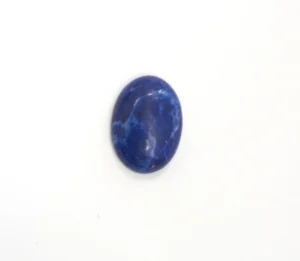
In ancient Egypt, jewellery played a crucial role in both protection and ornamentation, with colour and form holding significant symbolic meaning. Scarce and expensive stones like lapis lazuli, imported from distant lands, were often beyond the reach of many. Glass emerged as a more accessible and economical alternative, capable of fulfilling the most important decorative and symbolic purposes. Its prevalence is evident in the funerary artifacts of Tutankhamun, including the iconic funerary mask, where glass elements provided vibrant colour and intricate detail.
This appreciation for glass as a gemstone simulant was not confined to Egypt. Evidence of its use in jewellery can be found across other early civilizations, including Mesopotamia, China, Greece, and Rome. These cultures recognized the potential of glass to mimic the appearance of precious stones, demonstrating an early understanding of its decorative and imitative capabilities.
The Evolution of "Paste": A Term of Distinction:

For gemmologists, the term "paste" is often employed to distinguish artificial glass materials from naturally occurring stones that may share similar appearances. This nomenclature highlights the deliberate creation of glass for its aesthetic qualities, acknowledging its crafted nature rather than its inherent geological origin. As Pat Daly explains, while synthetic and composite stones can pose identification challenges, those made primarily of glass are among the most common and generally easier to recognize.
The journey of glass in jewellery is a testament to human ingenuity, transforming a malleable substance into objects of exquisite beauty and cultural significance. From the practical need for affordable adornment in antiquity to the sophisticated artistic expressions of later eras, glass has consistently played a vital role in the world of jewellery.
The Craft of Creation: Three Pillars of Glass in Jewellery
The creation of glass for jewellery purposes has historically followed three primary methods, all of which were utilized in antiquity and have seen continued refinement over centuries. These techniques showcase the versatility of glass as a medium for artistic expression.
1. Paste: The Master of Mimicry
At its core, paste is a type of high-lead glass meticulously crafted by melting a precise blend of ingredients. The fundamental component is silica, the glassy backbone, which is then combined with specific colouring agents to achieve desired hues and chemical additives to enhance its workability and durability. This carefully formulated mixture can be molded into intricate shapes or cut and polished from solid blocks, allowing for a remarkable range of forms and finishes.
The true artistry of paste lies in its chameleon-like ability to imitate a vast spectrum of natural gemstones. It can be produced in transparent, translucent, or opaque states, mirroring the diverse appearances of almost any precious or semi-precious stone. Furthermore, paste can be manipulated to simulate not only colour but also the textures and patterns characteristic of natural minerals.
To enhance its brilliance and mimic the high refractive index of stones like diamonds and corundum, paste is often "foil-backed" within jewellery settings. This technique involves placing a thin layer of reflective material, typically foil, behind the glass. The foil reflects light back through the paste, creating a dazzling sparkle that can convincingly emulate the fire and scintillation of genuine gemstones.
Beyond mere visual imitation, advancements in paste production have allowed for the creation of sophisticated optical effects. Modifications to the manufacturing process can yield phenomena such as:
- Cats-eyes: The characteristic band of light that moves across the surface of cabochon-cut stones.
- Iridescence: A shimmering, rainbow-like play of colour.
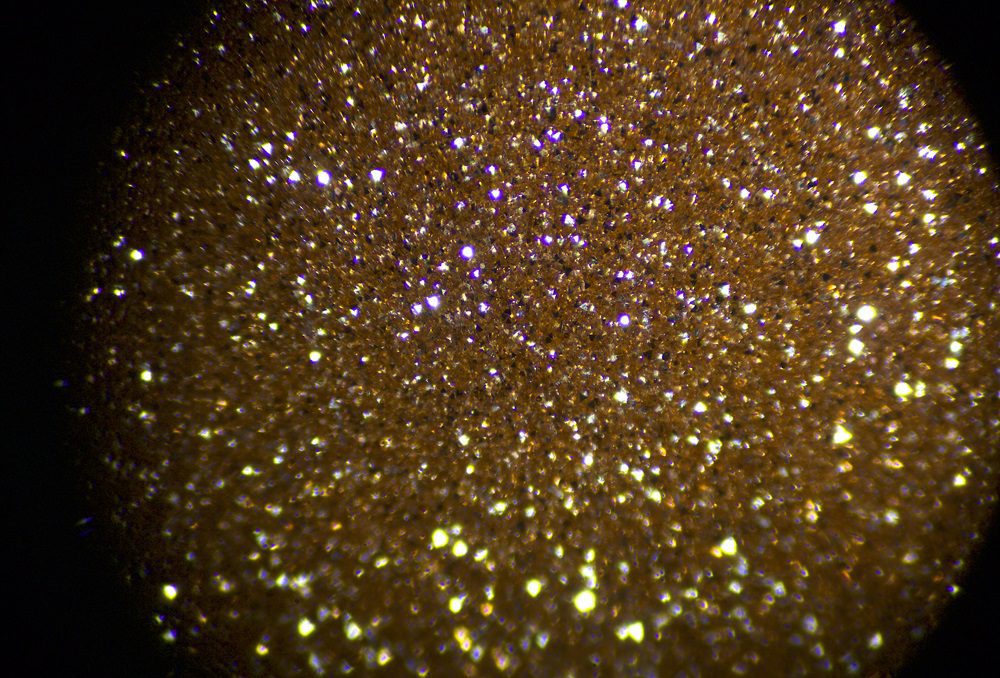
- Aventurescence: The sparkling effect caused by the presence of tiny mineral inclusions, famously seen in goldstone.
- Asterism: The star-like effect seen in star sapphires and rubies.
A particularly fascinating development is devitrified glass. In this process, specific ingredients are introduced that crystallize at a higher temperature than the glass itself solidifies. This results in the formation of fine, needle-like to branching crystallites within the glass matrix. These micro-structures can closely resemble the polycrystalline nature of certain gemstones, further enhancing the mimetic capabilities of the material.
The versatility of paste extends to its application as a direct substitute for all natural stones. This practicality has historical precedent. Paste-set jewellery was often worn for security reasons, allowing individuals to display ostentatious pieces without the significant financial risk associated with genuine gemstones, particularly in situations where theft was a concern. In 18th and 19th century Europe, for instance, wearing well-crafted paste jewellery was a fashionable choice, and high-quality examples from these periods can command substantial prices today. The renowned Russian jewellery house Fabergé, for example, utilized red devitrified glass, known as "purpurine," in its intricate carvings, pieces that are now highly sought after by collectors and hold significant value.
2. Enamel or Pâte de Verre: The Art of Surface Decoration and Sculpture
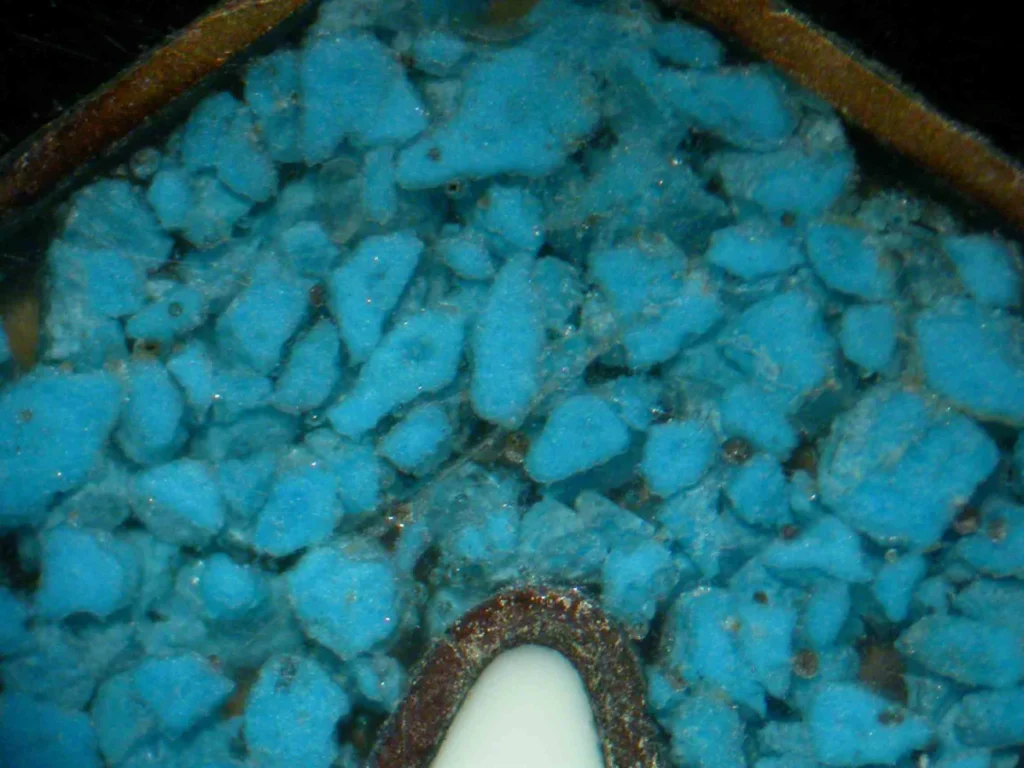
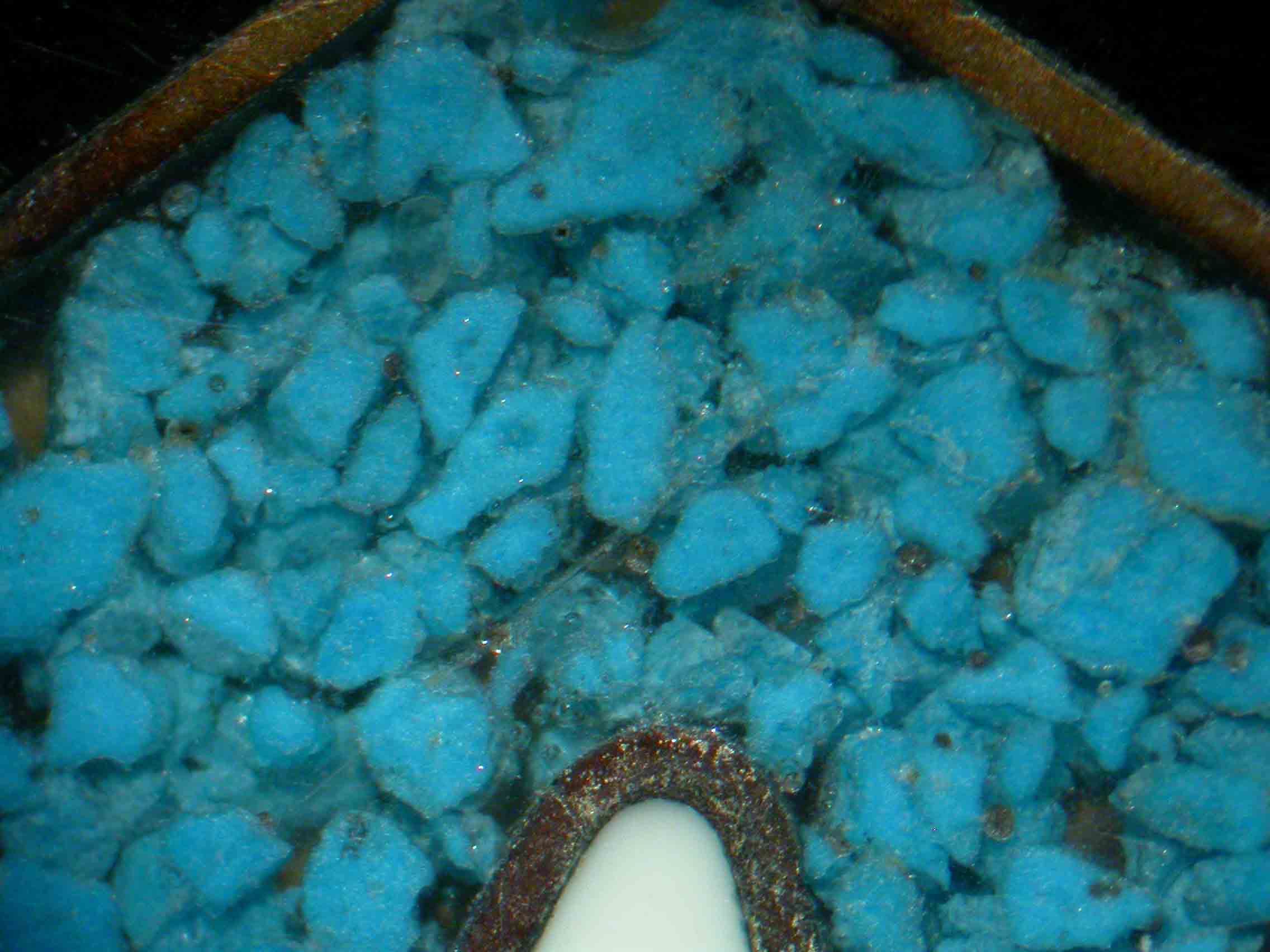
Enamel, or pâte de verre, represents a distinct yet related application of glass in jewellery. This technique involves the preparation of powdered glass of any desired colour, which is then mixed with binding agents, typically oils, to create a workable paste. This mixture can be applied to surfaces or carefully placed into moulds before being subjected to heat, causing it to melt and fuse.
Enamel is primarily used to impart colour to jewellery surfaces. The application can range from flat or gently curved areas to elaborate three-dimensional sculptural forms. Broad surfaces can be coloured, often after being engraved to create textured backgrounds. Alternatively, fine wires (known as cloison) can be used to delineate individual colour areas, creating intricate patterns and designs.
A particularly captivating technique within enamelling is plique-à-jour. This method, often described as "stained glass in miniature," involves constructing the wire framework on a temporary backing. Once the enamel has solidified, the backing is removed, leaving behind a delicate, translucent layer of coloured glass suspended within the wire structure, allowing light to pass through much like a stained-glass window.
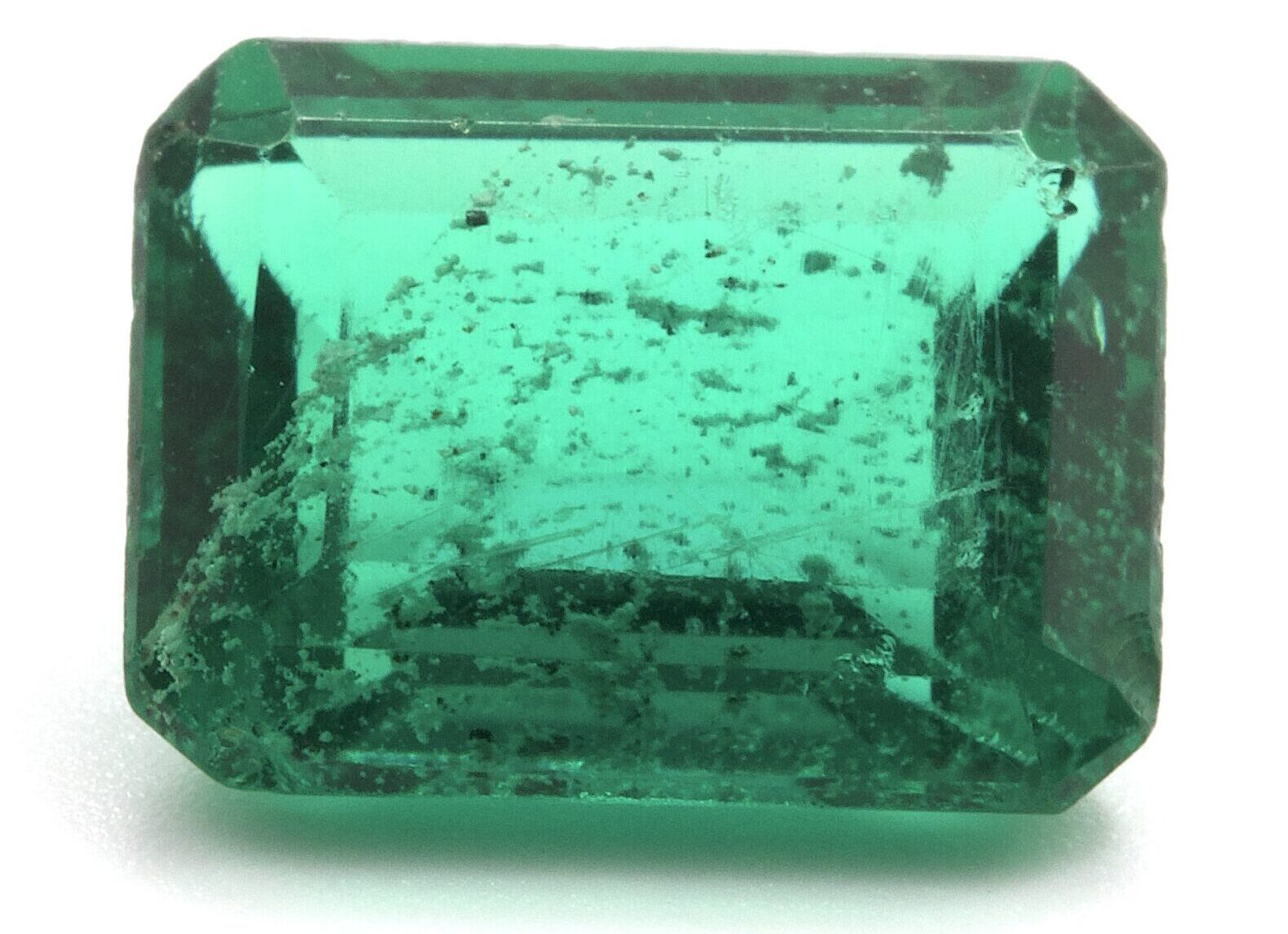
Beyond surface decoration, pâte de verre also refers to a technique where powdered glass is moulded and heated to create carved or sculpted effects. This allows for the creation of intricate details, which can be further enhanced by subsequent engraving. The process offers remarkable control over variations in colour, texture, and translucency, enabling the achievement of striking and unique visual outcomes.
Pâte de verre experienced a significant surge in popularity during the late 19th and early 20th centuries, coinciding with the Art Nouveau movement. This artistic period, characterized by its embrace of naturalistic forms and organic motifs, found a perfect medium in pâte de verre. Jewellery makers utilized this technique to create flowing lines, delicate floral designs, and stylized representations of nature. It was often employed in conjunction with enamels, precious metals, and gemstones, with renowned artist René Lalique being a leading exponent of this combined approach. Today, antique Lalique jewellery pieces, often featuring exquisite pâte de verre, command tens to hundreds of thousands of pounds, a testament to their enduring artistic merit and collectibility.
3. Glass Mosaics: The Art of Miniature Assembly
Mosaics, an art form with roots stretching back millennia, involve the assembly of small pieces of stone or glass to create larger decorative patterns. In the context of jewellery, this technique saw particular adaptation during the late medieval period, where religious motifs were rendered in small fragments of coloured glass.
A significant evolution of this technique occurred in Italy, especially during the 19th century, leading to the creation of jewellery designed for the burgeoning tourist market. Italian artisans became masters of micromosaics, a specialized form where hundreds, even thousands, of individual glass tesserae (small pieces) are meticulously arranged within a single square centimeter of decorated surface.
The designs typically found in micromosaics are often classical architectural scenes, intricate floral arrangements, and other naturalistic motifs. These miniature masterpieces were incorporated into jewellery, small boxes, and other decorative items, showcasing extraordinary craftsmanship and artistic vision. Well-preserved examples of these intricate glass mosaics remain highly popular among collectors today, prized for their delicate detail and historical charm.
Identifying the Artifice: Unmasking the Glass in Jewellery
While the allure of glass in historical jewellery is undeniable, accurate identification is crucial for both collectors and gemmologists. Fortunately, the physical properties of glass often provide clear indicators, though careful observation and, in some cases, gemmological tools are essential for definitive conclusions.
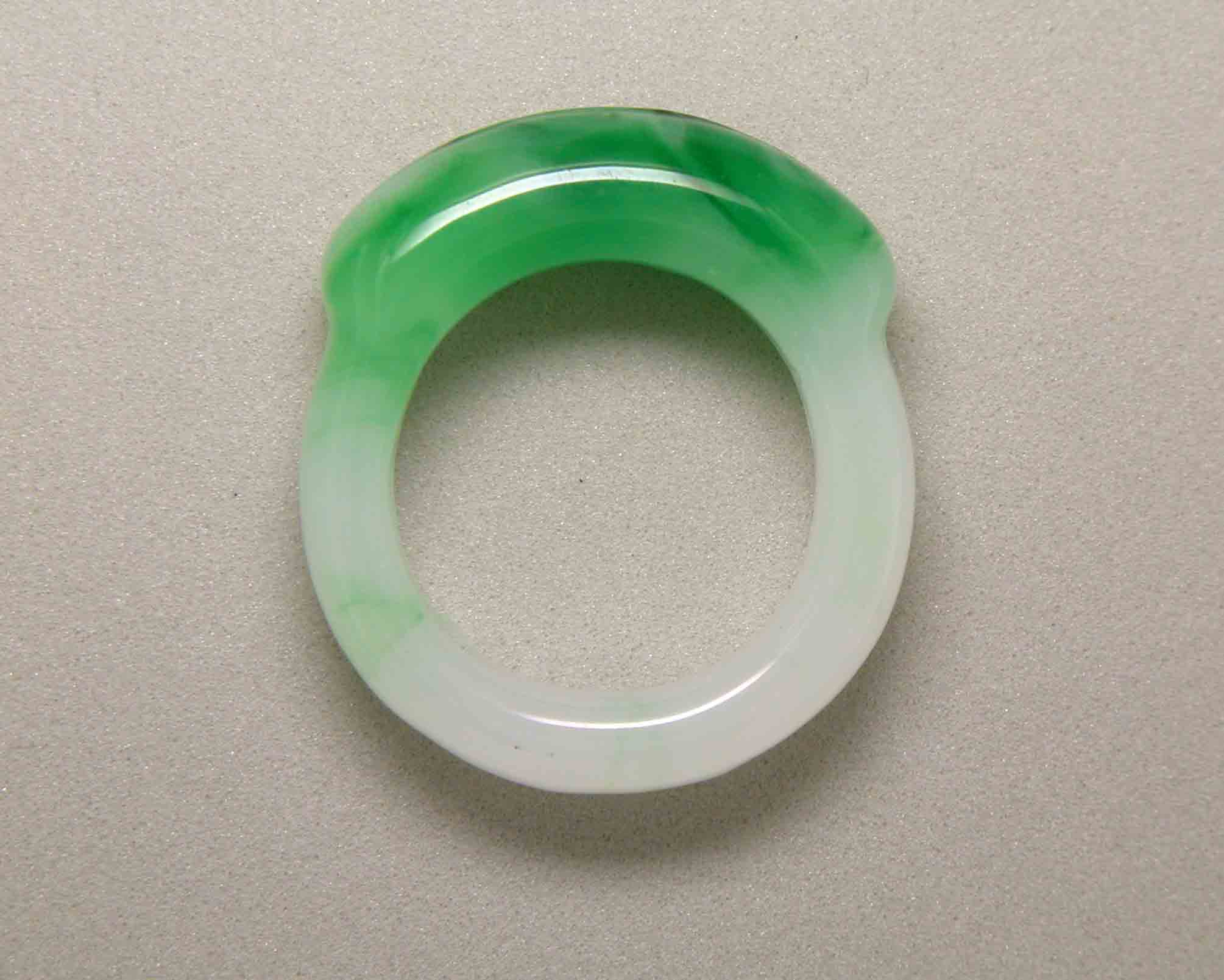
Visual Clues and Subtle Characteristics:
- Lustre: Compared to most natural gemstones, transparent paste typically exhibits a poorer lustre. This means it reflects less light and appears less brilliant.
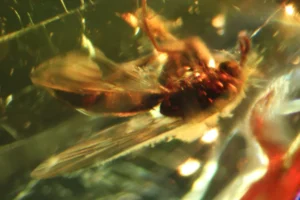
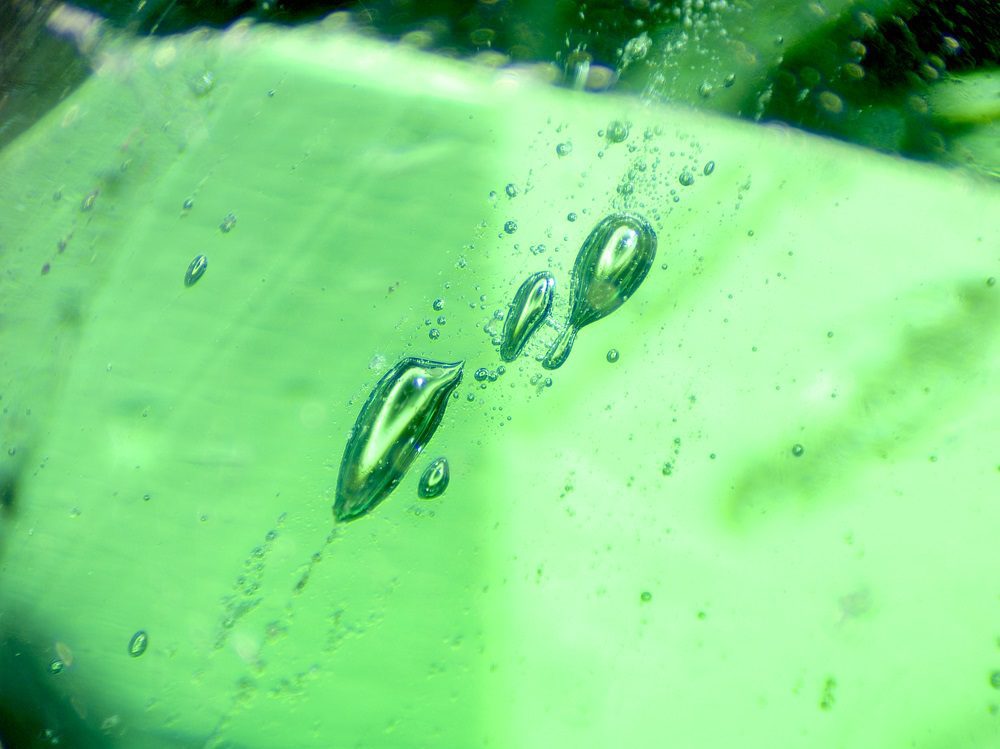
- Inclusions: The presence of bubbles and swirls is a common characteristic of manufactured glass. Bubbles, small pockets of trapped air, are a tell-tale sign of the melting and cooling process. Swirls, or internal curving flow structures, are evidence of the material’s molten state during creation.
- Moulding Marks: Paste is often produced by moulding, and faint marks from the moulds can sometimes be visible, particularly on the girdle or back of a fashioned stone.
- Surface Wear: Opaque paste, in particular, often displays small chips and scratches. Crucially, these imperfections exhibit a distinctly glassy lustre. This is unlike the fractures seen on polycrystalline gemstones, which typically have a duller, more granular appearance. This difference in lustre on wear is an excellent indicator that a material is glass.
Gemmological Testing for Confirmation:
For those seeking more definitive identification, gemmological instruments offer precise insights:
- Polariscope: Transparent paste is optically isotropic. This means that when viewed under a polariscope, it remains dark regardless of its orientation. Natural gemstones, with their crystalline structures, are typically anisotropic and will show varying degrees of light transmission.
- Dichroscope: The absence of pleochroism (the property of showing different colours when viewed from different directions) is another key indicator. Gemmological instruments like the dichroscope can confirm this lack of colour variation, which is characteristic of glass.
- Refractometer: Readings on a refractometer for glass paste typically fall within the range of 1.50 to 1.70. This specific range, combined with the other identified features, is generally not found in gem varieties commonly used in antique jewellery.
It is important to note that enamels and pâte de verre are often recognized by the context of their use – the way they are applied, their moulding and flow structures, and the occasional presence of small bubbles.
A Note of Caution:
Given the significant value that some antique jewellery can command, any testing should be approached with caution. Non-destructive observation is always the preferred initial approach. In cases of uncertainty, seeking advice from experienced professionals who specialize in handling antique jewellery is highly recommended. They possess the knowledge and expertise to assess pieces accurately and without causing damage.
A Legacy of Beauty and Artistry
Artificial glass, far from being a mere imitation, has played a profound and often underappreciated role in the history of jewellery. While it is true that artificial glass is used to create low-quality simulants for mass-produced, inexpensive jewellery, this is not the entirety of its story. The skilled artisans and craftspeople of previous centuries harnessed the unique properties of glass to create some of the most appealing and enduring jewellery ever produced.
The legacy of glass in jewellery is one of innovation, artistry, and accessibility. It democratized adornment, enabled breathtaking artistic expressions, and continues to captivate collectors with its historical significance and inherent beauty. To dismiss it as merely a "cheap substitute" is to overlook the rich tapestry of human creativity woven into its very fabric. From the protective amulets of ancient Egypt to the delicate sculptures of Art Nouveau, glass has been, and continues to be, a material worthy of respect and admiration.
Main Facts:
- Artificial glass, often referred to as "paste," is a common simulant of natural gemstones.
- Glass has been used in jewellery for thousands of years, dating back to ancient Egypt, Mesopotamia, China, Greece, and Rome.
- The primary methods of creating glass for jewellery include paste (high-lead glass), enamel/pâte de verre (powdered glass), and glass mosaics.
- Paste can mimic a wide range of natural gemstones through colour, texture, and optical effects like iridescence and asterism.
- Devitrified glass and purpurine are specialized forms of glass used for their unique crystalline structures and vibrant colours.
- Enamel and pâte de verre are used for surface decoration and sculptural effects, notably in Art Nouveau jewellery by artists like René Lalique.
- Micromosaics, an intricate form of glass mosaic, were popular in 19th-century Italy for jewellery.
- Identification of glass in jewellery often relies on visual cues such as poor lustre, bubbles, swirls, and moulding marks.
- Gemmological instruments like the polariscope, dichroscope, and refractometer can provide definitive identification of glass due to its isotropic nature, lack of pleochroism, and specific refractive index range.
Chronology:
- Ancient Egypt (c. 3000 BCE onwards): Early use of glass for jewellery, including in funerary artifacts like Tutankhamun’s mask.
- Mesopotamia, China, Greece, Rome (Antiquity): Widespread use of glass as a simulant for gemstones.
- Late Medieval Period: Adaptation of glass mosaics for religious motifs in jewellery.
- 18th and 19th Centuries: Fashionable period for wearing paste jewellery in Europe; development of micromosaics in Italy.
- Late 19th to Early 20th Centuries: Rise of Art Nouveau; significant use of enamel and pâte de verre, notably by René Lalique.
- Present Day: Continued appreciation and collection of antique glass jewellery; ongoing use of glass in modern costume jewellery.
Supporting Data:
- Refractive Index Range: Typically 1.50 to 1.70 for glass paste.
- Optical Properties: Isotropic (optically inactive under a polariscope), lacks pleochroism.
- Value of Collectibles: Antique Lalique pieces can fetch tens to hundreds of thousands of pounds; well-made 18th and 19th-century paste jewellery can cost hundreds to thousands of pounds. Fabergé pieces using purpurine are highly valuable.
Official Responses (Implied through Gem-A’s Expertise):
The article, presented by Gem-A (The Gemmological Association of Great Britain), reflects the professional stance of gemmologists. Their "response" is to educate and inform about the nature and identification of materials, emphasizing the distinction between natural gemstones and their imitations. The article implicitly advocates for a nuanced appreciation of glass, recognizing its artistic merit rather than solely its imitative function.
Implications:
- Collector Value: The article highlights that well-crafted glass jewellery from specific historical periods and by renowned artists can hold significant monetary and artistic value. This implies the importance of accurate identification and authentication for collectors.
- Historical Understanding: The widespread use of glass in jewellery across different eras provides valuable insights into the economic, social, and aesthetic priorities of past societies. It demonstrates how technological advancements have consistently influenced artistic expression.
- Appreciation of Craftsmanship: The detailed explanation of glassmaking techniques underscores the skill and artistry involved, encouraging a deeper appreciation for the craftspeople who worked with this material. It challenges the notion that glass is inherently inferior to natural gemstones, positioning it as a legitimate medium for artistic creation.
- Gemmological Practice: The information provided is crucial for gemmologists and appraisers in accurately identifying and valuing jewellery. Understanding the characteristics of glass paste is essential for distinguishing it from natural stones and for assessing the authenticity and condition of antique pieces.