London, UK – [Insert Date] – For millennia, diamonds have captivated humanity, their brilliance and enduring allure making them the undisputed kings of the jewelry trade. Yet, beyond their surface sparkle lies a hidden dimension, a phenomenon that reveals itself under ultraviolet light: fluorescence. While many may have encountered the term, its deeper meaning, its crucial role in gemology, and its implications for discerning collectors often remain elusive. This comprehensive exploration, guided by the expertise of Pat Daly FGA DGA, delves into the fascinating world of diamond fluorescence, demystifying its causes and highlighting its profound significance.
The Enduring Allure of Diamonds and the Dawn of Scientific Understanding
Diamonds have been cherished for over 2,000 years, their value intrinsically linked to their beauty and rarity. However, it wasn’t until the late 18th century that scientists definitively established their composition as primarily carbon. The early 20th century marked a pivotal era, with burgeoning industrial applications of diamond spurring intensive scientific investigation into its properties, structure, and intricate chemistry. This deeper understanding paved the way for comprehending the subtle nuances that differentiate one diamond from another, including the intriguing phenomenon of fluorescence.
Unraveling the Mysteries: Defects as the Architects of Diamond’s Luminescence
At its theoretical core, a "perfect" diamond is a pristine lattice of carbon atoms arranged in a flawless three-dimensional structure. However, in reality, diamonds are rarely so pure. Departures from this ideal structure, known as "defects," are not merely imperfections but crucial elements that dictate a diamond’s unique characteristics. These defects can range from the inclusion of foreign atoms, or chemical impurities, to missing carbon atoms, termed vacancies.
In the realm of gemology, these defects are of paramount importance. They are the silent architects behind a diamond’s color and, critically, its luminescent responses. This luminescent behavior, particularly under ultraviolet (UV) light, serves as a vital diagnostic tool for gemologists, aiding in the identification of natural, treated, and even synthetic stones.
A Tale of Two Types: Classifying Diamonds by Their Elemental Signatures
The scientific classification of diamonds into distinct types is primarily based on the quantity and distribution of two key impurities: nitrogen and boron. This classification system is fundamental to understanding their varied properties, including fluorescence.
Type I Diamonds: The Nitrogen-Rich Majority
Type I diamonds represent the vast majority of natural diamonds and are characterized by the presence of nitrogen impurities in concentrations ranging from hundreds to thousands of parts per million (ppm). When diamonds first formed deep within the Earth’s mantle, nitrogen atoms were likely dispersed individually within the crystal structure. Over millions of years, as these diamonds journeyed towards the Earth’s surface, these dispersed nitrogen atoms began to aggregate.
Initially, nitrogen atoms paired up, forming "A centers." Later, in some cases, these pairs would further combine with other pairs and vacancies (sites where a carbon atom is missing), forming more complex aggregates like "B centers" (four nitrogen atoms surrounding a vacancy).
- Single Nitrogen Atoms: The presence of single nitrogen atoms within the diamond lattice is often responsible for a diamond’s yellowish hue. While they contribute to color, their effect on luminescence is generally minimal.
- Nitrogen Pairs (A Centers): These pairs of nitrogen atoms have a significant impact on luminescence. They are known to "quench" or suppress fluorescence, meaning they reduce the intensity of the light emitted under UV. They do not significantly affect the diamond’s color.
- Groups of Four Nitrogens (B Centers): These larger aggregates of nitrogen atoms have a negligible effect on both color and luminescence.
Type II Diamonds: The Rare and Refined
In stark contrast to Type I diamonds, Type II diamonds contain significantly lower concentrations of nitrogen, typically less than 10 ppm. They are further subdivided into two categories:
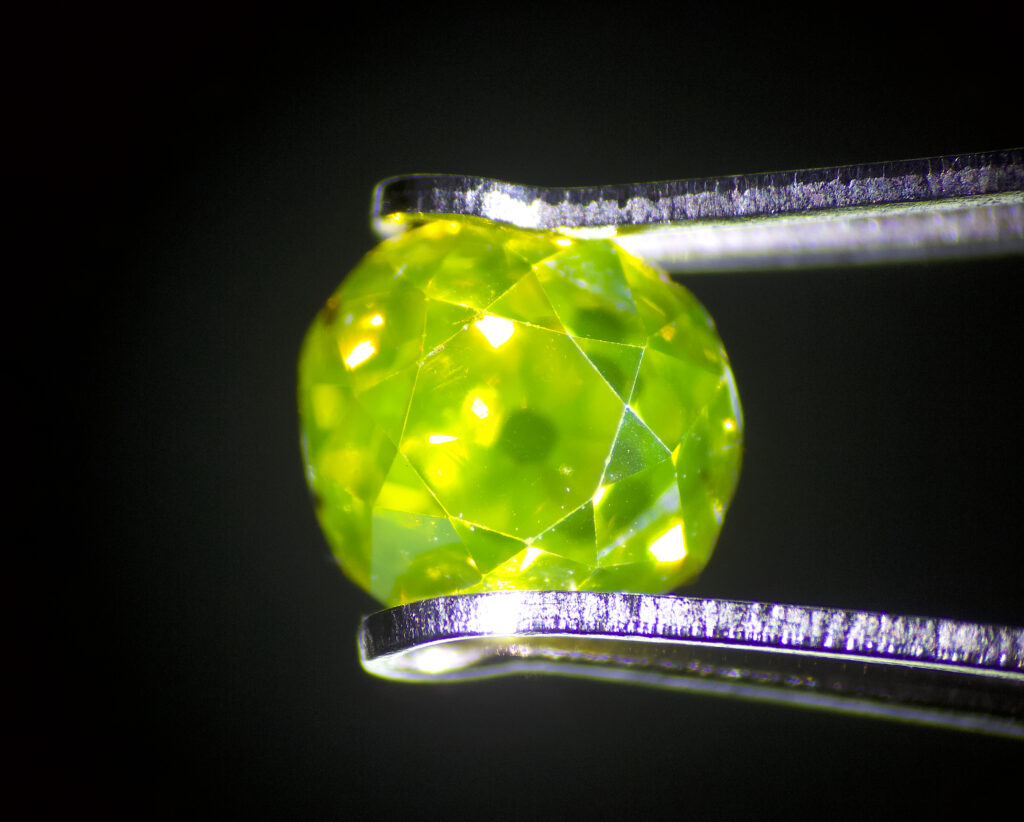
- Type IIa Diamonds: These diamonds possess exceptionally low levels of nitrogen. Their unique properties are often attributed to other subtle structural anomalies rather than nitrogen impurities.
- Type IIb Diamonds: A rarer subset of Type II diamonds, these contain trace amounts of boron. Boron is a critical element that imparts a distinct blue color and luminescence to these diamonds.
The Dance of Light: Fluorescence in Action
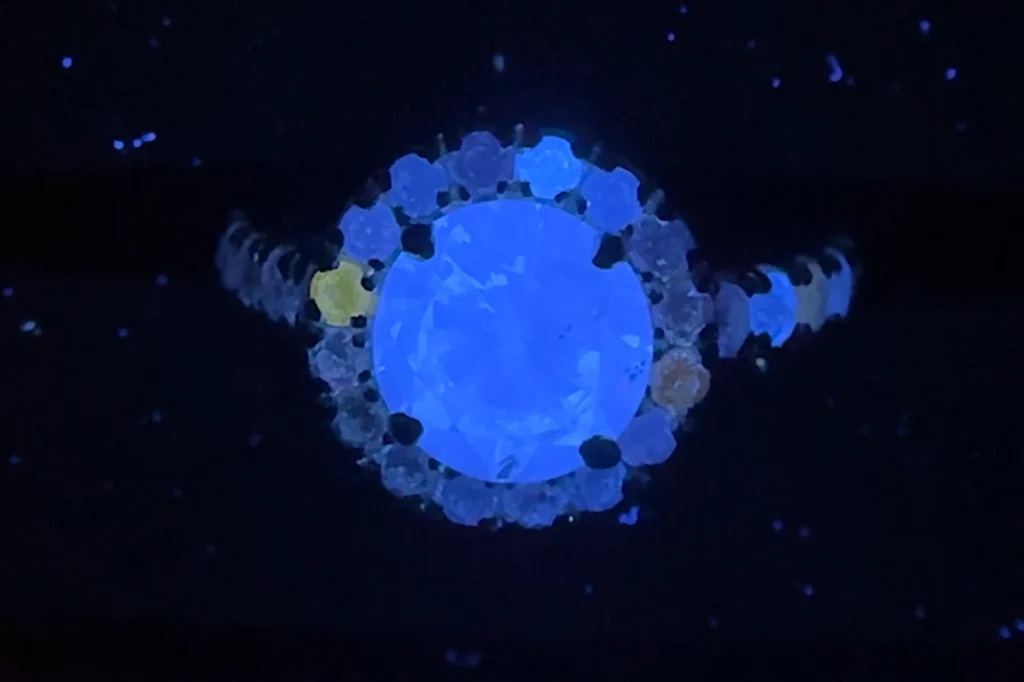
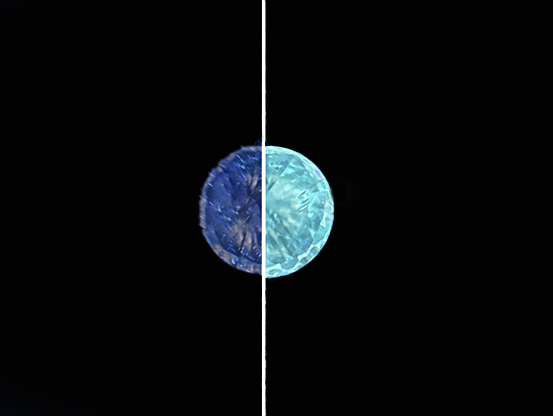
When a diamond is exposed to ultraviolet (UV) light, its electrons become energized. As these electrons return to their original, lower energy state, they release this excess energy in the form of visible light. This emitted light is what we perceive as fluorescence. The color and intensity of this fluorescence are directly influenced by the type and concentration of defects within the diamond.
The Ubiquitous Blue Glow: A Hallmark of Natural Diamonds
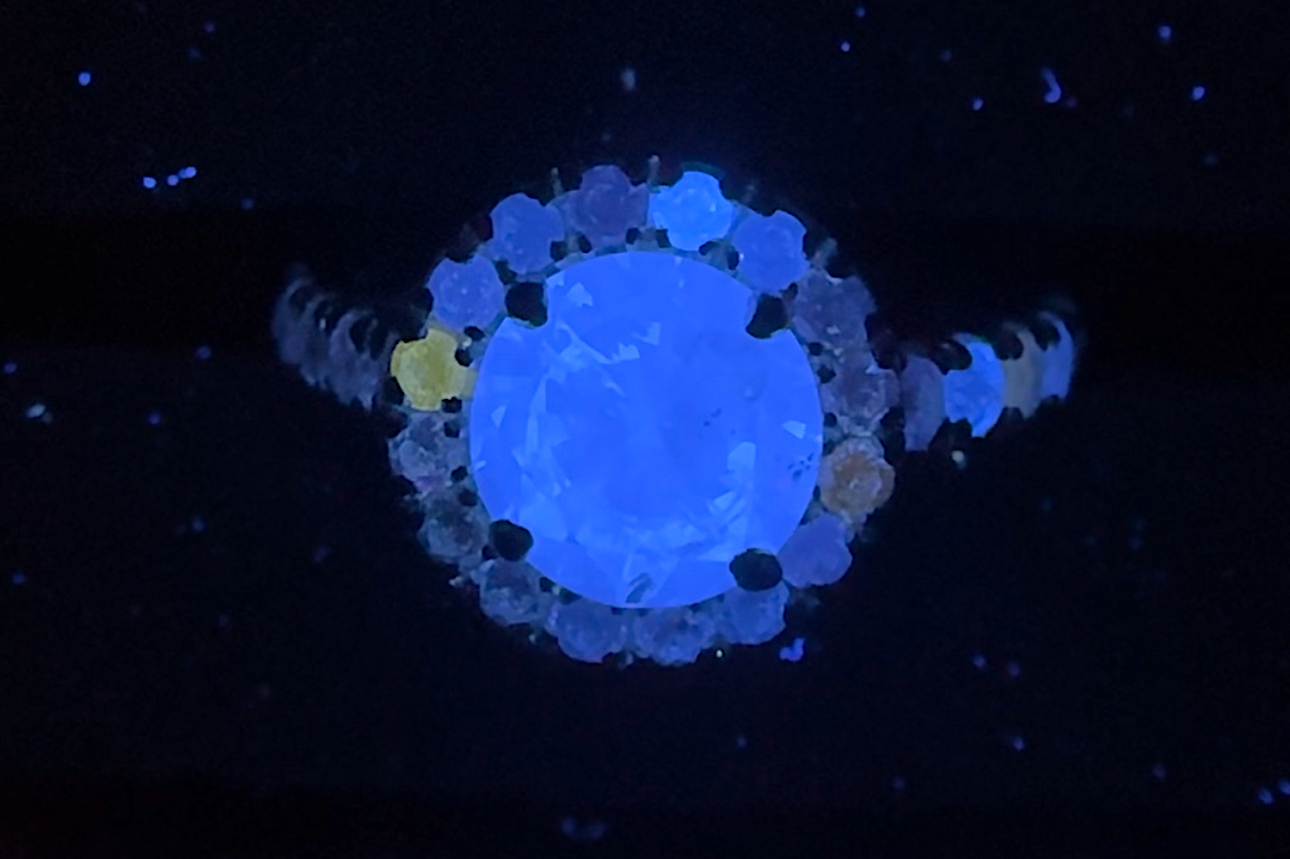
Approximately 98% of natural diamonds contain aggregates of nitrogen atoms (specifically, groups of three nitrogen atoms surrounding a vacancy). This specific defect is often responsible for a characteristic yellowish body color and, crucially, a blue fluorescence when exposed to long-wave ultraviolet (LWUV) light. This blue fluorescence is frequently accompanied by a phenomenon known as phosphorescence, where the diamond continues to emit light for a short period after the UV source is removed, often appearing yellow.
The intensity of this blue fluorescence can vary significantly, depending on the concentration of these nitrogen aggregates and the balance with quenching A centers. It is estimated that between one-third and all natural diamonds of this type will fluoresce under UV light, with the specific response dependent on the UV wavelength used, viewing conditions, and the instrument employed. Importantly, the presence of this distinct blue fluorescence under LWUV is considered strong evidence that a stone is a natural diamond.
In some instances, the blue fluorescence can be so pronounced that it is visible even under the UV component of natural daylight. The strength of fluorescence is a graded characteristic on diamond reports, as it can sometimes be perceived as negatively impacting a diamond’s appearance. However, this perception is not universally held, and for many, the subtle glow adds an intriguing dimension to the stone.
A Spectrum of Colors: Beyond the Blue
While blue is the most commonly observed fluorescence color, diamonds can exhibit a surprising array of hues under UV light, each telling a story about their internal structure:
- Green Fluorescence: This is often attributed to the combination of two nitrogen ions with a vacancy or four nitrogen ions with two vacancies.
- Orange Fluorescence: A single nitrogen ion combined with a vacancy can give rise to orange fluorescence.
- Yellow Fluorescence: This color is thought to originate from platelets, which are planar defects composed primarily of carbon atoms with some interspersed nitrogen.
- Pink Diamonds and Their Luminescent Ties: The captivating color of pink diamonds is believed to stem from dislocations – disruptions in the atomic structure caused by crystal distortion, which can interact with nitrogen. Most natural pink diamonds fall into Type I and exhibit either blue or yellow fluorescence.
Fluorescence in Type II Diamonds: A Different Luminescent Landscape
The fluorescence characteristics of Type II diamonds differ markedly from their Type I counterparts due to their minimal nitrogen content.
-
Type IIa Diamonds: These diamonds generally do not exhibit significant fluorescence under the typical equipment and conditions used by gemologists. However, some naturally colored pink diamonds within this type can emit an orange glow under LWUV. This response, and their color, is linked to a rare defect involving a nitrogen ion associated with a vacancy. While uncommon in natural stones, this defect is more prevalent in artificially colored and synthetic pink diamonds.
-
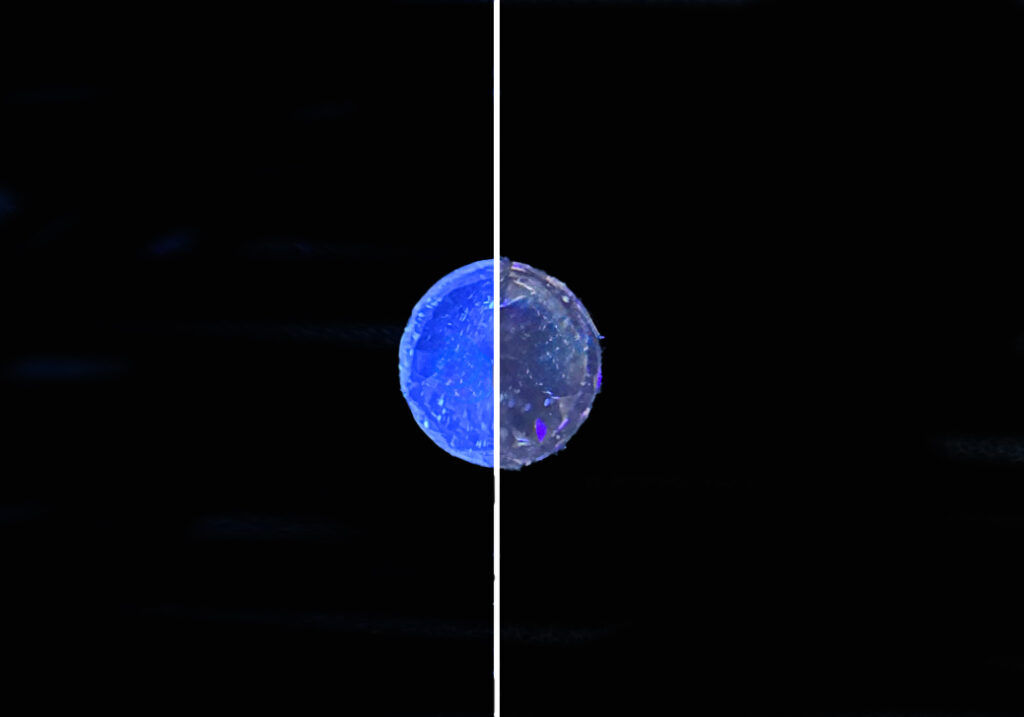
Type IIb Diamonds: The presence of boron in Type IIb diamonds is the source of the distinctive blue color and luminescence seen in many blue diamonds. While they show little fluorescence under LWUV, they can display bluish, greenish, and orange to red fluorescence under short-wave ultraviolet (SWUV). Phosphorescence after SWUV exposure is common in these diamonds and can persist for up to a minute. The interplay between bluish-green and red phosphorescence has even been proposed as a method for identifying individual stones, potentially tracing recut diamonds from the same rough or stolen sources.
Luminescence as a Key Identifier: Distinguishing Natural from Synthetic
The luminescent properties of diamonds, particularly synthetic and treated stones, offer valuable diagnostic clues for gemologists.
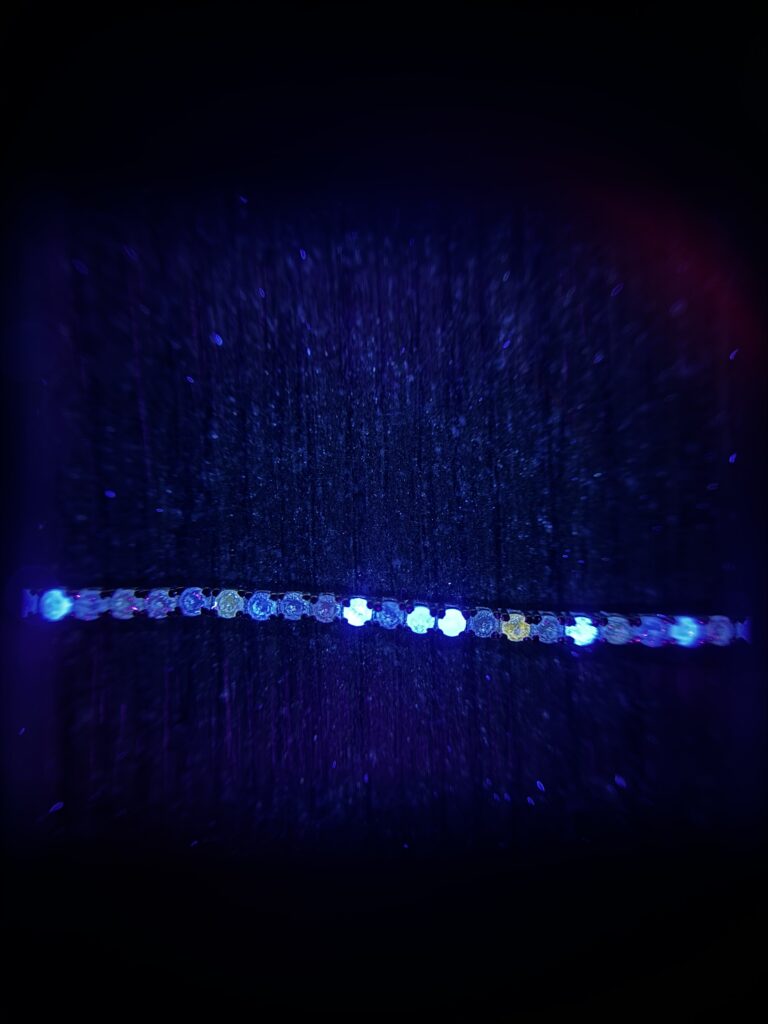
- Treated Pink Diamonds: Many treated pink diamonds, including synthetic pink diamonds, exhibit an orange glow under UV light, a response that is rare in natural pink diamonds.
- HPHT Treated Diamonds: Diamonds treated using High-Pressure, High-Temperature (HPHT) methods often develop bright yellow and green body colors and display vivid fluorescence in similar hues when they contain nitrogen.
- Synthetic Diamonds: Blue fluorescence under LWUV is infrequent in synthetic diamonds. Most synthetic diamonds that fluoresce tend to emit an orange-to-yellow or greenish glow, which is typically stronger under SWUV than LWUV. Many small melee diamonds produced via HPHT processes contain boron and exhibit a prolonged phosphorescence, which can even be stimulated by daylight. This effect can be mitigated through irradiation, but this adds to the cost and may not always be performed.
The Power of Short-Wave Ultraviolet: A Deeper Dive into Luminescence
All diamonds exhibit fluorescence when exposed to very short-wave ultraviolet radiation (around 225nm). While gemologists commonly use lamps emitting around 250nm, the fundamental principle remains. The colors emitted by natural and synthetic stones under these conditions often differ. This variation can be attributed to the way defects accumulate on different faces of a growing crystal, leading to distinct luminescent responses on each face. These patterns can even be recognized on polished stones, offering insights into the diamond’s original crystal growth. Natural diamonds typically grow as octahedra, while HPHT synthetics often display prominent cube faces, and CVD-grown synthetics form in layers parallel to a pair of cube faces.
Instruments like the SYNTHdetect leverage this short-wave UV fluorescence to differentiate natural from synthetic stones, especially in multi-stone jewelry. By analyzing the colors and observing changes in luminescence over short periods, gemologists can effectively distinguish between natural and synthetic diamonds.
The Future of Identification: Advanced Instrumentation
The intricate relationship between diamond structure, defects, and luminescence has led to the development of sophisticated instruments designed to aid the trade in screening and identifying diamonds. Pioneering technologies, such as De Beers’ Diamond View and SYNTHdetect, utilize advanced UV imaging and analysis to provide rapid and reliable identification of natural versus synthetic stones.
In conclusion, diamond fluorescence is far more than a mere visual curiosity. It is a complex interplay of atomic structure, impurities, and light, providing gemologists with invaluable diagnostic information. For collectors, understanding fluorescence adds another layer of appreciation for the unique character and origin of each diamond, transforming a beautiful gem into a window into the Earth’s ancient processes and the cutting edge of scientific discovery. The luminescence of diamonds, a beautiful and observable feature, continues to be a critical tool in the ongoing quest to distinguish the natural wonders of our planet from the marvels of human ingenuity.
Learn More:
For those eager to delve deeper into the fascinating field of gemology, Gem-A offers a comprehensive range of educational opportunities. Explore our introductory online course, GemIntro, or discover our accredited programmes to embark on your gemological journey.