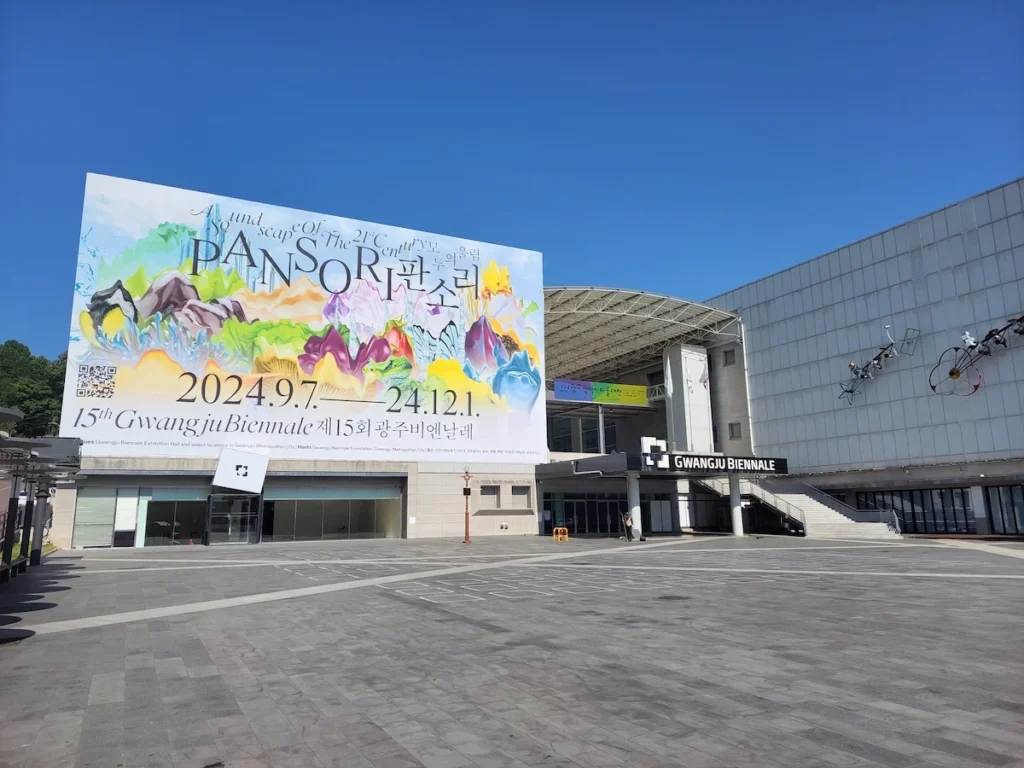
The 16th Gwangju Biennale, historically a beacon of democratic expression and artistic freedom in South Korea, has found itself at the epicenter of an escalating geopolitical confrontation. With the exhibition set to open on September 5, the event is currently grappling with a severe diplomatic crisis: the Chinese government has officially ordered its participating artists to withdraw from the Biennale. This move comes in direct retaliation against the Gwangju Biennale Foundation’s (GBF) recent decision to allow the Taiwanese delegation to exhibit under the official designation of the "Taiwan Pavilion."
The controversy, which pits the foundational ideals of artistic autonomy against the rigid geopolitical demands of the “One China” policy, has thrust the biennial—an event born from the memory of South Korea’s 1980 pro-democracy uprising—into a high-stakes struggle over sovereignty and cultural representation.
The Chronology of a Diplomatic Standoff
The roots of the current impasse extend back more than a year, characterized by a protracted tug-of-war over naming conventions that reflect the broader, often volatile, status of cross-strait relations.
The Initial Compromise and Subsequent Fallout
For years, the status of the Taiwanese exhibition at the Gwangju Biennale has been a point of friction. In previous iterations, the GBF, under pressure to maintain diplomatic equilibrium, had pushed for a renaming of the satellite exhibition from the "Taiwan Pavilion" to the "NTMoFA Pavilion," a reference to the National Taiwan Museum of Fine Arts. The intention, according to the Foundation, was to de-politicize the space to ensure the event could proceed without interference from Beijing.
However, this move triggered immediate backlash from the Taiwanese Ministry of Culture. On August 15, the Ministry issued a sharp rebuke, publicly accusing the GBF of engaging in "political censorship." The allegation suggested that the Foundation had acted unilaterally to appease Chinese authorities, effectively erasing Taiwan’s identity to avoid offending the mainland.
The Escalation
The situation reached a breaking point on Tuesday, when the GBF, likely in an attempt to salvage its reputation and uphold its commitment to artistic inclusivity, formally announced that the exhibition would return to its original name: the "Taiwan Pavilion." This decision, while welcomed by Taipei, was interpreted by the Chinese Embassy as an intolerable provocation.
The Intervention of Ambassador Dai Bing
The following day, Chinese Ambassador Dai Bing met with Gwangju Mayor Min Hyung-bae at Gwangju City Hall. During this meeting, Ambassador Dai expressed his "regret and concern," a diplomatic euphemism for a formal protest. Following the meeting, the Chinese Embassy issued a mandate to all Chinese artists and installation staff currently working at the Hajeongung Art Museum—the venue for their special exhibition—to halt all preparations and immediately withdraw from the Biennale.
The Ideological Conflict: Art vs. Geopolitics
At the heart of this dispute is a fundamental disagreement over the role of art in international relations.
The Stance of the Gwangju Biennale Foundation
In response to the mounting pressure, Mayor Min Hyung-bae reportedly held his ground during the meeting with Ambassador Dai, asserting that "political considerations should not affect the field of art." This reflects the Foundation’s broader struggle to maintain the Biennale’s legacy.
Established in 1994, the Gwangju Biennale serves as a memorial to the 1980 Gwangju Uprising. The event was created to honor the 2,300 civilians who were killed during the struggle against military dictatorship in South Korea. Because of this history, the Biennale has long prided itself on being a space for social critique and the defense of human rights. For the GBF, allowing the "Taiwan Pavilion" to operate under its rightful name is a matter of institutional integrity.
The Chinese Perspective
Beijing’s reaction, however, is consistent with its long-standing foreign policy regarding Taiwan. China does not recognize the sovereignty of the self-governed island, viewing it as a breakaway province. Any international event that grants Taiwan a platform under its own name is viewed by the Chinese Ministry of Foreign Affairs as an attempt to foster "Taiwanese independence" on the global stage. By ordering a withdrawal, Beijing is signaling to the international community that cultural participation in events with Chinese artists is contingent upon the absolute exclusion of Taiwanese sovereign identifiers.
Implications for the International Art World
The impact of this standoff extends far beyond the borders of South Korea, raising difficult questions for curators, institutions, and artists globally.
Reputational Risks for Global Biennials
The Gwangju Biennale is now facing a significant reputational crisis. The institution is caught between the hammer and the anvil: if it maintains the "Taiwan Pavilion," it faces the loss of Chinese participation and potential long-term diplomatic fallout with its largest trading partner. If it caves to the demands of the Chinese Embassy, it risks alienating its own base, undermining its democratic values, and confirming the accusations of censorship leveled by the Taiwanese government.
The "Chilling Effect" on Artistic Freedom
Observers note that this incident is part of a growing trend where international exhibitions are being utilized as proxies for state-level political disputes. For individual artists, the situation is particularly precarious. Many Chinese artists who rely on state support or who operate within a system where such actions can have personal repercussions are now forced into a binary choice: comply with the state-mandated withdrawal or risk their careers and standing within their home country.
Official Responses and Current Status
As of the latest reports, the Gwangju Biennale remains in a state of suspended animation regarding the Chinese exhibition.
- The Gwangju Biennale Foundation: In a statement issued to the press, the Foundation emphasized the time-sensitive nature of the crisis. "There is not much time left until the opening on September 5," the statement read, "and we are closely monitoring the situation, hoping the exhibition will proceed smoothly." The Foundation has confirmed that, despite the pressure, the "Taiwan Pavilion" will remain as advertised in all promotional materials.
- The Taiwanese Ministry of Culture: While the Ministry has yet to issue a new statement following the withdrawal order, their August 15 stance remains the baseline for their participation: they demand the right to represent their culture under their own name, viewing any alternative as an erasure of their identity.
- The Chinese Embassy: The Embassy has not retracted its demand, and reports indicate that, as of this morning, Chinese staff have begun the process of dismantling or halting their preparations at the Hajeongung Art Museum.
Conclusion: A Turning Point for Gwangju
The 16th Gwangju Biennale will inevitably be defined by this conflict. By standing by the "Taiwan Pavilion," the organizers have chosen to prioritize the historical ethos of the event—a legacy of resistance against authoritarianism—over the pragmatic demands of international diplomacy.
However, the departure of Chinese artists leaves a vacuum in the exhibition. The absence of these voices is a stark reminder of the limitations of "soft power" in an era of hardening geopolitical lines. As the clock ticks down to September 5, the global art community will be watching closely to see how the Gwangju Biennale navigates this crisis. Will it emerge as a defender of artistic sovereignty, or will it be remembered as a cautionary tale of how easily the walls of the art world can be breached by the reach of state power?
For now, the situation remains fluid, with the Foundation attempting to balance the preservation of its founding ideals with the harsh realities of a world where art is rarely ever truly free from the reach of the state.